The air in the Black Hills of South Dakota carries the scent of pine needle resin and dry summer dust. On a normal July evening, the shadows stretch long across the granite valleys, and the only sound is the wind scraping through the ponderosa pines. But on this specific night, the silence was shattered. Thousands of boots tramped into the amphitheater beneath Mount Rushmore. They came flag-draped and expectant, filling the darkness with a restless energy that felt less like a holiday and more like a gathering before a storm.
High above them, lit by artificial floodlights that carved deep shadows into the stone, four American presidents stared out into the void. George Washington, Thomas Jefferson, Theodore Roosevelt, and Abraham Lincoln. Sixty-foot faces of granite, silent and unblinking.
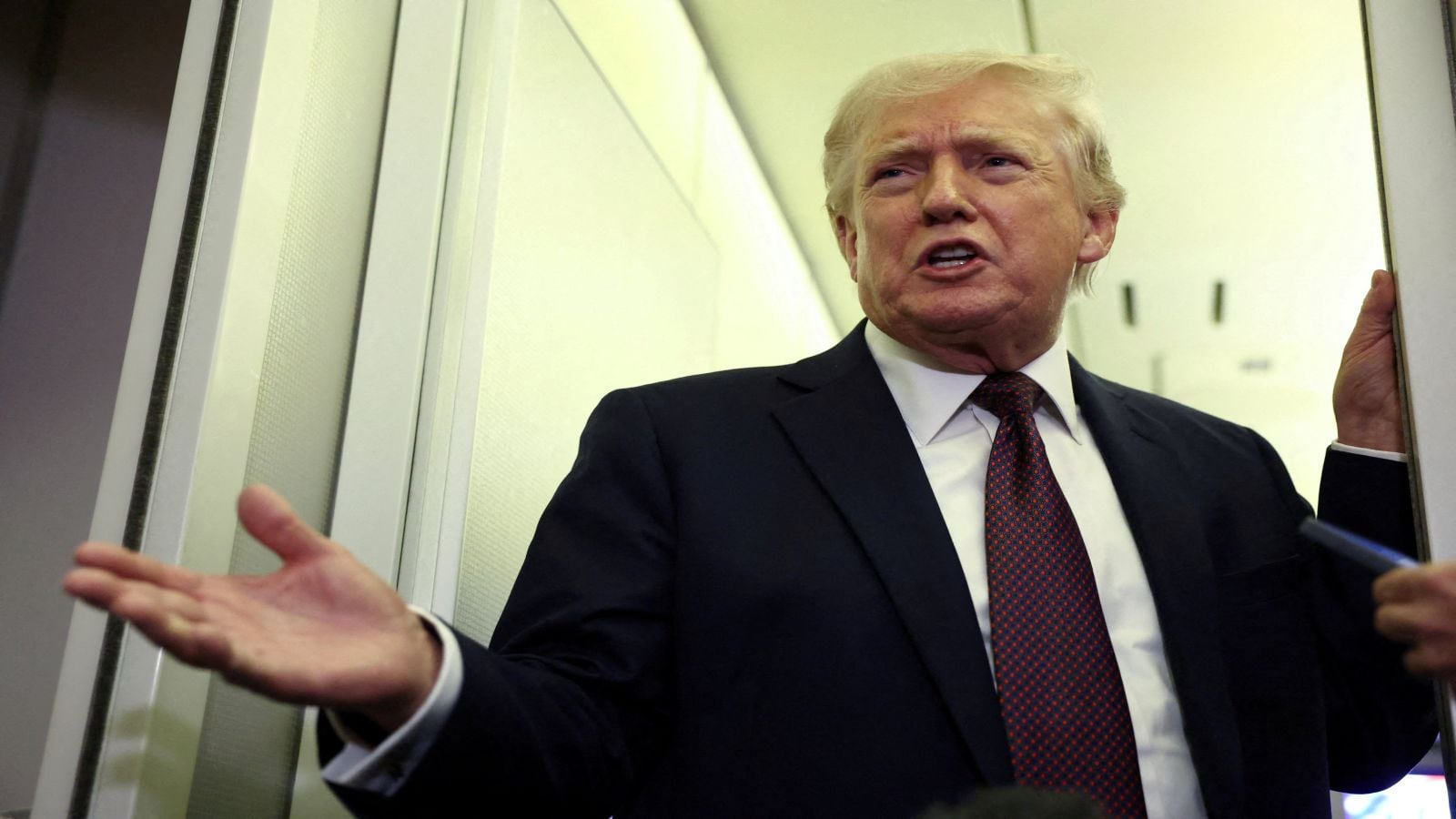
Then came the roar of the crowd, the thrum of helicopter blades, and the unmistakable silhouette of a president stepping to the podium.
Donald Trump did not come to the mountain to deliver a standard tribute to the nation’s founding. He came to declare a cultural war. He told the gathered crowd that the very identity of America was under assault, targeted by a "left-wing cultural revolution" designed to overthrow the American Revolution.
To understand what happened that night, you have to look past the cable news chyrons and the immediate political spin. You have to look at the friction between the permanence of stone and the volatility of human anger.
The Friction in the Black Hills
Imagine standing in that crowd. The temperature drops fast in the hills once the sun slips behind the peaks. You are surrounded by thousands of people singing, cheering, and chanting. For many in attendance, the gathering felt like a sanctuary. They felt heard in a world that they believed was rapidly trying to silence them.
When the speech began, the rhetoric did not mimic the soft, unifying tones traditionally reserved for Independence Day. It was sharp. It cut through the night air like a blade. The president spoke of a totalitarian conformity being pushed by schools, newsrooms, and corporate boardrooms. He spoke of statues being pulled down by protestors across the country, framing those actions not as localized civil unrest, but as a coordinated campaign to wipe out the nation's heritage.
This is where the emotional core of the evening lived. It was built on a profound, shared anxiety. It is the fear of erasure.
For the people cheering in the amphitheater, the changing cultural norms of the country do not feel like progress. They feel like a personal eviction notice from the American story. When a statue falls in a city hundreds of miles away, it feels to them like a brick being pulled from the foundation of their own homes. The speech functioned as a mirror for that exact anxiety, reflecting it back to the crowd magnified tenfold by the power of the executive office.
But look slightly to the left, just beyond the security perimeter, and the narrative changes completely.
The Unseen Battle for the Mountain
The mountain itself is a character in this drama, one with a long and blood-soaked memory. Long before Gutzon Borglum began blasting the rock with dynamite in the 1920s, the Lakota Sioux called this formation Tunkasila Sakpe, the Six Grandfathers. It was, and remains, a deeply sacred space.
To the Native American protestors who blocked the highway leading up to the monument earlier that afternoon, the event was not a celebration of freedom. It was a provocation. They stood on the asphalt, facing down lines of National Guardsmen in riot gear, holding signs that read "Protect Sacred Land."
Consider the collision of these two realities.
On one side of the security fence, a crowd is cheering for the preservation of an identity they feel is being stolen from them. On the other side of the fence, indigenous people are protesting the celebration of an identity built on land they know was stolen from their ancestors. Both groups are operating from a place of deep historical grievance. Both believe they are fighting for survival.
The standard news reporting of the event captured the words spoken from the podium. It listed the policy announcements and the attacks on political rivals. But the dry facts miss the real story: the profound, agonizing disconnect between two groups of Americans looking at the exact same piece of rock and seeing two entirely different universes.
The Architecture of Anger
Politics has always relied on symbols, but symbols are dangerous because they cannot be controlled. They mean whatever the observer needs them to mean.
During the speech, the president explicitly tied the faces on the mountain to the modern political struggle. He praised Washington’s resolve, Jefferson’s vision, Roosevelt’s grit, and Lincoln’s preservation of the Union. He argued that to critique these men, or to contextualize their flaws, was an act of national self-loathing.
But history is rarely as clean as a granite monument.
The real tension of our current moment is that we are trying to live in a house where the foundation is being inspected for cracks. To some, pointing out the cracks means you want to burn the house down. To others, ignoring the cracks means the house will eventually collapse on everyone inside.
The speech at Mount Rushmore was designed to force a choice between those two perspectives. There was no room for nuance in the shadow of the cliff. The language used was binary: us versus them, heroes versus totalitarians, preservation versus destruction.
This kind of storytelling is intoxicatingly effective. It simplifies a chaotic world. It gives the listener a clear enemy and a clear role to play. If you believe the nation's identity is under a coordinated, existential attack, then every cultural debate—from school curriculums to corporate statements—becomes a battleground where surrender is unthinkable.
When the Fireworks Fade
As the speech concluded, a massive display of fireworks launched from behind the monument. It was the first time pyrotechnics had been used at the site in a decade, due to concerns over wildfire risks and groundwater contamination from perchlorate.
The sky exploded in brilliant streaks of red, white, and blue. For a few minutes, the booms echoed off the canyon walls, drowning out any lingering arguments, any protests, any doubts. The smoke rose in thick, heavy plumes, caught in the bright glare of the spotlights, drifting across the faces of the stone presidents until Washington and Lincoln were entirely obscured by a fog of gunpowder and sulfur.
The crowd cheered, looked up in awe, and eventually drifted back to their cars, heading down the winding mountain roads into the night.
The next morning, the smoke had cleared. The tourists returned with their cameras and their binoculars. The National Guard units packed up their shields. The protestors moved on to the next flashpoint.
The four presidents remained, staring out into the empty air, indifferent to the passions that had played out at their feet. The stone does not care about the speeches. It does not care about the cultural wars or the election cycles. But the people who live in its shadow do.
We are left with the same unresolved question that echoed through the Black Hills that night. Can a nation survive when its citizens no longer share a common story of who they are, where they came from, or what they want to become? The answer won't be found by carving more faces into mountains, or by tearing down the ones we have. It will be found in the quiet, difficult work of looking at each other across the fences we have built, and realizing that the people on the other side are just as terrified of losing America as we are.