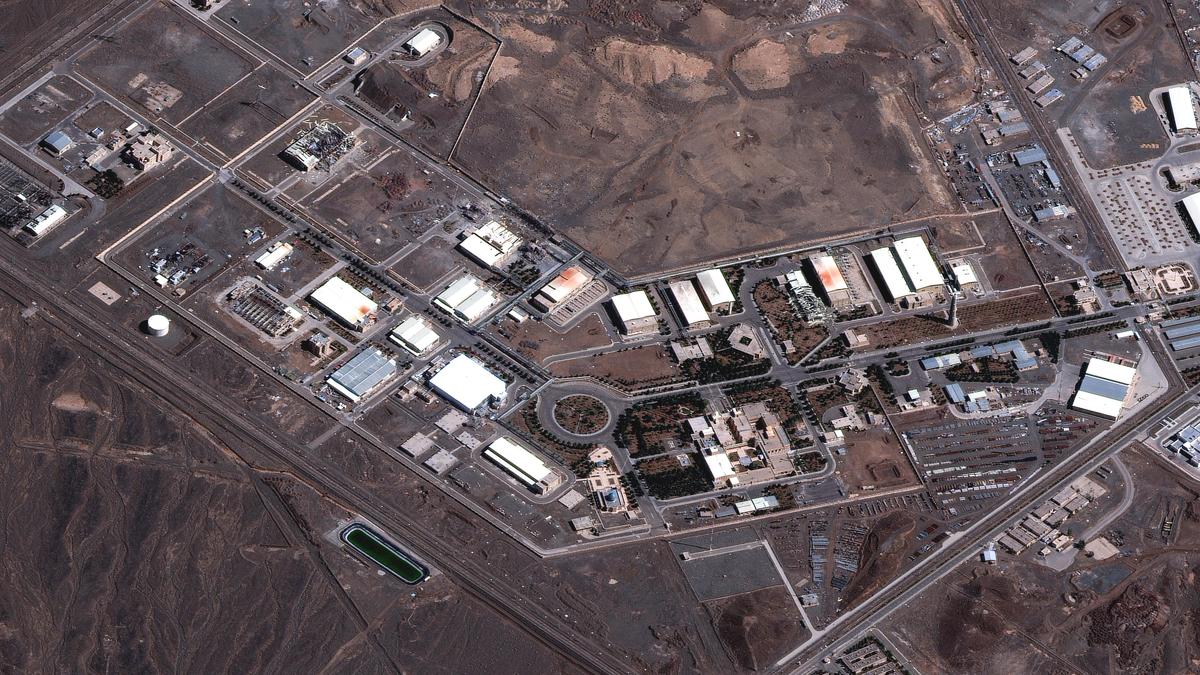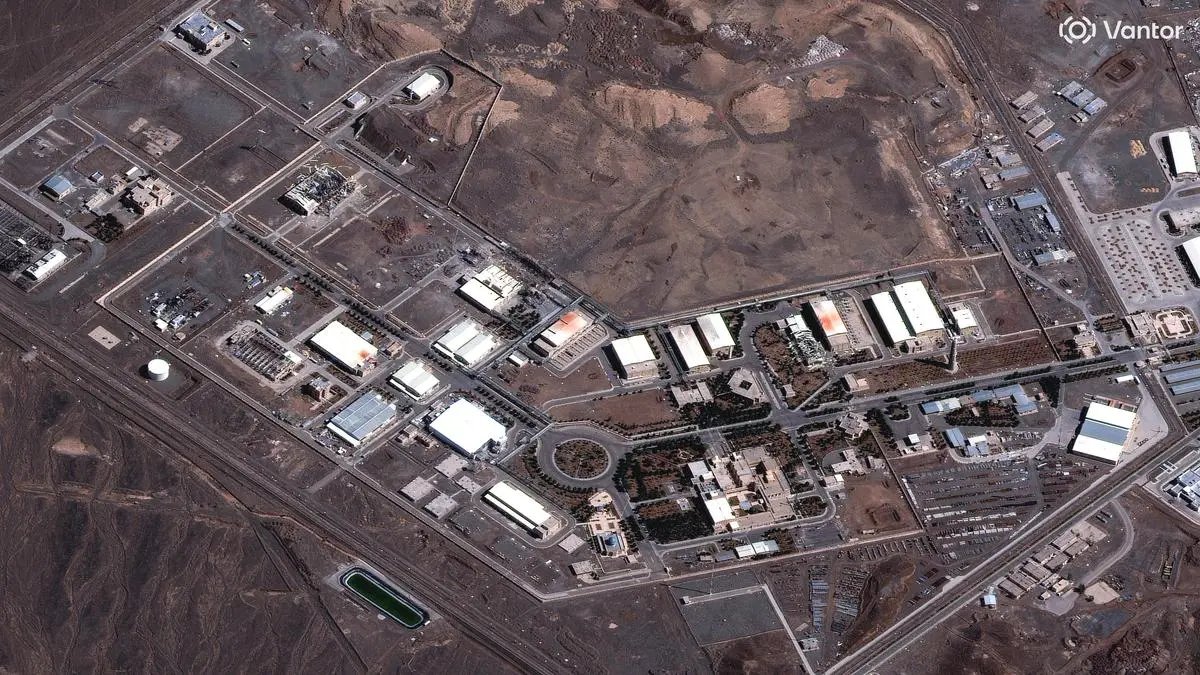
The silence of the Isfahan desert is a physical weight. It is a vast, cooling expanse where the wind usually carries nothing but the scent of dry earth and the distant hum of the Iranian power grid. But inside the Natanz nuclear complex, the silence is different. It is artificial. It is the sound of thousands of IR-6 centrifuges spinning at speeds that defy intuition, a high-pitched metallic choir turning uranium hexafluoride gas into the building blocks of a different world.
Then, the sky fell. If you liked this post, you might want to check out: this related article.
The reports filtering out of the central plateau speak of a precision that borders on the surgical. There were no lumbering bomber wings visible on radar, no protracted dogfights over the Zagros Mountains. Instead, there was a sudden, violent intrusion of kinetic energy. The Iranian government soon confirmed the unthinkable: the facility, buried under meters of reinforced concrete and layers of sophisticated air defenses, had been struck. They pointed the finger immediately at a coordinated US-Israeli operation.
To understand why this matters, you have to look past the satellite imagery and the grainy footage of smoke rising against a sunrise. You have to look at the people inside the wire. For another perspective on this development, refer to the recent update from The Guardian.
The Architect in the Basement
Imagine a technician named Reza. He is not a warmonger or a shadow-cabinet strategist. He is a man with a PhD in fluid dynamics who worries about his daughter’s math grades and the rising cost of lamb in Tehran. For Reza, the centrifuges are not symbols of defiance; they are the result of decades of grueling academic labor. When the floor buckled and the power failed, Reza wasn’t thinking about regional hegemony. He was thinking about the terrifying sound of carbon-fiber rotors shattering at supersonic speeds.
A centrifuge is a delicate creature. If you disrupt its balance by even a fraction of a millimeter, it becomes a self-destructing pipe of shrapnel. When an airstrike hits a facility like Natanz, the "kill" isn't just the explosion. It is the cascading failure of thousands of interconnected systems. It is the death of a decade of work in a single heartbeat.
This is the hidden cost of the shadow war. It isn't just about "assets" or "capabilities." It is about the evaporation of human effort and the terrifying realization that nowhere, no matter how deep you dig, is truly safe.
The Physics of Ghost Warfare
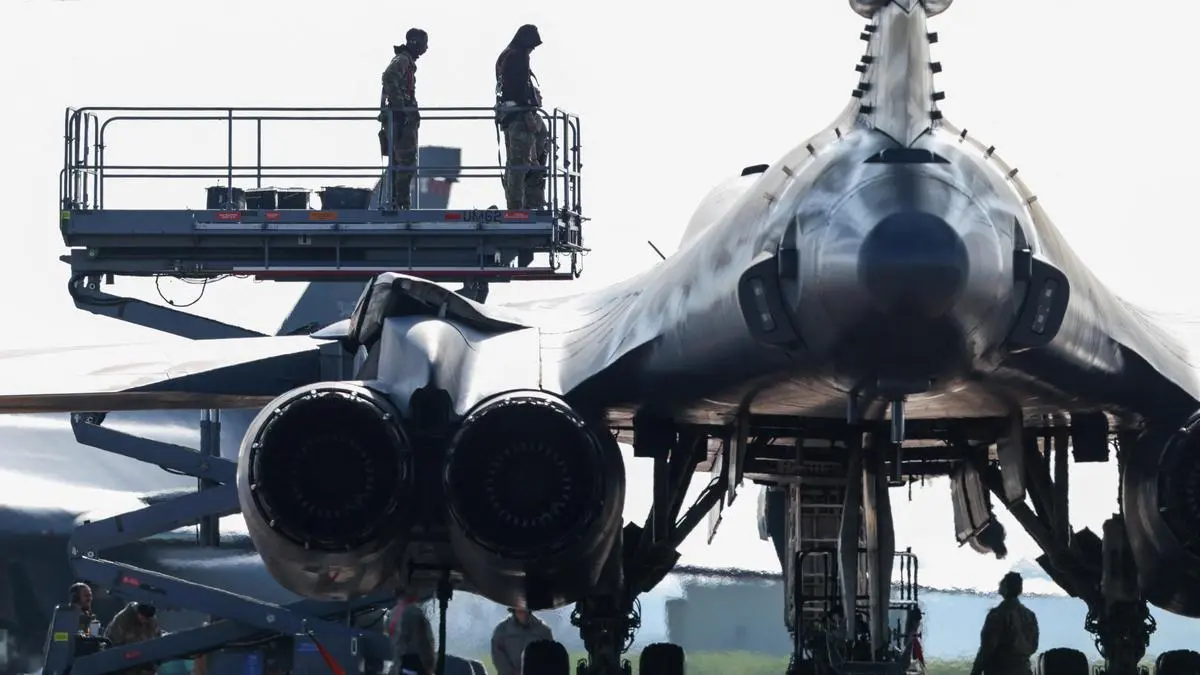
The strike on Natanz represents a evolution in how nations fight. We used to think of war as a front line—a place where two armies met. Today, the front line is a GPS coordinate. It is a line of code. It is a stealth profile so small it looks like a bird on a monitor until the moment the munitions release.
The technical mastery required to pull off such a strike is staggering. Natanz is protected by the S-300 surface-to-air missile system and various indigenous electronic warfare suites designed to "blind" incoming threats. To bypass these, an attacker must use a combination of electronic suppression and low-observable technology. It is a high-stakes game of "I see you, you don't see me."
But why now?
The timing is never accidental in the Middle East. Diplomacy is often a polite mask worn over a clenched fist. For months, negotiators in plush European hotel rooms have been arguing over percentages of enrichment and the lifting of sanctions. While the diplomats sipped sparkling water, the planners in Washington and Tel Aviv were looking at a different set of numbers. They were looking at the "breakout time"—the window of time it would take for Iran to amass enough highly enriched uranium for a single nuclear device.
When that window gets too small, the fist punches through the mask.
The Invisible Stakes
We often talk about "geopolitics" as if it’s a game of Risk played on a wooden board. It isn't. It is a series of ripples. When the bombs hit Natanz, the ripples moved through the oil markets, the halls of the United Nations, and the nervous systems of every civilian in the region.
Consider the perspective from Jerusalem. For the Israeli leadership, an Iranian nuclear weapon is not a political talking point; it is an existential threat. They remember history differently than we do in the West. They see a "red line" not as a metaphor, but as a border between survival and annihilation. This fear drives a level of audacity that leads to mid-air refueling missions and high-altitude penetrations of sovereign airspace.
Conversely, consider the view from Washington. The United States finds itself in a perpetual balancing act. It seeks to prevent a nuclear-armed Iran while simultaneously trying to avoid being dragged into another "forever war" in the desert. Supporting—or participating in—a strike like this is a massive gamble. It is a bet that a tactical setback for Iran will buy enough time for a strategic solution.
But bets can be lost.
The Human Echo
The most chilling part of the Natanz strike isn't the technology or the politics. It is the silence that follows. After the dust settles and the official statements are read by stone-faced announcers on state television, the world waits for the "other shoe."
In the neighborhoods of Isfahan, people look at the sky with a new kind of suspicion. They know that the facility nearby is a lightning rod. They know that when the giants fight, it is the earth that suffers. There is a specific kind of exhaustion that comes from living in a geography that the rest of the world treats like a laboratory for modern warfare.
We are told that these strikes are "precise." We are told that "collateral damage was minimized." These phrases are designed to make us feel better about the chaos. They suggest that war can be managed, like a business merger or a software update. But there is nothing managed about the heat of a blast or the panic of a blackout in a high-security zone.
The Architecture of Defiance
Reports suggest that the damage at Natanz is significant, yet Iran’s response has been a mix of fury and stubbornness. Almost immediately, officials announced they would not only rebuild but upgrade. This is the central paradox of the shadow war: every attempt to dismantle the program only seems to harden the resolve of those building it.
The Iranian government views Natanz as a symbol of national pride and technological sovereignty. To them, the airstrike is not a deterrent; it is a provocation that justifies further escalation. They see the West's "rules-based order" as a set of handcuffs designed to keep them permanent second-class citizens in the global hierarchy.
The technical reality is that you can destroy centrifuges, you can collapse tunnels, and you can burn blueprints. But you cannot un-learn the physics. You cannot bomb the knowledge out of the heads of the thousands of scientists and engineers who have dedicated their lives to the cycle.
A World Without Friction
The Natanz strike serves as a cold reminder that we are entering an era of "frictionless" conflict. In the past, mobilizing for a strike of this magnitude would take weeks of visible preparation. Today, the decision is made in a quiet room, a command is sent through a satellite link, and the sky explodes before the target even knows the planes have taken off.
This speed is terrifying. It leaves no room for the "cool-down" periods that used to prevent localized skirmishes from turning into global conflagrations. When the response time is measured in seconds, the margin for error disappears.
The desert around Natanz is quiet again now. The smoke has cleared, and the satellite passes show a charred scar where a ventilation shaft once stood. But the earth is still humming. Deep underground, away from the prying eyes of the drones, the survivors are picking up the pieces. They are clearing the shrapnel of the IR-6s, checking the seals on the surviving canisters, and starting the long, slow process of spinning up again.
The choir is muted, for now. But in the dark, the rhythm is already beginning to return.
The world watches the news and sees a win or a loss on a scoreboard of international power. But if you listen closely to the wind coming off the plateau, you hear something else. You hear the sound of a spring being coiled tighter and tighter, waiting for the moment the tension becomes too much for the metal to hold.
The sand eventually covers everything, but it cannot hide the heat that remains beneath the surface. For those who live in the shadow of the facility, the "news" isn't a headline. It is the vibration in their tea cups, the sudden glare on the horizon, and the knowledge that the desert is no longer a place of peace, but a stage for a play that never ends.
The lights in Isfahan flicker, then steady themselves. Life goes on, but the air feels thinner, as if the oxygen itself is being consumed by the friction of two worlds rubbing against each other until they spark.