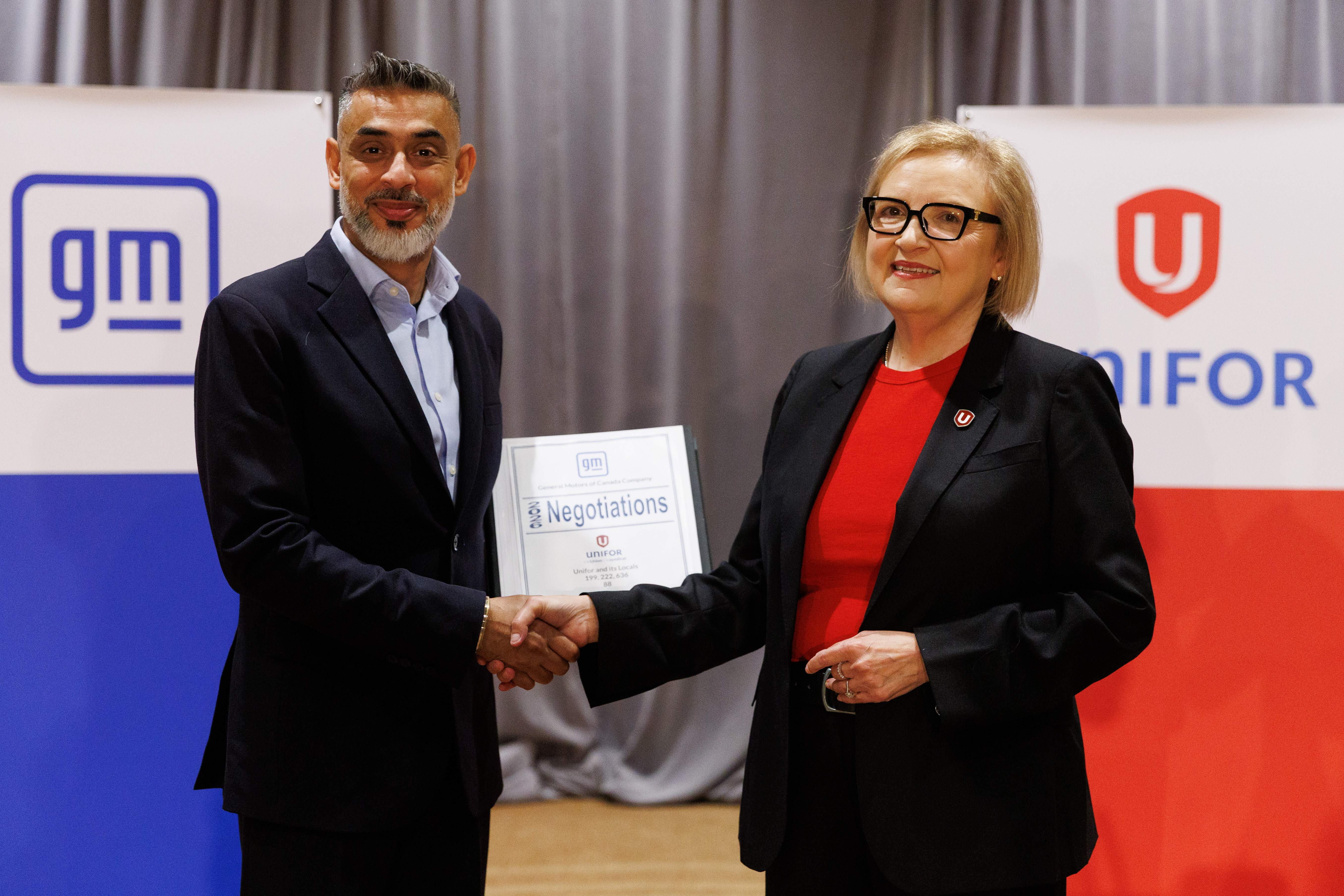
Getting a deal done in the current Canadian auto sector isn't for the faint of heart. When Unifor secured a tentative agreement with General Motors, it didn't just avert chaos. It sent a clear message about how labor negotiations operate when cross-border trade pressures are high.
More than 4,600 workers across Ontario are looking at major updates to their pay and benefits. If you follow the industry, you know these talks carried immense weight. Tariff threats loom large, and trade friction with the United States changes the math for every manufacturing floor. You might also find this related story interesting: The Secret Geopolitical Cost of South Korea Driving Ships Through the Melting North.
Let's break down what actually happened, what the deal means for the plants, and why this sets the stage for the rest of the Detroit Three.
The Anatomy of the GM Tentative Agreement
Negotiations kicked off on August 10, following a pattern agreement already established with Ford. Unifor used that exact template to lock down terms with General Motors. That strategy matters. Pattern bargaining stops automakers from playing Canadian plants against each other. As extensively documented in latest articles by Bloomberg, the implications are significant.
The agreement covers four key operational sites in Ontario:
- The Oshawa Assembly Plant
- The CAMI Assembly Plant in Ingersoll
- The St. Catharines Propulsion Plant
- The Woodstock Parts Distribution Centre
Unifor National President Lana Payne pointed out that these talks happened during some of the toughest economic conditions the union has ever faced. You can feel that pressure in the background details. Master Bargaining Chairperson Trevor Longpre explicitly called out tariff uncertainty and relentless U.S. trade aggression as major hurdles during the table discussions.
Despite those headwinds, the committee held the line.
What Workers Get and Why the Pattern Worked
Union members want stability above all else. When you have roughly thirty percent of a workforce sitting on temporary layoffs—as GM Canada did heading into these talks—pay increases alone won't cut it. Workers need to know their assembly lines will actually be running next year.
While full text details roll out ahead of the ratification votes scheduled for August 29 and 30, the core framework mirrors the Ford pattern. That means strong income gains, improved benefit structures, and structural protections designed to weather shifting EV adoption rates and market volatility.
People often underestimate how difficult it is to secure plant commitments when automakers look for ways to cut global costs. General Motors Canada President and Managing Director Jack Uppal noted that the agreement builds on existing investments in Canadian manufacturing, but getting those commitments down on paper took aggressive bargaining.
The Bigger Picture Across the Canadian Border
You cannot look at this agreement in isolation. The Canadian automotive manufacturing ecosystem faces a triple threat right now.
First, constant tariff threats from the United States create severe planning anxiety. Second, the future of the Canada-United States-Mexico Agreement remains a massive question mark. Third, cheap electric vehicles from overseas are starting to push into domestic markets.
Unifor's ability to lock down a deal with GM without striking proves that pattern bargaining remains an effective shield. By setting the standard with one automaker and forcing the others to match it, the union protects wages from eroding during inflationary spikes.
Next up on the docket is Stellantis. Watch that space closely. If the Ford and GM templates hold up, Stellantis will likely face a similar push from the union floor.
Mark your calendar for August 29 and 30. That is when the rubber meets the road, and the 4,600-plus workers decide whether this tentative agreement becomes official policy. Read your local union updates, check the exact benefit breakdowns, and vote.