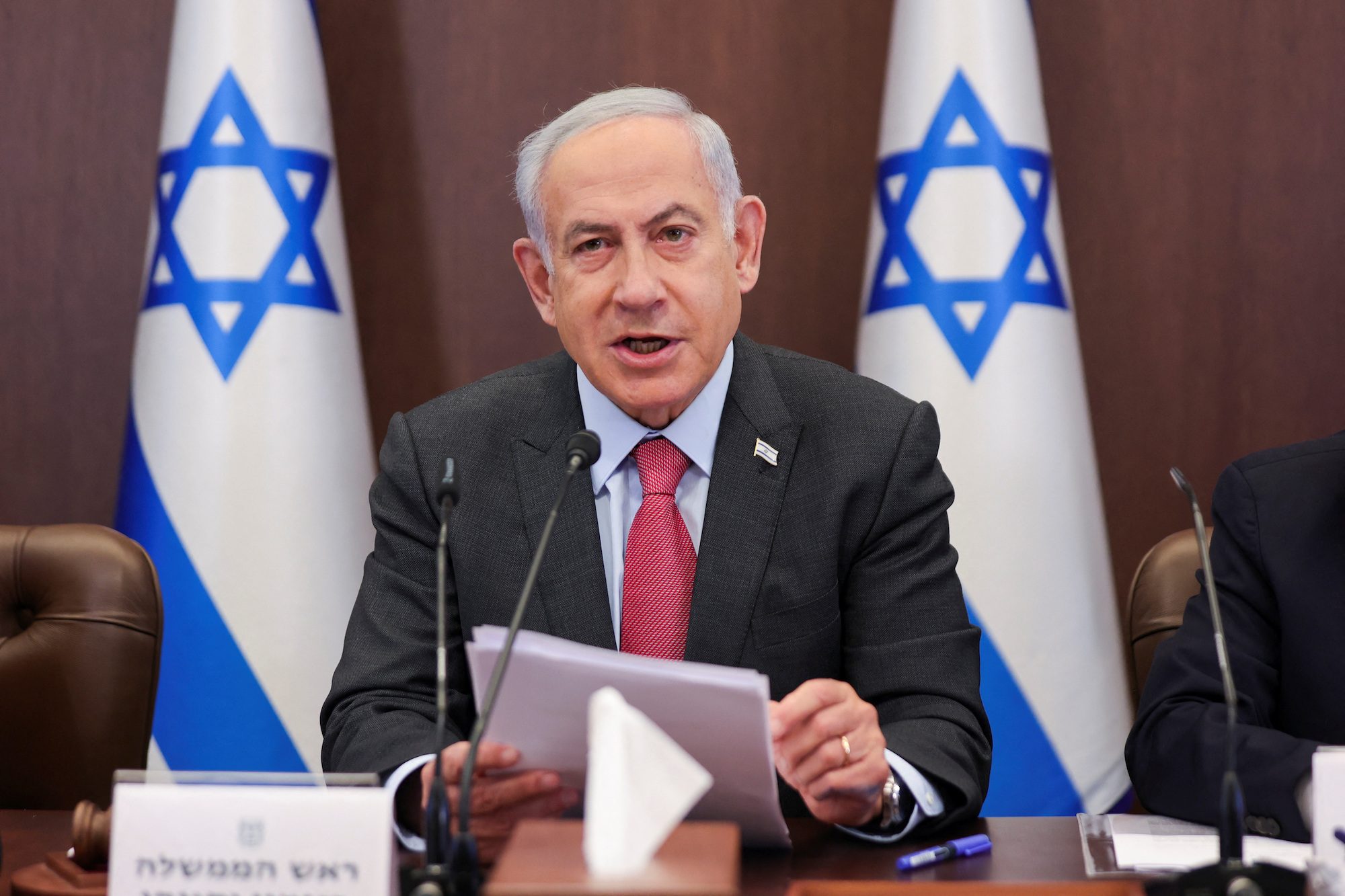
Benjamin Netanyahu insisted he had no intention of launching another attack on Iran ahead of Israel's October 27, 2026 Knesset election, yet the friction between public assurances and behind-the-scenes maneuvering told a far sharper story. Israeli media reports and diplomatic accounts from October revealed clashes between the prime minister and military leadership over directives that risked reigniting combat with Tehran before voters went to the polls, alongside efforts to rally Washington ahead of the U.S. midterms. Now that the October 27 vote has come and gone—leaving Netanyahu's coalition without a Knesset majority and handing opposition leader Gadi Eisenkot the mandate to attempt coalition-building—the pre-election pledge looks less like a settled doctrine and more like a tactical pause in a much longer struggle over war, timing, and political survival.
Anyone who has covered Middle Eastern security desks for three decades knows how to read a pre-vote denial. Politicians rarely announce an impending military strike weeks before a ballot unless they believe a show of force will instantly sweep away domestic liabilities. More often, they deny aggressive intentions while testing room to maneuver with generals, intelligence chiefs, and foreign allies.
The Gap Between Public Denials and Military Friction
Public statements from Jerusalem and the defense establishment in late October tried to project calm. Netanyahu denied reports of an imminent push for military action against Iran, and Israel's defense ministry pushed back against talk of fresh operations. Yet reporting from Israeli outlets and international newspapers painted a tense picture inside the security apparatus.
Channel 12 reported friction between Netanyahu and Israel Defense Forces Chief of Staff Lt. Gen. Eyal Zamir over a directive that could trigger an immediate escalation with Iran at a volatile moment, with Zamir reportedly asking for instructions in writing. Separate reporting from the Financial Times and CNN indicated that Netanyahu had sought U.S. backing for renewed strikes on Iran, only to run into resistance from President Donald Trump ahead of the November 3 U.S. congressional elections. Meanwhile, the IDF issued a carefully worded statement emphasizing that its decisions rest strictly on security, professional, objective, and national considerations—an institutional signal that stopped well short of echoing political denials.
When an army chief asks for sensitive directives in writing and the military releases a clinical statement on professional standards, the dispute is no longer theoretical.
That distinction matters. A prime minister can tell voters he is not seeking a new round of fighting before election day while still keeping contingency plans alive, pressing allies in Washington, or probing how far the military chain of command will bend. Calling a pre-election period "quiet" simply because no airstrike took place before October 27 misses the mechanics of how wartime leaders manage both calendars and commanders.
Why the Calendar Shaped Every Move in October
Timing was not a minor detail in the autumn of 2026. It was the central constraint shaping decisions in both Jerusalem and Washington.
In Israel, the October 27 legislative vote was the first national election since the October 7, 2023 attacks and the devastating war in Gaza that followed. Voters were weighing years of polarization, security failures, regional escalation, and Netanyahu's personal political standing. Launching a major new confrontation with Iran right before the vote carried unpredictable risks: retaliatory strikes on Israeli cities, disruption to daily life and economic activity, and accusations from rivals that national security was being bent to electoral calculations. Opposition figure Gadi Eisenkot explicitly warned against turning the IDF into a pawn in a political survival campaign.
At the same time, Washington had its own electoral clock ticking toward November 3. Following the major rounds of fighting with Iran in 2025 and early 2026—after which Netanyahu had boasted of shattering Tehran's uranium enrichment and ballistic missile capabilities—reopening large-scale combat in October collided with American political priorities. Even though Trump endorsed Netanyahu late in the Israeli campaign, reports indicated the White House was reluctant to ignite another major regional war days before U.S. midterm voting.
Two calendars collided:
- Israel's election calendar: Voters went to the polls on October 27 under the weight of unresolved security grievances and a fractured political map.
- America's midterm calendar: U.S. congressional elections on November 3 made Washington wary of fresh military escalation with Tehran right before Americans voted.
- The post-election transition: Once ballots were cast and counted, political leverage shifted toward coalition bargaining, caretaker governance, and emergency pressures.
A simplified comparison helps clarify why pre-election restraint differed from post-election dynamics. (The following table summarizes public claims alongside documented reporting from the period.)
| Dimension | Pre-Election Posture (October 2026) | Post-Election Reality (November 2026) |
|---|---|---|
| Official Framing | Denials of seeking a new strike before the vote | Ongoing discussions over Iran escalation and coalition formation |
| Political Stakes | Protecting pre-vote momentum and avoiding campaign disruption | Navigating a Knesset where Netanyahu's bloc lost its majority |
| External Alignment | Friction over U.S. reluctance ahead of November 3 midterms | Continued U.S.-Israel military coordination amid regional pressure |
| Civil-Military Tension | Disputes over directives and political use of the IDF | Scrutiny over emergency powers, unity talks, and timing |
What "Attacking Iran Again" Actually Means After 2025 and 2026
To understand why talk of another strike carries such weight, you have to look at what has already happened. This was not a cold war frozen in place since 2023. Israel and the United States had already waged major military campaigns against Iran in 2025 and the spring of 2026.
Following those earlier operations, Netanyahu proclaimed historic gains, asserting in March 2026 that Israeli and American strikes had destroyed Iran's capacity to enrich uranium and manufacture ballistic missiles. Yet arguments for striking again—or maintaining intense pressure—expose a built-in contradiction in triumphalist wartime rhetoric. If a prior campaign permanently eliminated a threat, why would renewed strikes still be contemplated months later? Conversely, if remnants of missile production, nuclear infrastructure, air defenses, or regional proxy networks survive or reconstitute, then "victory" was never final.
Military planners rarely view regional conflicts as neat chapters with a final period at the end. Even after heavy blows, adversaries adapt, disperse assets, repair facilities, or shift tactics across neighboring fronts. By mid-November 2026, reports of CENTCOM chief Adm. Brad Cooper meeting with Zamir, Mossad chief Roman Gofman, and top Israeli operations and planning officers underscored that Iran remained front and center in operational planning, even as political leaders argued over timing and necessity.
That is the gray area that superficial reporting often misses. A leader can claim past strikes were decisive while simultaneously arguing that new strikes are needed to lock in gains or prevent recovery. Both claims cannot be simultaneously true in an absolute sense, yet politicians routinely hold both in reserve depending on the audience and the moment.
The Survival Calculus Behind Wartime Politics
No serious analysis of Netanyahu's strategic choices can ignore domestic politics. For years, critics and political rivals have argued that his decisions around war and peace are inseparable from his hold on power, his ongoing corruption trial, and his international legal exposure, including the International Criminal Court arrest warrant issued in 2024 over the Gaza war.
Supporters counter that tough action against Iran is a core national security imperative driven by existential threats from Tehran, not personal survival. Both arguments deserve examination without caricature. A prime minister can genuinely believe Iran poses a grave danger while also recognizing that external crises reshape domestic coalitions.
After the October 27 election, Netanyahu's bloc fell short of a Knesset majority, and opposition leader Gadi Eisenkot received the mandate to try to form a new government. Critics in the anti-Netanyahu camp warned that pushing for a renewed confrontation with Iran could create a state of emergency strong enough to force a national unity government that keeps Netanyahu anchored in power. Reports that Netanyahu discussed a possible resumption of attacks on Iran with Eisenkot, while Eisenkot cautioned against unnecessary military moves before a government is formed, highlight how sharply defense policy and coalition arithmetic are intertwined.
Consider a hypothetical example to see how emergency dynamics work in parliamentary politics. Suppose a caretaker prime minister has lost a narrow parliamentary majority and faces a rival trying to assemble an opposing coalition. If a major external crisis erupts on the eve of coalition bargaining, parties that might otherwise refuse to sit together sometimes feel pressured to rally around a war cabinet or unity arrangement. That mechanism does not prove every military proposal is politically manufactured, nor does it mean generals will simply salute and march. It does explain why opposition leaders watch every security warning with intense suspicion.
Generals, Allies, and the Limits of Executive Will
One common mistake in coverage of Israeli politics is treating the prime minister as an omnipotent actor who simply decides to strike and watches the state obey. In reality, major military operations against Iran depend on several moving parts that no single leader controls completely.
First comes the IDF high command. Senior officers bear operational responsibility for force readiness, air and missile defense interception capacity, potential multi-front spillover in Lebanon, Gaza, or Syria, and the toll on troops already stretched by prolonged conflict. When a chief of staff signals caution or asks for written directives, that creates friction inside the chain of command.
Second comes Washington. Major campaigns involving Iran have relied heavily on U.S. military coordination, intelligence, diplomatic cover, and air-defense support. Even a closely aligned U.S. administration has its own domestic politics, regional priorities—such as outreach to Gulf states—and tolerance for escalation.
Third comes Iranian reaction. Every strike carries the risk of asymmetric retaliation, miscalculation, or escalation across multiple theaters. A calculation that looks manageable on paper in a war room can spiral quickly once missiles fly and regional actors respond.
Reading Between the Lines of Future Denials
The headline claim that Netanyahu was not seeking to attack Iran again before the election captures a surface moment in a much deeper story. Before October 27, restraint made sense given U.S. midterm sensitivities, domestic campaign risks, and military pushback. After the election, the questions shifted to coalition negotiations, emergency pressures, and ongoing military coordination with Washington.
For readers trying to separate spin from substance in future coverage, watch what happens next in three specific places: whether written directives and formal cabinet approvals align with public rhetoric, how U.S. officials calibrate their posture in the region, and whether Knesset coalition talks produce a stable government or prolong a high-stakes standoff. When leaders say they are not seeking war right now, the real test is always what they do the day after the political clock moves forward.