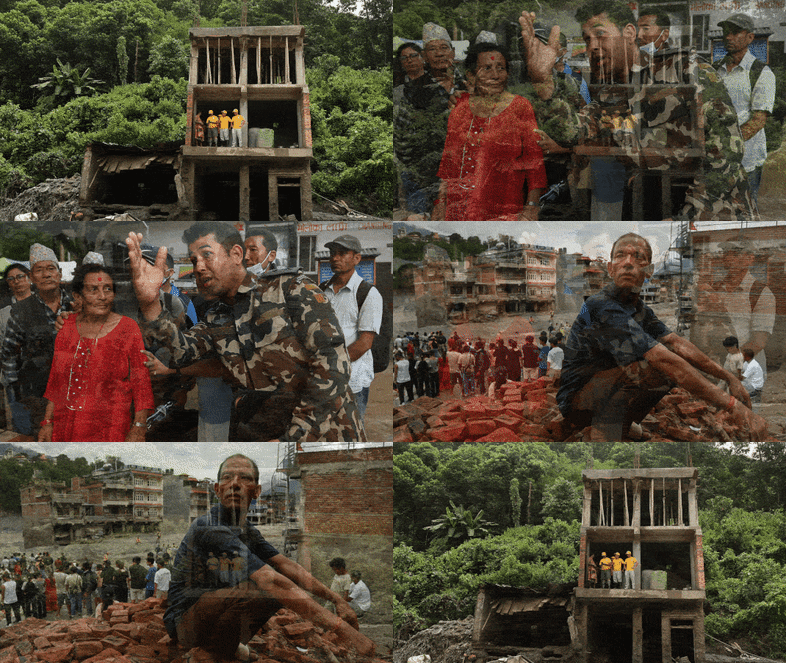
Entire communities don't vanish overnight. They get buried slowly. Then the monsoon arrives and finishes the job.
If you travel through the rural corridors of Nepal right now, you won't just see picturesque mountain passes. You will see once-thriving trading posts turned into dead zones of gray sludge. Heavy rains trigger massive sediment flows. These mudslides swallow homes, choke rivers, and leave once-busy commercial hubs looking like active war zones.
People think natural disasters are purely acts of God. They aren't. Years of unscientific road construction, unchecked deforestation, and shifting weather patterns created this catastrophe. Let us look at what is actually happening on the ground and why ignoring these mud-choked towns will cost the country its future.
The Human Cost Behind the Sludge
Walk through areas hit by recent slope failures and flash floods, and the silence hits you first. Shops are shuttered. Doors are caked in three feet of dried silt. Locals spend their days shoveling muck out of their living rooms with plastic buckets.
The economic engine of these hill towns relies entirely on foot traffic, seasonal tourism, and local agriculture. When the trails wash out and bridges snap, towns like Melamchi or various settlements along the Araniko Highway turn into islands. Tourists cancel bookings. Farmers cannot get their cardamom or citrus crops to regional markets.
Income drops to zero. Families pack up whatever they can carry and migrate to the already crowded slums of Kathmandu. They become climate refugees in their own country.
Why Unscientific Roadbuilding Fuels the Crisis
Local politicians love handing out contracts for rural dirt roads. Bulldozers tear into fragile mountain slopes without proper geological surveys or drainage systems.
This practice is called dozer culture. Contractors carve roads into unstable hillsides just to show voters they brought development. They dump loose excavated soil straight down the slope. The first heavy monsoon rain turns that loose earth into a slurry of destruction.
The Chain Reaction of Slope Failure
- Deforestation: Roots no longer hold the topsoil together after decades of clearing for timber and firewood.
- Improper Drainage: Rainwater pools on newly cut terraces, soaking into the earth like a sponge until the slope gives way.
- River Bed Sinking: Tons of washed-down sediment raise the riverbeds, causing water to spill over banks during standard seasonal storms.
Geologists have warned about this for decades. Yet, local governments keep prioritizing cheap, fast road expansion over sustainable engineering. The hills are literally falling apart because short-term political wins trump long-term safety.
What Real Recovery Actually Requires
Fixing this mess takes more than handing out bags of rice after a disaster. Nepal needs an immediate policy shift on how infrastructure gets built in fragile mountain zones.
First, stop building roads with bulldozers. Mandate proper retaining walls, bio-engineering with deep-rooting local grasses, and professional geotechnical assessments before a single machine touches a hill.
Second, invest in early warning systems that actually work. Sirens and SMS alerts save lives, but only if communities know evacuation routes. Many rural towns lack safe high ground.
Finally, hold local officials accountable for environmental compliance. When a poorly planned road causes a catastrophic mudslide, the cost shouldn't fall entirely on the families living at the bottom of the valley.
The mud isn't going away on its own. Unless policies change fast, the map of rural Nepal will keep losing its most vibrant dots, replaced forever by silent wastelands.