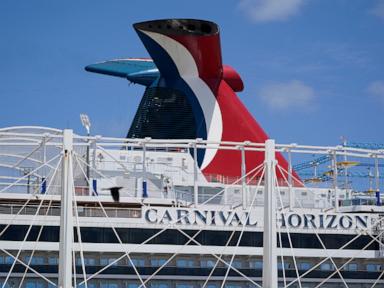
The modern cruise ship is a floating city of enforced joy. Neon lights paint the deck at midnight. The bass from a pool-deck party vibrates through the steel hull, masking the sound of the ocean below. For thousands of travelers, these massive vessels represent the ultimate escape—a frictionless paradise where the outside world ceases to exist.
But when the music stops, the isolation of the sea changes from a luxury into a cage.
A family boards a ship looking for a shared memory. Instead, they fracture. What happens when a teenage vacation morphs into a criminal investigation in the middle of the ocean? The transition is instant. It is terrifying. The bright, sterile corridors of a pleasure liner suddenly mirror the cold hallways of a courthouse, and a family is left to navigate a tragedy that offers no easy answers.
The Night the Music Stopped
Eighteen-year-old Zion Vance sat in a federal courtroom, stripped of the tropical warmth of a Caribbean cruise. He faced a magistrate judge, handcuffed, listening to charges that would reshape the rest of his life. The accusation was heavy, suffocating: the second-degree murder of his 15-year-old stepsister, a girl whose name was woven into the very fabric of his domestic life.
The setting of the alleged crime was the Carnival Elation. It is a vessel designed for family bonding, a labyrinth of water slides, buffets, and staterooms. But on a night meant for relaxation, within the cramped confines of a cabin, something went horribly wrong.
Consider the physical reality of a cruise ship cabin. Space is a premium. Walls are thin. Every sound carries, yet the overwhelming white noise of the ship’s engines can drown out a crisis. According to investigators, an argument escalated. Words turned into physical violence. By the time security was alerted, a 15-year-old girl was dead, and her stepbrother was placed in a holding cell deep within the bowels of the ship.
The contrast is jarring. Upstairs, passengers were likely ordering late-night room service or planning their excursions for the next port of call. Downstairs, a family’s reality had utterly collapsed.
The Long Road Back to Land
When a crime occurs on land, the machinery of justice moves predictably. Sirens wail. First responders arrive within minutes. The yellow tape goes up, and the suspects are taken to a local precinct.
At sea, jurisdiction becomes a complex, swirling vortex.
The Carnival Elation was navigating international waters when the incident occurred. This triggers a specific, rigid legal framework. Under federal law, the United States claims jurisdiction over crimes committed by or against American citizens on the high seas. The FBI becomes the primary investigative body. But the FBI cannot simply pull over to the side of the road.
For days, the ship had to sail on. Imagine the psychological weight carried by the passengers and crew who knew what had transpired. The vessel became a floating crime scene, moving at eighteen knots toward Jacksonville, Florida. The suspect remained detained in a secure room, isolated from the vacationers who continued to tan on the decks above him.
The ship finally docked. The illusion of the vacation evaporated completely. Federal agents boarded the vessel, stepping past the luggage lines and the sun-baked tourists to take an eighteen-year-old into custody. The transition from the jurisdiction of the captain to the jurisdiction of the United States federal court system was complete.
The Weight of Pretrial Detention
In a standard criminal case, bond is a primary point of discussion. Defense attorneys argue for their clients to await trial at home, surrounded by family, wearing an ankle monitor if necessary.
But federal prosecutors viewed Zion Vance through a different lens. They saw a flight risk. They saw the gravity of a life taken.
During the initial court appearance in Jacksonville, the prosecution made their stance clear: Vance should remain behind bars until his trial begins. The argument for detention in federal cases often hinges on two factors: the danger the defendant poses to the community and the risk that they will flee. When the victim is a member of the defendant’s own household, the concept of "community danger" takes on a devastating, intimate meaning.
The judge listened to the arguments, weighing the liberty of a young man against the severity of a homicide charge. The decision to detain a teenager without bond is never made lightly, yet the federal system is notoriously stringent. For Vance, the immediate future holds no return to normalcy. The neon lights of the cruise ship have been replaced by the fluorescent glare of a federal holding facility.
The Invisible Stakeholders
Behind every headline lies a wreckage that numbers and legal jargon fail to capture. We talk about the defendant and the victim, but we rarely speak of the parents.
Think about the position of the mother and father in this scenario. They boarded a ship with their children, anticipating photographs, laughter, and a break from the grind of daily life. They returned to land having lost a daughter to violence and a son to the legal system. They are caught in an unimaginable crossfire of grief and loyalty. How do you mourn a daughter when your son is the one accused of taking her life?
The emotional math does not add up. There is no comfort to be found in the legal proceedings, no resolution that brings back the life that was lost. The courtroom becomes a place of cold accounting, where human emotion is stripped away to make room for evidence, timelines, and statutory requirements.
The defense will likely look into the psychology of the moment. Was there a history of conflict? Was it an accident borne of teenage volatility? These questions will be picked apart by lawyers over the coming months. But for the family, the answers matter less than the permanent vacancy at their dinner table.
A System Without Sympathy
The federal legal system is an immense, slow-moving machine. It does not pause for shock, and it does not bend for youth.
As the case against Zion Vance moves forward, the grand jury process will dictate the formal indictment. If convicted of second-degree murder in the special maritime jurisdiction of the United States, Vance faces the potential of life in prison. The law treats crimes on the high seas with a unique severity, a legacy of historical maritime laws designed to maintain absolute order on isolated vessels.
The defense will fight for a reduced charge, perhaps manslaughter, arguing a lack of premeditation or malice aforethought. They will try to paint a picture of a young life that can still be redeemed. The prosecution will counter with the brutal finality of the victim's injuries.
Meanwhile, the Carnival Elation has already wiped down its cabins, changed the linens, and welcomed a new cohort of travelers. The music has started up again on the pool deck. The ship has sailed back out into the Atlantic, leaving the tragedy behind in a Florida courtroom.
The contrast remains the most haunting element of the entire affair. A place designed exclusively for the creation of happy memories became the setting for a permanent nightmare. A young girl’s life ended in the middle of an ocean, and a young man sits in a cell, waiting for a trial that will decide whether he ever sees the open sky as a free man again.