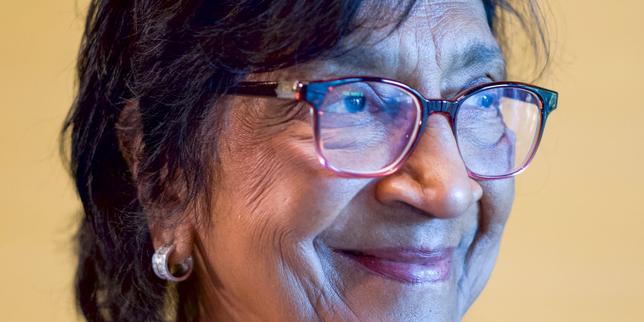
When the Norwegian Nobel Committee awarded the 2026 Nobel Peace Prize to Navanethem "Navi" Pillay, the backlash started before the ink on the citation was even dry. Critics—including Israeli officials who fiercely rejected her work—pointed straight to her leadership of the UN Independent International Commission of Inquiry on the Occupied Palestinian Territory, which concluded in September 2025 that Israel had committed genocide in Gaza. Accusations of bias, partiality, and antisemitism have dogged UN human rights bodies for years, and Pillay hasn't been spared.
Here's the thing you have to understand about Pillay, though. She didn't just wake up one morning and decide to throw around the word "genocide" for headlines.
Long before Gaza dominated global news, Pillay spent decades actually defining, prosecuting, and interpreting international law on mass atrocities. Born in South Africa in 1941 under apartheid, she started out as a lawyer defending anti-apartheid activists and political prisoners—including Nelson Mandela. Later, she became the first woman of color on South Africa's High Court, served as a judge on the International Criminal Tribunal for Rwanda (ICTR), sat on the International Criminal Court (ICC), served as UN High Commissioner for Human Rights, and sat as an ad hoc judge at the International Court of Justice (ICJ) in The Gambia v. Myanmar. When she says she knows what constitutes the crime of genocide under international law, she isn't speaking as a casual activist. She's speaking as a jurist who helped build the modern jurisprudence around it.
Why Navi Pillay Draws Fierce Accusations of Bias
If you follow international politics closely, you've probably seen how quickly debates over Gaza turn into proxy fights over the credibility of UN institutions. When Pillay's UN commission published its 72-page legal analysis in September 2025 finding that Israel committed genocide against Palestinians in Gaza, the reaction was explosive.
Israeli officials dismissed the findings outright, arguing that the commission operates with a structural bias against Israel and ignores the context of the October 7, 2023 Hamas attacks—which killed around 1,200 people, mostly civilians, and saw 251 taken hostage—as well as Israel's right to self-defense. Some critics and commentators also argued that labeling Israel's military campaign a genocide crosses a legal and moral line, especially while cases before the ICJ remain ongoing and require rigorous proof of specific intent (dolus specialis).
Even the Nobel decision itself stirred sharp debate. Supporters, including major human rights organizations and UN leadership, saw the award as a defense of international law and judicial independence at a moment when powerful states increasingly push back against international courts. Detractors viewed it as a political statement that validated contested conclusions rather than neutral peacemaking.
Honestly, pretending those tensions don't exist would be naive. International law doesn't operate in a vacuum, and accusations of partiality against UN inquiries have real political weight. Yet dismissing Pillay solely through the lens of political pushback misses how legal determinations of genocide actually work.
How International Law Actually Defines Genocide
People throw the word "genocide" around in everyday arguments all the time. In a courtroom or a legal commission, though, it has a strict, narrow meaning under the 1948 Genocide Convention.
Article 2 of the Convention defines genocide as specific acts committed with the intent to destroy, in whole or in part, a national, ethnical, racial, or religious group, as such. Those underlying acts—known legally as actus reus—include:
- Killing members of the group.
- Causing serious bodily or mental harm to members of the group.
- Deliberately inflicting conditions of life calculated to bring about the group's physical destruction in whole or in part.
- Imposing measures intended to prevent births within the group.
- Forcibly transferring children of the group to another group.
In its September 2025 report examining conduct between October 7, 2023 and July 31, 2025, Pillay's UN Commission of Inquiry concluded that Israeli forces engaged in four of those five categories: killings, serious bodily or mental harm, deliberately inflicting destructive living conditions, and measures intended to prevent births. To support those findings, the commission pointed to massive civilian casualties and injuries, widespread displacement, damage to healthcare facilities and aid distribution, and strikes affecting reproductive healthcare—such as the December 2023 strike on Gaza's al-Basma IVF clinic, which reportedly destroyed roughly 4,000 embryos.
The Hardest Hurdle Is Intent
Here's where a lot of public confusion creeps in. Proving horrific civilian harm, displacement, or war crimes isn't the same thing as proving genocide. A military campaign can be devastating, disproportionate, or unlawful under international humanitarian law without legally meeting the threshold of genocide unless specific genocidal intent is established.
In its analysis, Pillay's commission argued that genocidal intent could be inferred from the pattern of conduct alongside public rhetoric by certain Israeli officials and lack of accountability for inflammatory statements or abuses. By contrast, Israel maintains that its military operations targeted Hamas militants and infrastructure rather than seeking to destroy the Palestinian people as a group, framing the conflict as an act of self-defense after October 7.
That clash—between a legal commission pointing to patterns of harm and rhetoric as evidence of intent, and a state insisting its objective was security and dismantling Hamas—is the exact fault line driving the global argument.
What Pillay's Record at Rwanda and the UN Tells Us
If you want to understand why Pillay pushes back so firmly against accusations that she doesn't grasp the gravity of the label, look at her judicial track record in the 1990s.
At the International Criminal Tribunal for Rwanda, Pillay helped adjudicate cases arising from the 1994 Rwandan genocide. Most famously, in the 1998 Akayesu judgment, the tribunal broke new legal ground by recognizing that rape and sexual violence could constitute acts of genocide when committed with the intent to destroy, in whole or in part, a targeted group. That wasn't a rhetorical stretch; it was a foundational legal precedent that reshaped international criminal law forever.
Later, as UN High Commissioner for Human Rights and as an ad hoc judge on the ICJ in The Gambia v. Myanmar, Pillay spent years examining state obligations under the Genocide Convention. When she talks about the legal elements of genocide, she isn't learning the definitions on the fly.
Still, legal experts and political analysts draw an important distinction between a UN Commission of Inquiry report and a final binding judgment by the International Court of Justice. A UN commission investigates, gathers evidence, and issues legal findings on state responsibility. The ICJ is the principal judicial organ of the United Nations that adjudicates inter-state disputes under the Genocide Convention, a process that typically takes years of evidentiary review and legal briefing. Recognizing that distinction helps keep the debate grounded: a commission's conclusion carries serious legal and moral weight, while final adjudication by an international court is a separate, longer process.
Practical Ways to Read Coverage of Gaza and Genocide Claims
When headlines clash over words like "genocide," "partiality," and "Nobel Peace Prize," it's easy to get pulled into whichever side yells loudest. If you want to cut through the noise and judge claims on their actual merits, a few habits make a real difference:
- Read primary legal summaries, not just hot takes: Look up the actual summary or press release from the UN Independent International Commission of Inquiry alongside official responses from the government of Israel and independent legal scholars. Seeing how each side defines intent clarifies why they reach opposite conclusions.
- Separate war crimes from genocide: Check whether a source is talking about violations of the laws of war (such as attacks on civilians or protected infrastructure) or the specific legal test for genocide under Article 2 of the Genocide Convention. Conflating the two obscures both the law and the facts on the ground.
- Check institutional roles carefully: Keep track of who is speaking—a UN investigative commission, a Nobel committee citing a career of human rights advocacy, an international court hearing a case, or a government defending its security policy. Each has a different mandate and authority.
- Watch for one-sided framing on either end: Be skeptical of commentary that treats any UN report as infallible or treats any criticism of military conduct as automatic antisemitism, just as you should be skeptical of commentary that waves away documented civilian suffering or ignores the October 7 attacks. Serious accountability depends on holding every claim to real evidence and clear legal standards.


