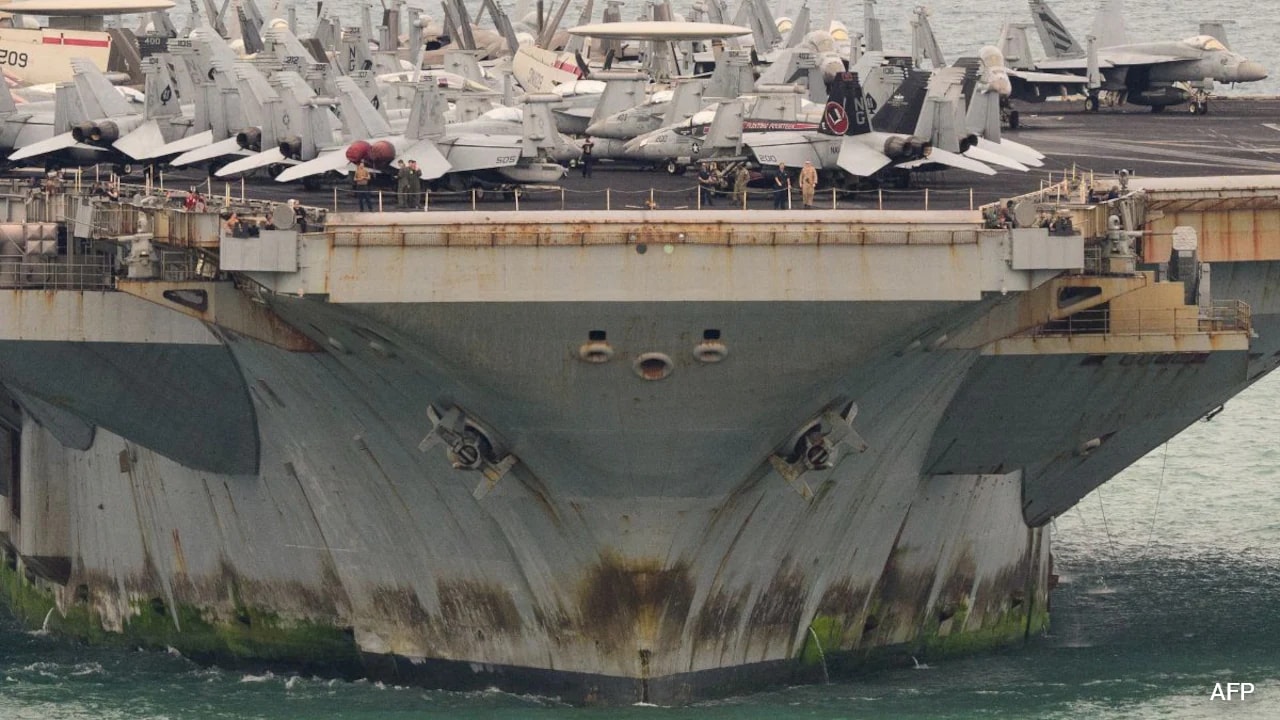
The operational tempo of modern naval power projection relies on a fragile equation between mechanical limits and political signaling. When a Nimitz-class nuclear-powered aircraft carrier completes an extended deployment to a high-threat zone like the Strait of Hormuz, visible exterior degradation such as heavy hull corrosion is not merely an aesthetic failure. It is the primary indicator of systemic maintenance neglect, material fatigue, and deferred structural preservation. Surface rust manifests when high-salinity marine environments overwhelm protective coating systems that cannot receive proper upkeep during high-tempo combat patrols.
Analyzing the condition of a capital ship returning from prolonged regional deterrence missions requires moving past sensationalized descriptions to evaluate three core variables: environmental degradation vectors, maintenance throughput capacity, and personnel operational fatigue. Each variable interacts to create compounding liabilities that degrade overall fleet readiness.
The Environmental Degradation Vectors
High-temperature, high-salinity bodies of water accelerate electrochemical oxidation on exposed steel surfaces at exponential rates. Naval vessels utilize multi-layer coating systems, including zinc-rich primers, epoxy barriers, and ablative non-skid decks, to isolate high-tensile steel hulls from sea water. When an aircraft carrier operates continuously under high-threat conditions, standard preventive maintenance routines break down.
Crew members must prioritize immediate combat readiness, propulsion engineering, and tactical watchstanding over cyclical preservation tasks like chipping, priming, and painting. Without routine touch-ups, minor breaches in the coating system allow salt water to penetrate to the bare metal. Once subsurface oxidation begins, it expands beneath the paint film, causing rapid blistering and widespread rust streaking.
Beyond exterior oxidation, internal mechanical systems experience accelerated wear. Evaporators, salt water cooling lines, and electronic sensors ingest warm, mineral-rich water, leading to scaling and corrosion within closed-loop machinery. The accumulation of these minor environmental stressors creates a heavy backlog of technical deficiencies that cannot be resolved while the ship remains underway.
The Maintenance Throughput Bottleneck
A capital warship returning from an extended deployment enters a tightly regulated industrial ecosystem governed by public naval shipyards and private dry-dock facilities. The structural degradation visible on the hull exterior serves as a reliable proxy for the invisible, deep-system wear accumulated within the reactor spaces, catapult mechanisms, and arresting gear.
Depot-level maintenance windows are scheduled years in advance, adhering to a strict force-generation model. When geopolitical crises force extended deployments, ships routinely exceed their maximum operational months between major overhauls. This disruption cascades through the entire naval maintenance schedule.
- Dry-dock availability: Public shipyards operate at near-maximum capacity, meaning a delayed carrier disrupts the docking schedule for subsequent strike groups.
- Component replacement lead times: Specialized marine-grade steel components, pumps, and valve assemblies often require extended procurement cycles, turning routine repairs into protracted overhauls.
- Skilled labor constraints: The industrial workforce supporting naval overhauls faces persistent shortages in specialized trades such as certified welders, electricians, and nuclear-qualified technicians.
When a vessel returns from a deployment displaying severe exterior wear, it signals that the ship has operated far past the optimal point of its maintenance cycle, forcing the upcoming shipyard period to expand in both cost and duration to address discovered structural defects.
The Human Factor and Operational Fatigue
Material degradation is mirrored by the cognitive and physical exhaustion of the crew. Extended deployments impose relentless operational tempos characterized by general quarters drills, flight deck operations in high ambient temperatures, and continuous threat monitoring.
Watch rotations under high-stress conditions degrade decision-making capacity and increase the incidence of preventable maintenance oversights. When sailors are consumed by the immediate demands of force protection and flight schedules, the rigorous execution of technical manuals and preventive maintenance systems suffers. This operational pressure creates a feedback loop: fatigued crews miss early indicators of mechanical or structural wear, which leads to accelerated equipment degradation, requiring even more intensive labor once the ship finally reaches port.
Strategic Forecast and Resource Allocation
The visible rust on a returning carrier hull represents the downstream cost of maintaining global deterrence presence with a finite number of hulls. The strategic tension between continuous regional presence and long-term fleet preservation cannot be resolved through increased operational tempo alone.
To mitigate structural and mechanical exhaustion, fleet command structures must enforce strict adherence to deployment caps, insulate maintenance funding from operational budget raids, and expand public shipyard modernization programs. Without these structural adjustments, future deployments will yield diminishing returns, trading long-term naval capability for short-term political signaling.