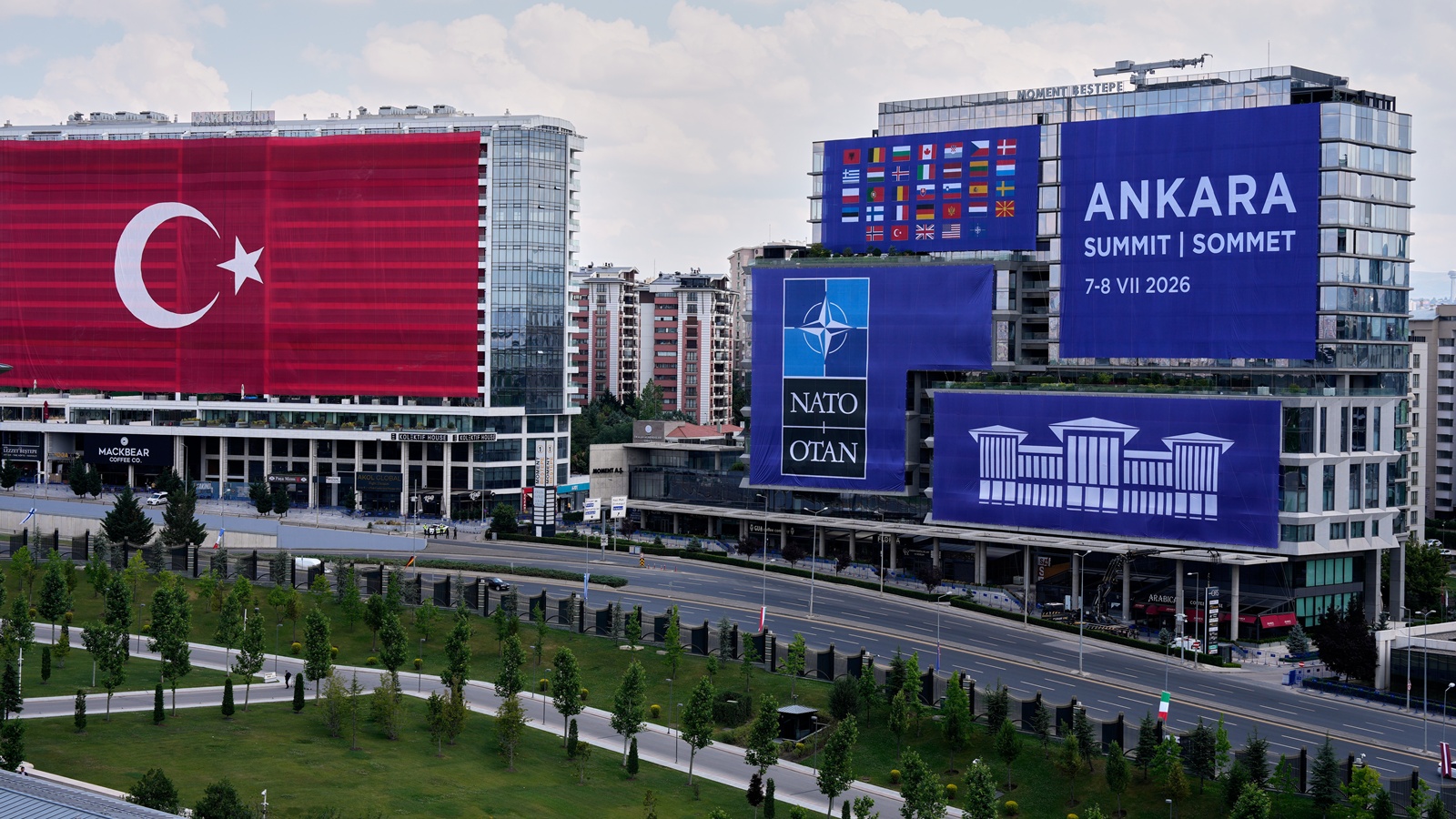
The mainstream media is already printing the press releases for the 2026 NATO Summit. You know the narrative by heart. Leaders will gather, stand in front of a wall of flags, and issue a communique packed with lofty rhetoric about "unwavering unity," "integrated deterrence," and the pressing need to expand defense budgets to 2.5% of GDP.
It is a comfortable, expensive fiction.
The lazy consensus among foreign policy pundits is that NATO is stronger, larger, and more vital than ever. They point to Finland and Sweden’s recent integrations as proof of a revitalized alliance. They treat the summit as a masterclass in modern geopolitical strategy.
They are wrong.
Behind the choreographed handshakes and the sterile policy papers lies a grim reality: NATO is facing an existential operational crisis precisely because it is choosing bureaucratic expansion over hard military capability. By treating alliance membership as a badge of moral solidarity rather than a cold calculation of military logistics, the alliance has extended its security guarantees to a breaking point.
I have spent years analyzing defense procurement cycles and institutional military readiness. The math does not check out. The 2026 summit is not a demonstration of strength. It is a desperate attempt to paper over structural cracks with diplomatic wallpaper.
The Myth of the 2% GDP Solution
Let’s start with the favorite metric of the defense establishment: defense spending as a percentage of GDP. The current consensus screams that if every member state just hits the magic 2% or 2.5% threshold, Western security is guaranteed.
This is a fundamentally flawed metric that measures input instead of output. It is entirely possible—and indeed common—for a nation to spend billions of dollars on defense without adding an ounce of actual combat power.
Consider how European defense budgets are actually allocated.
- Personnel Costs: A massive chunk of Western European defense spending goes toward pensions, salaries, and administrative overhead. You cannot fire a pension at an advancing armored division.
- Bespoke Procurement: Instead of mass-producing standardized hardware, European nations routinely insist on developing their own sovereign defense platforms to protect domestic union jobs. The result is a fragmented logistical nightmare.
- The Interoperability Lie: The alliance boasts about its shared standards, but in a high-intensity conflict, a German mechanic cannot easily service a French fighter jet, and British artillery shells do not always play nice with Italian logistics chains.
When Gen. Christopher Cavoli or other top NATO commanders talk about readiness, they are looking at the raw numbers of deployable, high-readiness brigades. The truth? Spending 2% of GDP on a bloated, unionized domestic defense industry that produces twelve high-tech tanks a year is worse than spending 1.2% on standardized, mass-produced munitions. NATO does not have a spending problem; it has an execution problem.
The Expansion Trap: More Flags, Less Security
Every time a new country joins the alliance, the foreign policy establishment applauds. They view it as a victory for the "rules-based international order."
In the real world, adding members without a corresponding, exponential increase in logistical infrastructure is an act of strategic reckless abandonment. Article 5 is not a magical shield; it is a promise of total war. When you extend that promise to nations sitting directly on the geographic fault lines of major adversaries, you are not deterring conflict—you are shortening the fuse.
Imagine a scenario where a localized, ambiguous cyber and hybrid attack disables the electrical grid of a Baltic state. Under the current bloated framework, a consensus-based organization of over 30 nations must unanimously agree to trigger a military response.
- What happens when Hungary hesitates?
- What happens when a domestic political crisis in Washington slows down the decision-making loop by 48 hours?
- What happens when Turkey decides to use its veto as leverage for an unrelated regional dispute?
By expanding the defensive perimeter while maintaining a consensus-driven decision-making model, NATO has guaranteed paralysis. The alliance has traded depth for surface area. It is now a mile wide and an inch deep.
The Industrial Reality vs. The Digital Illusion
The upcoming summit will undoubtedly feature a panel on AI, autonomous drones, and cyber warfare. The tech-optimists will argue that silicon can replace steel. They want you to believe that software-defined warfare will allow smaller, tech-forward militaries to leapfrog traditional industrial requirements.
This is a dangerous delusion pushed by defense tech startups looking for venture capital.
The war in Ukraine has brutally demonstrated that modern, high-intensity conflict is still an industrial war of attrition. It consumes artillery shells, air defense interceptors, and armored vehicles at a rate that Western supply chains cannot sustain.
Look at the hard data from the Royal United Services Institute (RUSI) or any realistic assessment of the European defense industrial base. The United States and its allies have spent decades optimizing their defense industries for just-in-time logistics and low-rate initial production. We build exquisite, hyper-expensive weapon systems designed for short, asymmetric interventions against non-state actors.
We do not build for mass.
- If a peer-to-peer conflict breaks out tomorrow, Western forces will run out of precision-guided munitions in a matter of weeks, if not days.
- The factories needed to ramp up production of standard 155mm shells or Patriot missiles cannot simply flick a switch; they require specialized tooling, rare earth elements, and a skilled labor force that no longer exists in Western Europe.
No amount of cloud computing or predictive AI algorithms will change the fact that you cannot stop a ballistic missile with a software update. The 2026 summit will focus on the flashy, digital future because admitting the analog failure of the present is too politically painful.
Dismantling the PAA Presenses
If you look at the standard questions people ask ahead of these summits, the lack of strategic depth is glaring. Let’s answer them honestly.
"Will NATO deploy troops to Ukraine?"
The official answer will be a carefully worded statement about continued logistical and financial support without direct intervention. The brutal truth is that NATO cannot deploy a meaningful joint force to Ukraine without exposing its own structural vacancies. The alliance lacks the integrated air defense umbrellas required to protect a massive expeditionary force from sustained missile bombardment, and its logistical nodes are entirely transparent to modern satellite reconnaissance. Any talk of direct intervention is political posturing.
"Is NATO ready for a two-front war in Europe and Asia?"
Absolutely not. The United States remains the only member state with global power projection capabilities, and its naval and air assets are already stretched thin across the Indo-Pacific and the Middle East. If Western Europe cannot secure its own backyard without relying on American logistics, refueling, and intelligence assets, the concept of a global NATO is a farce.
"How do we fix the burden-sharing issue?"
You don't fix it by begging European capitals to spend more money on their broken procurement systems. You fix it by changing the terms of the contract. The United States must transition from an omnipresent security provider to a balancer of last resort. European nations will only build credible, independent military capabilities when the alternative is direct vulnerability—not when they know Washington will always foot the bill for the heavy lifting.
Stop Fixating on Treaties. Look at the Rail Lines.
If you want to know if NATO is actually prepared to deter an adversary, ignore the speeches at the 2026 summit. Ignore the communiques. Look instead at the European rail network.
Look at the weight limits on bridges in Eastern Europe. Look at the bureaucratic red tape required to move ammunition across internal European borders. Look at the fact that Spain and Portugal use a different rail gauge than France, and the Baltic states historically used a different gauge than Western Europe.
True military deterrence is built on the unglamorous, boring foundations of military mobility and industrial capacity. If the alliance cannot seamlessly move an armored division from Rotterdam to the Polish border within 72 hours because of customs paperwork and structurally deficient bridges, the strategic concept isn't worth the paper it’s printed on.
The hard truth is that NATO has become a political talking shop that mistakes diplomatic consensus for military capability. Until the alliance stops celebrating the mere act of meeting and starts the brutal, unpopular work of rebuilding mass, standardization, and industrial resilience, every summit is just theater.
The leaders in 2026 will tell you they are building the future of global security. Look at the empty ammunition stockpiles, the fractured supply chains, and the paralyzed decision-making loops, and realize they are merely managing a legacy franchise that is running on fumes. Treat the upcoming summit accordingly: as a PR exercise designed to hide an operational vacuum.