You can't win rural America from an air-conditioned office in Washington, D.C.
Yet, national Democratic operatives are trying to do exactly that in California's 22nd Congressional District. It's a high-stakes, ugly intraparty brawl that reveals a deep ideological fracture. The primary battleground spans the agricultural heartland of the Central Valley, from Fresno down through Bakersfield.
At its core, this isn't just a local race. It's a proxy war over how the Democratic Party should talk to working-class, rural Latino voters who have steadily slipped away from the party over the last few election cycles.
The Battle Lines in CA-22
The fight features two Democrats trying to take down incumbent Republican Representative David Valadao. Because of California's jungle primary system, all candidates appear on the same ballot, and the top two finishers move on to November, regardless of their party.
The contenders represent two entirely different visions of the party's future:
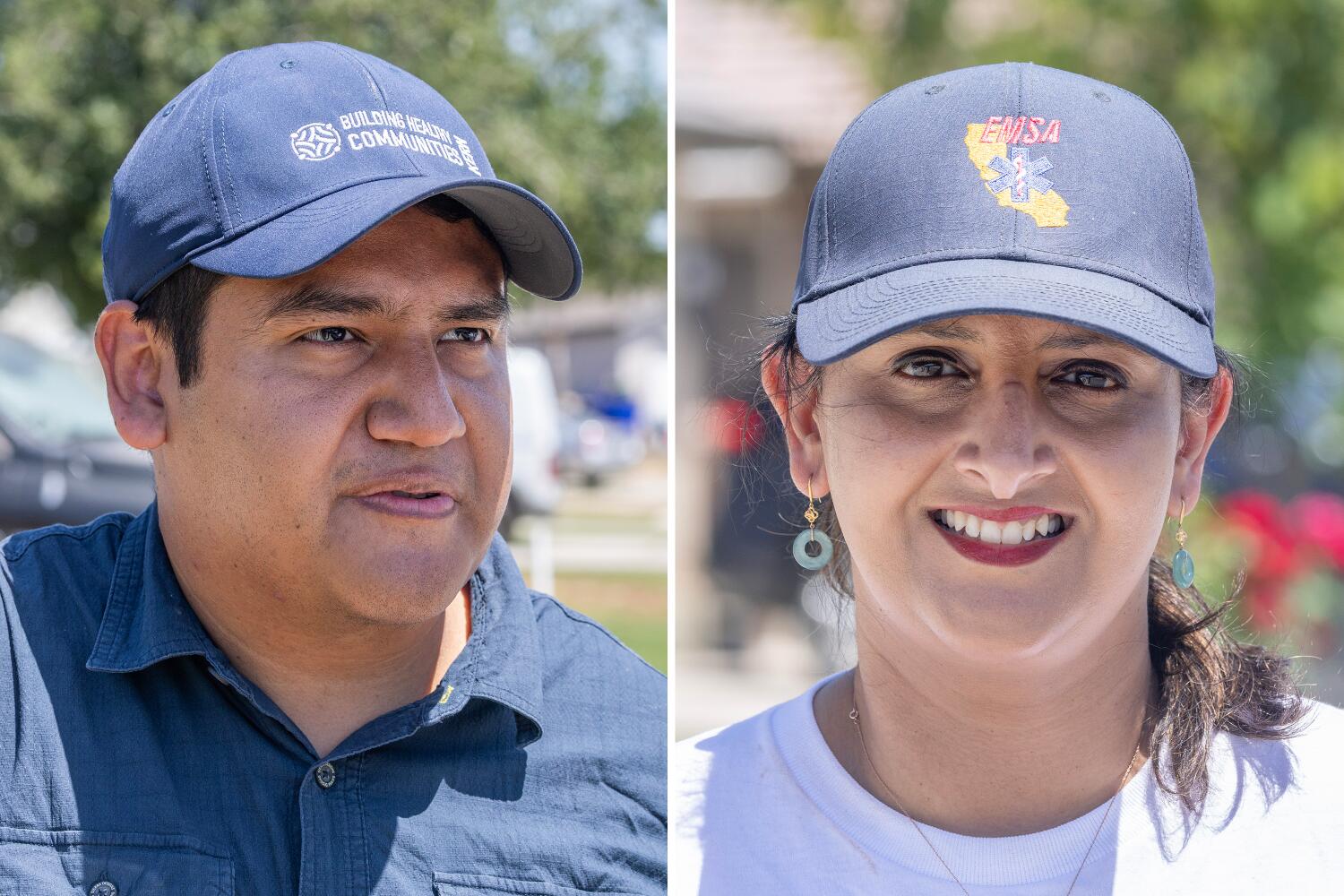
- Jasmeet Bains: A medical doctor and current State Assemblymember. She leans moderate, brags about her independent voting streak, and frequently bucks her own party's leadership in Sacramento.
- Randy Villegas: A progressive college professor backed by Senator Bernie Sanders, Representative Alexandria Ocasio-Cortez, and the Working Families Party. He rejects corporate political action committee (PAC) money and runs on a platform of grassroots populism.
The Democratic Congressional Campaign Committee (DCCC) promised it wouldn't take sides in the primary. Then they panicked.
Fearing a progressive candidate would lose a general election in this conservative-leaning Valley district, the DCCC stepped in late. They officially added Bains to their "Red to Blue" priority program, effectively dropping the hammer of the national party establishment on Villegas's campaign.
Local party leaders are furious. County chairs in Tulare, Fresno, and Kings counties had already refused to back a single candidate. They wanted the voters to decide. When Washington stepped in, it felt less like a strategic play and more like a heavy-handed dictate from coastal elites who don't understand the Valley.
What D.C. Gets Wrong About Latino Voters
National Democrats operate on a flawed premise. They look at CA-22's voter registration numbers—roughly 42% Democratic to 26% Republican—and assume it should be an easy pickup. They see a district where 60% of the population is Latino and think a standard-issue urban platform will translate.
It won't. The Central Valley isn't Los Angeles or San Francisco.
This is a region defined by agriculture, water rights, oil production, and high poverty rates. The electorate leans far more socially and economically conservative than party registration implies. Many families rely heavily on Medicaid and government assistance, yet they're deeply skeptical of government overreach.
The national party establishment believes a hyper-moderate approach is the only way to win over these swing voters. They think Bains's background as a physician and her cautious, business-friendly voting record makes her bulletproof.
Progressives argue that this top-down moderate strategy is exactly why Democrats keep losing working-class voters. When you offer a watered-down version of Republican economic policies, voters choose the real Republican every time. Villegas's supporters point out that the district's working-class families don't want corporate-friendly centrism. They want higher wages, better healthcare access, and lower costs.
The Ad War Gets Ugly
The race has turned into an expensive, negative slugfest. Millions of dollars are pouring into local television markets, and the messaging is brutal.
Outside progressive groups are attacking Bains's record, running ads funded by the Working Families Party PAC that accuse her of taking cash from Big Pharma and corporate polluters. They slam her for missing critical legislative votes on healthcare extensions.
Meanwhile, establishment-backed groups are painting Villegas as an un-electable radical whose academic progressivism is out of touch with the grueling realities of Valley life. They're spending heavily to ensure he doesn't slip past Bains to claim the second spot on the November ballot.
Financially, the two campaigns are locked in a dead heat. The latest federal filings show Bains with roughly $700,000 on hand, while Villegas holds about $718,000. The fact that an anti-corporate PAC progressive is out-fundraising a state assemblymember through small-dollar grassroots donations should be a massive wake-up call for national strategists.
Why This Race Dictates Control of the House
This primary isn't happening in a vacuum. The road to the congressional majority runs straight through California's agricultural interior.
CA-22 Voter Registration Breakdown:
[ Democratic: 42% ] [ Republican: 26% ] [ No Party Preference: 22% ]
David Valadao is one of the most resilient Republicans in Congress. He has survived multiple election cycles in a district that Joe Biden won in 2020 and where Kamala Harris performed well. He knows how to position himself as a valley-first moderate focused on water infrastructure and farming, successfully insulating himself from national Republican toxicity.
If the DCCC's intervention successfully pushes Bains across the finish line, they risk alienating the young, progressive Latino base required to turn out in November. If Villegas wins the spot, the national party might withhold the millions of dollars needed to counter the Republican machine. It's a self-inflicted trap.
The Playbook for Local Campaigns
Heavy-handed national intervention usually backfires in rural districts because it signals that the candidate answers to party bosses in Washington rather than neighbors at home. Winning the Central Valley requires a shift in strategy.
Instead of waiting for national parties to drop millions on negative TV ads, successful local campaigns have to focus on aggressive ground-game operations. That means direct outreach regarding water security, local job creation, and tangible healthcare access.
Voters in the Valley are tired of being treated as data points on a Washington spreadsheet. The candidate who wins this seat won't be the one with the fanciest D.C. backing. It'll be the one who convinces the community that they actually understand the dirt under their fingernails.