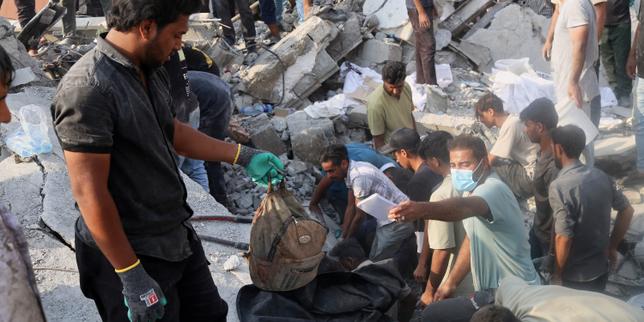
The headlines are predictable. They focus on the body count, the smoke, and the inevitable "opacity" surrounding the fate of high-level regime assets. When a strike hits a converted school or a dense urban center in a place like Iran, the media immediately falls into a well-worn trap. They treat the ambiguity of the outcome as a failure of communication.
It isn't. It’s a failure of the fundamental premise of modern kinetic warfare.
We are told we live in the era of "surgical" precision. We are sold a narrative where $Hellfire$ missiles and $JDAM$ guidance systems have turned war into a scalpels-only affair. But when you see reports of 100-plus casualties alongside "uncertainty" regarding the actual targets, you aren't looking at a surgical error. You are looking at the terminal decline of signal intelligence in a world that has learned how to hide in plain sight.
Stop asking if the leaders were killed. Start asking why the world’s most advanced intelligence agencies still have to level a building to find out.
The Precision Paradox
The "lazy consensus" suggests that if you kill enough people in a room, you eventually get the guy you want. This is the attrition fallacy.
In my years analyzing regional security dynamics, I’ve seen this play out with agonizing repetition. Western and regional intelligence services have become addicted to their own technical prowess. They can track a burner phone to a specific floor. They can monitor thermal signatures through concrete. But they have lost the "Human Intelligence" (HUMINT) edge that actually confirms identity before the trigger is pulled.
The result is the Precision Paradox: as our weapons get more accurate, our understanding of who is under the crosshairs becomes more blurred. When media outlets complain about "opacity" regarding regime losses, they are inadvertently admitting that the strike was a gamble. You don't drop a payload that kills 100 people if you have eyes on the target. You do it because your data is "probabilistic."
The Architecture of Human Shields
Let’s dismantle the "school" narrative. The outrage cycle follows a script: one side claims it was a command center; the other claims it was a sanctuary for displaced civilians.
The truth is rarely in the middle. The truth is that the distinction between "civilian infrastructure" and "military asset" has been intentionally erased by asymmetric actors. If you are a high-ranking official in a sanctioned regime, you don't hide in a bunker. Bunkers are tomb-shaped targets for deep-penetration munitions. You hide in a school. You hide in a hospital. You hide where the "cost" of hitting you is a global PR disaster for your enemy.
This isn't just "cowardice" as the pundits claim. It is a sophisticated defensive layer.
Imagine a scenario where a regime leader knows that their presence in a civilian building provides a $90%$ probability of safety because the political cost of civilian casualties is too high for the attacker. The moment that math changes—the moment the attacker decides the target is worth the 100 lives—the "opacity" the media complains about becomes a survival mechanism. If the regime admits the leader is dead, they lose the deterrent. If they claim he’s alive, they maintain the illusion of invincibility.
The Signal is Dead
We are witnessing the end of the SIGINT Era.
For two decades, drone warfare relied on the fact that targets were "loud." They used radios, satellite phones, and unencrypted digital footprints. That era is over. Iranian and proxy leadership have moved toward "analog" survival.
- Courier Networks: Physical messages that cannot be intercepted by $X-band$ radar or fiber-optic taps.
- Decoy Signalling: Flooding the zone with digital signatures of "high-value targets" that are actually just scripts running on a cheap laptop in an empty basement.
- Deep Urban Integration: Living in high-density residential zones where the "noise" of 10,000 civilians masks the "signal" of one general.
When a strike results in massive civilian casualties but "unclear" results on the target, it means the intelligence was baited. They hit the signal, not the person.
The Competitor’s Blind Spot
The article you read likely focused on the horror of the loss of life. That’s valid, but it’s a surface-level emotional response to a structural military reality. The "opacity" they mention isn't a bug in the reporting; it is the entire point of the operation from the defender's perspective.
The competitor asks: "Were the leaders hit?"
The real question is: "Why did the attacker think 100 civilians were an acceptable price for a 'maybe'?"
This reveals a desperate shift in strategy. Kinetic strikes are no longer about elimination; they are about disruption. If you can’t be sure you killed the man, you settle for destroying his environment. You make it so that no school, no home, and no office is safe for him to inhabit. You turn his own people into a liability.
It is a brutal, medieval logic dressed up in 21st-century guidance systems.
Why "Stability" is a Lie
We are often told that these strikes are meant to "decapitate" leadership to bring about stability or regime change. History—and basic organizational psychology—tells us the opposite.
When you strike a command node in a decentralized regime like Tehran’s, you don't create a vacuum. You create a Promotion Incentive.
- The Martyrdom Loop: The death of a leader is used to radicalize the next tier of officers.
- Hardliner Consolidation: Every "ambiguous" strike that kills civilians is a gift to the regime's propaganda wing. It validates their narrative that the West is inherently genocidal.
- The Hydra Effect: For every general removed, three colonels with "something to prove" vie for his spot.
If the goal is to stop a regime's regional influence, blowing up a school to maybe hit a mid-level coordinator is like trying to stop a flood by throwing a brick at a wave. It’s a high-cost, low-yield tantrum.
The Data the Media Ignores
Look at the thermal footprint of these strikes. A standard $Gbu-39$ Small Diameter Bomb is designed for "low collateral damage." If 100 people died, multiple munitions were used. This wasn't a "sniping" mission. This was an "erasure" mission.
The media’s obsession with "who died" misses the terrifying reality of "how they are dying." We are seeing the normalization of high-casualty strikes as a standard operating procedure. This happens when intelligence agencies realize they have lost the ability to be precise, but refuse to give up the ability to be violent.
Stop Believing the "Opacity" Narrative
The next time you read that the fate of a regime leader is "unclear" following a mass-casualty strike, understand what is actually happening.
The attacker doesn't know.
The regime won't say.
The civilians paid for the uncertainty.
The intelligence is broken, the strategy is failing, and the "surgical strike" is a marketing term used to sell a more expensive version of carpet bombing.
The era of the "smart" war is dead. We are back to the meat grinder, only this time, the grinders have GPS.
Pick up the rubble. Count the bodies. Realize that the "target" probably left the building twenty minutes before the first bird was even in the air.