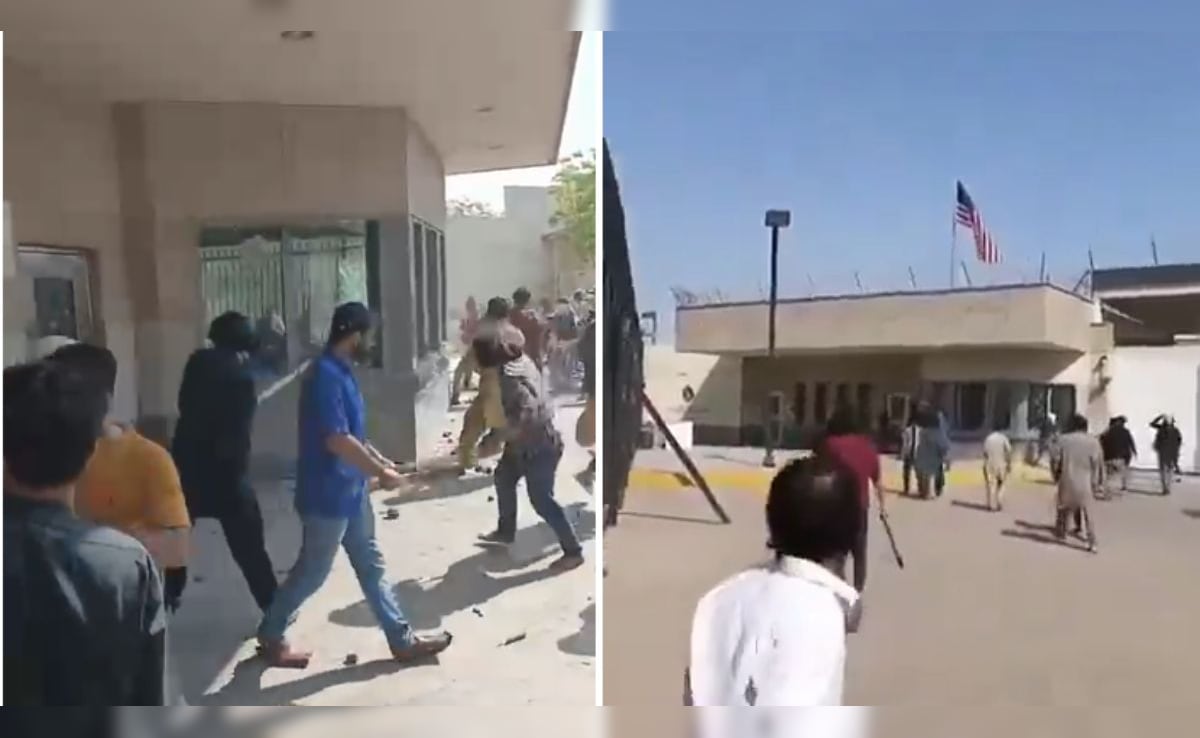
The headlines are predictable. They scream about "protests" and "clashes" as if these events are weather patterns—unavoidable, organic, and chaotic. Eight dead in Pakistan. Bullet wounds. Smoke. The standard narrative frames this as a tragic collision between ideological fervor and diplomatic defense.
They are lying to you by omission.
What happened at the US Consulate isn't a story about a protest gone wrong. It is a story about the obsolescence of "Soft Power" architecture and the lethal incompetence of modern diplomatic security protocols. When eight people die from small arms fire during a perimeter breach, it isn’t a tragedy. It’s a systemic failure of non-lethal deterrents and a total misunderstanding of 21st-century urban siege warfare.
The Crowd is a Weapon System
The media loves the word "protest." It implies a gathering of voices. In high-tension geopolitical zones like Pakistan, a crowd is not a gathering; it is a kinetic weapon. It is a delivery mechanism for provocateurs, intelligence assets, and IEDs.
If you view a mob as a group of "angry citizens," you have already lost. Professional security firms—the ones that actually survive these encounters—view a crowd as a fluid dynamics problem. The competitor articles focus on the "why"—the Pro-Iran sentiment. The "why" is a distraction. The "how" is where the bodies are buried.
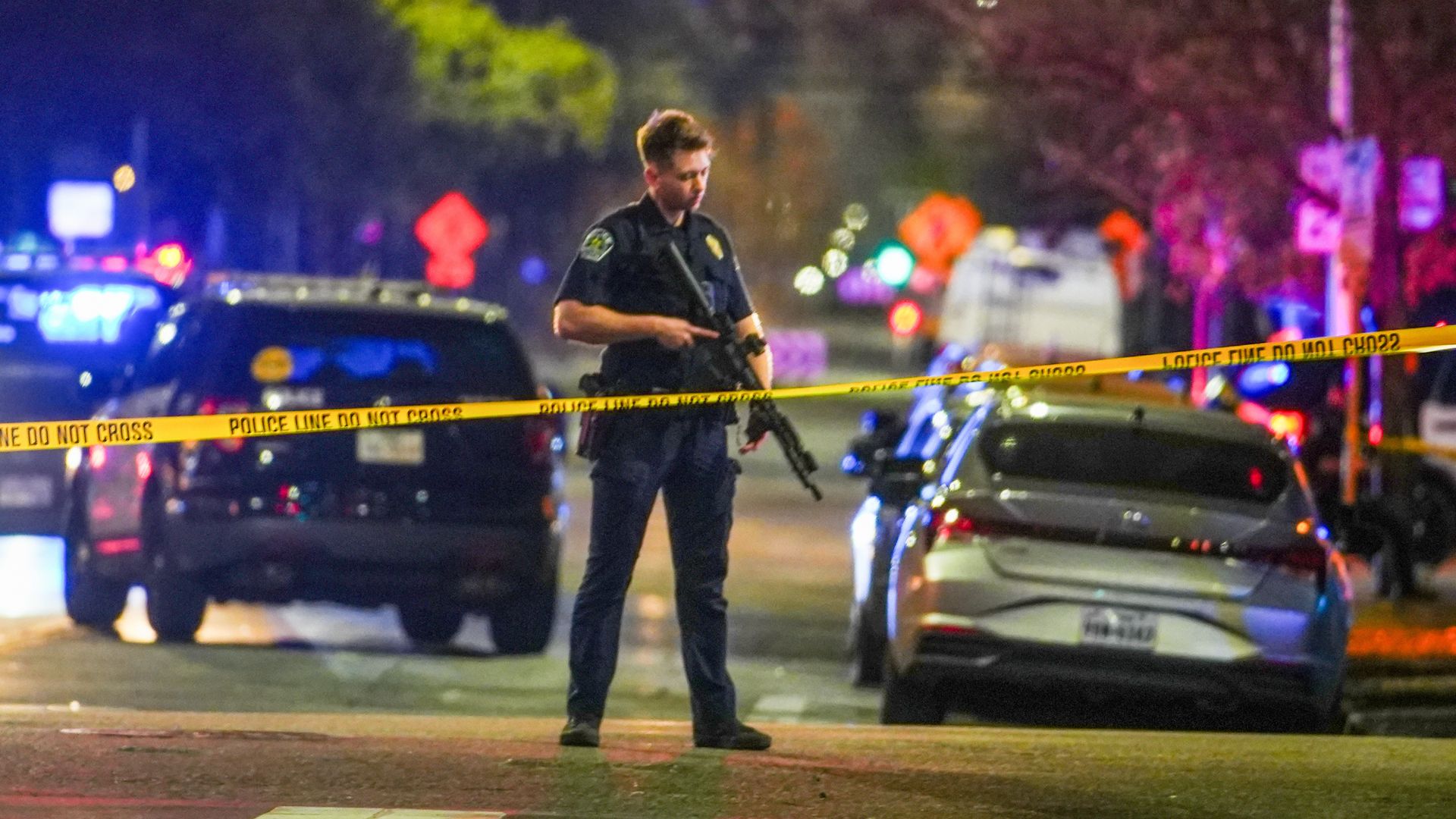
Most of these deaths were caused by bullet wounds. This indicates a catastrophic collapse of the escalation of force (EOF) ladder. In a properly secured facility, lethal force is the final, rarest step. When you have eight dead from gunfire, it means the intermediate layers—the physical barriers, the acoustic deterrents, the chemical agents—were either non-existent or bypassed with embarrassing ease.
The Death of the Perimeter
I’ve seen state departments spend millions on "shatter-resistant" glass while leaving the electronic perimeter wide open to basic interference. We are still building consulates based on 1990s threats.
The standard diplomatic outpost is a relic. It relies on a "Hard Shell, Soft Core" philosophy. You have a big wall, a few local guards who are often underpaid and ideologically conflicted, and a small detachment of elite personnel inside.
Here is the truth: Walls are psychological, not physical. A wall is a delay timer. If your security posture relies on a concrete slab to stop a motivated mob of five thousand, you are banking on hope. And hope is not a tactical plan.
The "lazy consensus" says the guards had no choice but to fire. I argue they were forced into that choice by a decade of stagnant security technology. Where were the Active Denial Systems (ADS)? Where were the high-frequency acoustic hailing devices that make it physically impossible to stand within fifty feet of a gate? If you are using lead to stop people in 2026, your procurement department failed those guards.
Pakistan and the Intelligence Blind Spot
Everyone asks: "How did it get this violent so fast?"
The premise of the question is flawed. It didn't get violent "fast." The escalation was likely visible in the signals intelligence (SIGINT) for days. In Karachi and Lahore, you don’t move a thousand people to a US Consulate without a massive digital footprint on encrypted messaging apps.
The failure here is an intelligence-sharing breakdown between the host nation and the diplomatic mission. We treat "diplomacy" as a series of polite dinners. In reality, a consulate in a volatile region is a forward operating base.
The fact that the mob reached the point where small arms fire was the only option proves that the "Early Warning" phase was skipped entirely. This happens because of a misplaced desire to "not offend" the host government by appearing too militarized.
Stop Calling Them Casualties
The competitor reports list the dead as "protesters." Let’s be brutally honest: if you are part of a mob attempting to breach the sovereign soil of a foreign embassy, you are a combatant.
When you frame these incidents through the lens of human rights alone, you ignore the physics of the situation. A breach of a consulate is a breach of national sovereignty. The internal response teams are trained to protect data and personnel at any cost.
The real controversy isn't that people were shot. The controversy is that we continue to put diplomatic staff in "sitting duck" architectures that provide no middle ground between "shouting through a megaphone" and "opening fire."
The Counter-Intuitive Fix: The "Invisible" Consulate
The solution isn't higher walls. It's the elimination of the "symbolic" consulate.
We cling to these massive, ornate buildings as symbols of presence. They are actually just massive targets. Modern diplomacy should be decentralized.
- Functional Fragmentation: Move the administrative and visa work to secure, nondescript office blocks with zero branding.
- Autonomous Defense: Implement automated non-lethal arrays that don't require a human to make a split-second, life-or-death decision under the pressure of a brick-throwing mob.
- Digital Sovereignty: If the threat level hits a certain threshold, the physical site should be secondary to the data. We still see guards dying to protect filing cabinets and servers that should have been cloud-wiped and abandoned the moment the perimeter was touched.
The Cost of the "Status Quo"
I have watched missions burn because the leadership was more afraid of a bad PR headline than a security breach. They hesitate to deploy tear gas because it "looks bad" on social media. Then, when the gate fails, they are forced to use rifles.
The blood is on the hands of the bureaucrats who prioritize the optics of peace over the mechanics of security.
You want to stop the deaths? Stop building target-rich environments and calling them "embassies." Stop assuming the host nation’s police force is either capable or willing to protect you. And for the love of God, stop treating a siege as a "protest."
The bullets in Pakistan were the inevitable result of a security philosophy that belongs in a museum. We are fighting a 21st-century information war with 20th-century concrete and 19th-century tactics.
The next time you see a headline about "deadly clashes" at a consulate, don't ask why the people were angry. Ask why the most powerful nation on earth still hasn't figured out how to hold a gate without a body count.
Stop pretending this was an accident. It was an engineering certainty.