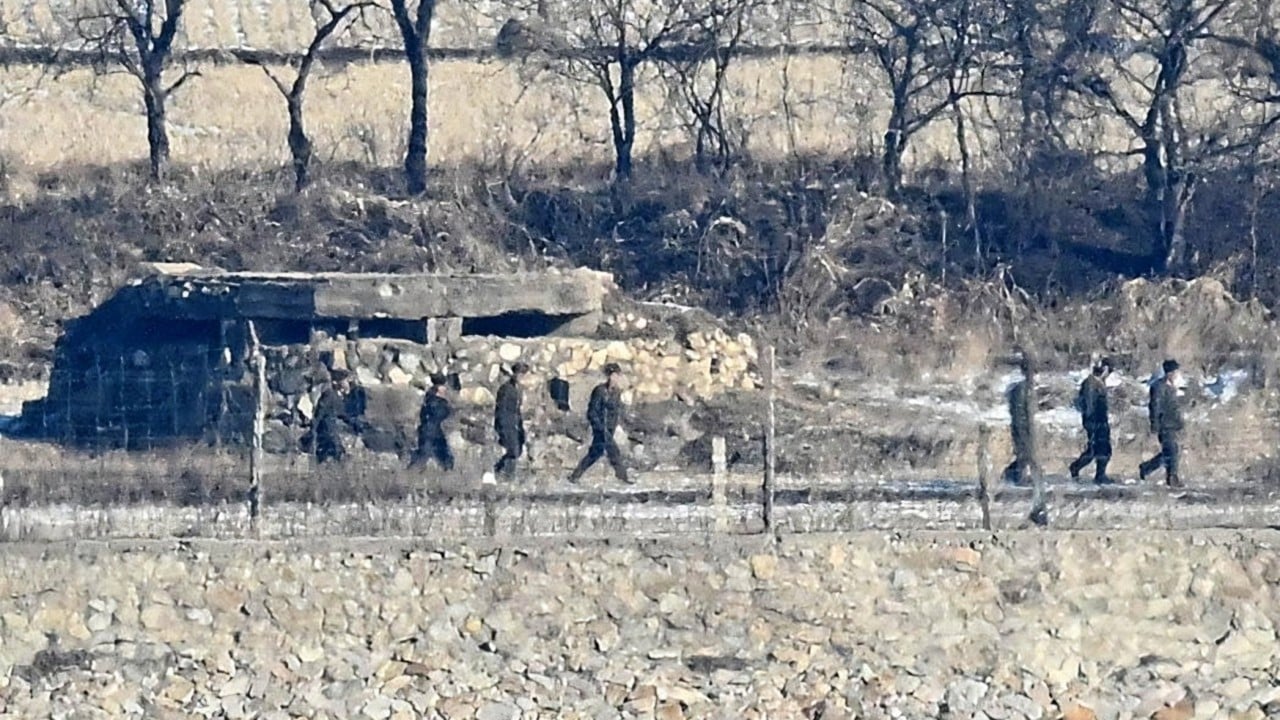
Mainstream geopolitical analysis has developed a lazy obsession with friction. The moment North Korea lays another mile of barbed wire or plants landmines along the Demilitarized Zone, the predictable commentary machines spin into motion. They all paint the same picture: a growing, dangerous wedge between Seoul’s aggressive defense posture and the United Nations Command’s (UNC) cautious, bureaucratic stabilization efforts.
They are misreading the entire theater.
What the pundit class labels a "rift" is actually a highly functional, deliberate feature of modern deterrence. The friction is not a sign of systemic failure; it is the point. Washington and Seoul are not stumbling into an institutional crisis over North Korea's border build-up. Instead, they are utilizing a complex, dual-track strategy where structural tension creates tactical flexibility.
The False Premise of Institutional Harmony
Standard foreign policy op-eds argue that for deterrence to work, every cog in the allied machine must turn in perfect unison. They look at South Korea's forward-leaning stance and contrast it with the UNC’s mandate to maintain the 1953 Armistice Agreement, concluding that the machinery is breaking down.
This view ignores how military alliances actually operate under immense stress.
If the South Korean Ministry of National Defense and the UNC functioned as a single, harmonious monolith, the alliance would lose its strategic ambiguity. When North Korea fortifies its border or conducts GPS jamming operations, a monolithic response forces the alliance into a corner: either escalate uniformly or back down uniformly.
The current structural setup provides an elegant escape hatch. South Korea can project fierce, immediate resolve to satisfy domestic audiences and deter localized provocations. Simultaneously, the UNC operates as a systemic brake, preventing tactical skirmishes from spiraling into a regional war. It is a classic good-cop, bad-cop routine disguised as bureaucratic dysfunction.
Dismantling the Sovereignty Argument
Critics often assert that the UNC infringes upon South Korea's national sovereignty, pointing to moments when the command restricted access to the DMZ or reviewed frontline actions. This argument collapses under historical and legal scrutiny.
The UNC is not an occupying force constraining Seoul's hands; it is a legal framework that locks in international commitment. Let’s look at the mechanics. The UNC ensures that if deterrence fails, multinational forces can flow into the Korean Peninsula without waiting for a lengthy UN Security Council debate—a debate that China or Russia would immediately veto.
Furthermore, the integration of Gen. Paul LaCamera’s dual role as commander of both the US Forces Korea (USFK) and the UNC demonstrates that the operational wires are deeply intertwined, not crossed. The apparent policy gaps are not accidental blunders made by diplomats who forgot to sync their calendars. They are calculated choices designed to keep Pyongyang guessing about where the tripwires actually lie.
The Cost of the Contrarian Reality
An honest assessment requires acknowledging the downsides of this dual-track system. The friction, while useful, introduces serious operational risks.
In a high-intensity crisis, communication lag between South Korea’s Joint Chiefs of Staff and the UNC can delay critical decisions. Frontline commanders face conflicting pressures: the national mandate to respond immediately to aggression versus the international mandate to avoid violating the armistice. I have watched military bureaucracies burn critical hours debating rules of engagement while assets on the ground sat exposed. It is messy, frustrating, and carries a genuine risk of miscalculation.
Yet, trying to eliminate this tension by dissolving the UNC or fully subordinating it to Seoul's immediate political whims would create a far worse alternative. It would strip the peninsula of its international shield, leaving South Korea to face a nuclear-armed neighbor without the baked-in multinational architecture that has prevented a major war for over seven decades.
Shift Your Analytical Focus
Stop asking if Seoul and the UNC are getting along. That is the wrong question entirely. Harmony is a metric for choirs, not military alliances managing a nuclear flashpoint.
Instead, analyze how effectively the alliance capitalizes on this structural friction. Watch how Pyongyang reacts to the dual messaging. The North Korean regime rarely misinterprets this setup; they know exactly how the trap is laid. The only people genuinely confused by the arrangement are the analysts writing post-mortems for an alliance that is doing exactly what it was engineered to do.
Stop looking for a unified front and start mapping the strategic utility of the divide.