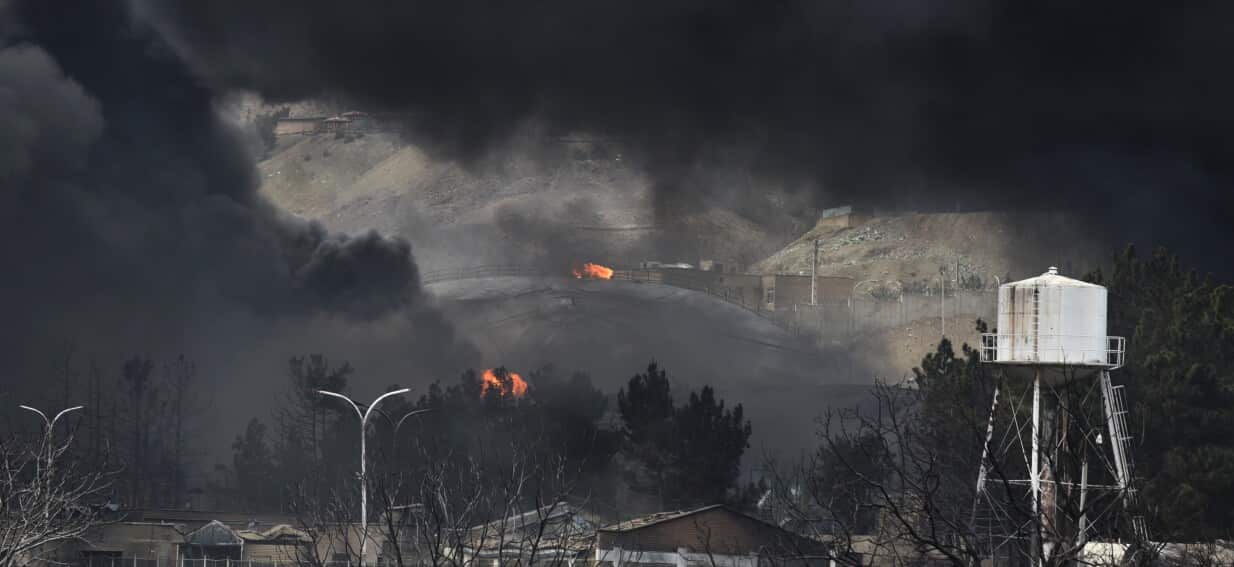
War is not a surgical procedure. Despite what the morning briefings and the defense contractors tell you, there is no such thing as a clean escalation. The reports filtering out of Lebanon—nearly 400 dead in a single wave of strikes—are being framed by the "lazy consensus" as a tactical necessity to degrade Hezbollah’s infrastructure. This is a fundamental misunderstanding of how asymmetric power works in the Levant. You cannot bomb a decentralized ideology into submission using 2,000-pound munitions without creating the very vacuum that sucks the entire region into a multi-generational quagmire.
While the world stares at the plumes of smoke over the Bekaa Valley, the real tectonic shift is happening in the shadowed corridors of Tehran. The naming of a new supreme leader isn't a simple administrative handoff. It is a desperate consolidation of power by a regime that knows its proxy network is fraying. If you think this is about "containment," you’ve already lost the plot.
The Attrition Fallacy
Military analysts love to talk about "degrading capabilities." They point to destroyed rocket launchers and neutralized mid-level commanders as proof of success. I have spent years watching these same metrics fail to account for the human element. When you kill 400 people in a day, you aren't just hitting targets. You are recruiting for the next decade.
Hezbollah is not a conventional army. It is a social fabric, a political party, and a militia woven into the bedrock of Southern Lebanon. The "precision strike" is a marketing term used to sell a high-tech solution to a low-tech, high-willpower problem.
- Logic Check: If tactical air superiority alone could win this conflict, it would have ended in 2006.
- The Reality: Every strike that misses its mark—or hits its mark but kills civilians nearby—acts as a force multiplier for the resistance.
The status quo suggests that Israel can "restore security" through overwhelming force. The data suggests the opposite. Security is a psychological state, not just a border fence. By escalating to this level, the objective has shifted from deterrence to survival, and a cornered adversary is the most dangerous entity on the map.
Tehran’s Succession Shell Game
The timing of the supreme leader's "naming" is no coincidence. In the world of high-stakes geopolitics, information is released only when it serves a specific defensive purpose.
Most pundits are asking, "Who is the new guy?" That is the wrong question. The right question is: "Why now?"
The Iranian leadership is facing an internal legitimacy crisis. The "Axis of Resistance" they spent billions to build is being hammered. By signaling a transition now, the Assembly of Experts is attempting to project stability where none exists. They are trying to tell the IRGC (Islamic Revolutionary Guard Corps) and their proxies in Lebanon, Yemen, and Iraq that the head of the snake is healthy, even as the body is being scorched.
Imagine a scenario where the succession is contested behind the scenes while the border is on fire. This creates a feedback loop of aggression. A new leader cannot afford to look weak. To establish his bona fides, he must double down on the very proxy wars that are draining the national treasury. We aren't looking at a transition; we are looking at a radicalization of the executive branch.
The Failure of the "Buffer Zone" Strategy
The "People Also Ask" columns will soon be flooded with questions about whether a ground invasion and a "buffer zone" will protect Northern Israel. Let’s be brutally honest: buffer zones are just killing fields with better branding.
- Geography is Unforgiving: The terrain in Southern Lebanon favors the defender. It is a labyrinth of tunnels and limestone ridges.
- Technological Diminishing Returns: Iron Dome and sophisticated sensors work until they are overwhelmed by volume. High-tech defense is expensive; low-tech offense is cheap.
- The Occupation Trap: Entering Lebanon is easy. Leaving is an American-style disaster waiting to happen.
The industry insiders who claim a ground maneuver will "finish the job" are the same ones who said the same thing in 1982 and 2006. History doesn't just repeat; it mocks those who refuse to learn.
The Economic Suicide of Endless Escalation
No one wants to talk about the ledger. War at this scale is an economic black hole. For Israel, the cost of intercepting a single cheap drone can exceed $100,000. For Lebanon, a country already on the brink of total financial collapse, these strikes represent the final nail in the coffin of their sovereign economy.
When a state collapses, it doesn't just disappear. It becomes a laboratory for extremism. A failed Lebanon is a permanent gift to the most radical elements of the IRGC. If the goal is long-term stability, destroying the last vestiges of the Lebanese state is the fastest way to ensure that stability never arrives.
The Pivot That Never Happens
We are told the international community is "working tirelessly" for a ceasefire. This is theater. Diplomacy without leverage is just noise. As long as the primary actors believe they can achieve a "total victory," the killing will continue.
The nuance missed by the mainstream media is that both sides are currently trapped by their own rhetoric. Hezbollah cannot retreat without losing its raison d'être. Israel cannot stop without appearing to have failed in its promise to return its citizens to the north.
You are being sold a narrative of "necessary escalation." In reality, you are witnessing a race to the bottom where the prize is a throne of ashes.
Stop looking for the "surgical strike." Start looking for the exit ramp that everyone is currently driving past at 100 miles per hour. The new leadership in Tehran isn't a sign of a new era; it’s a desperate attempt to keep the old one from burning down.
The bombs falling today are not solving yesterday’s problems. They are funding tomorrow’s wars.
Check the math. Follow the money. Ignore the "surgical" lies.
The only thing being precision-targeted is the possibility of peace.