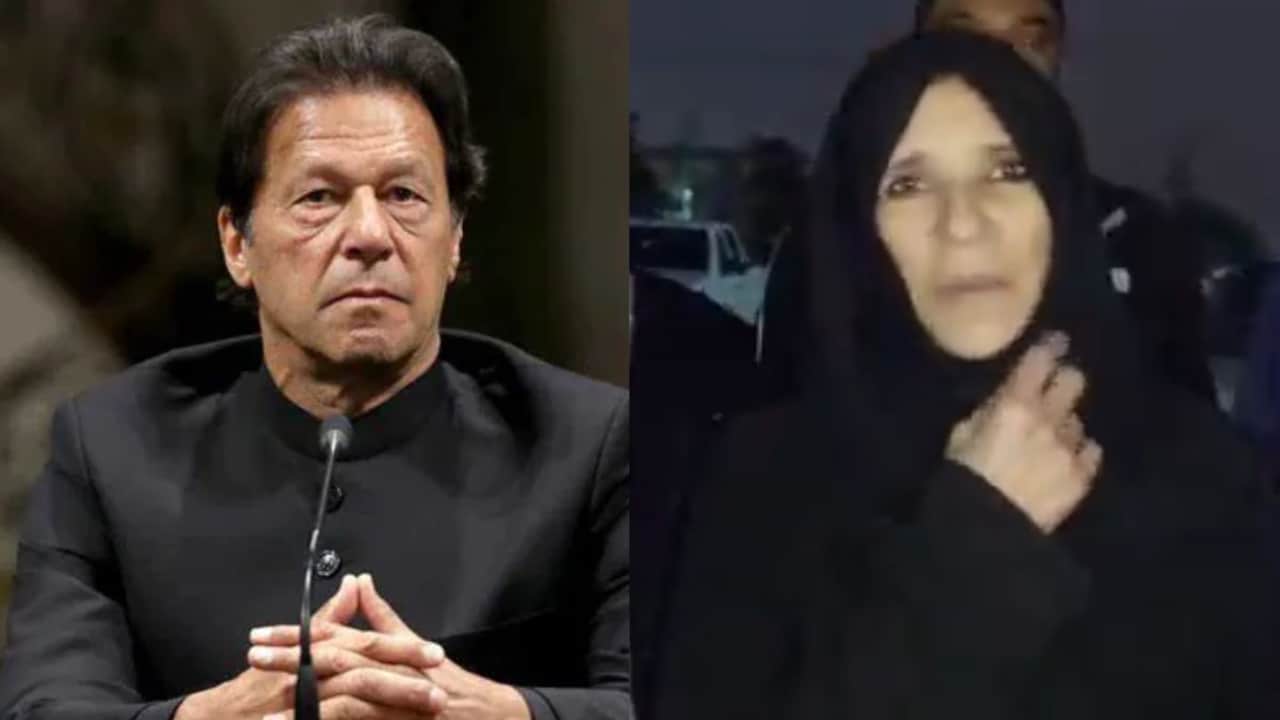
When Noreen Niazi sat down for a sequence of firebrand interviews targeting the upper echelons of Pakistan’s military establishment, she did not merely poke at an open wound. She exposed a systemic crisis of military authority and narrative control. By publicly asserting that General Headquarters in Rawalpindi sought to cover up tactical failures following India’s Operation Sindoor, the sister of imprisoned former Prime Minister Imran Khan struck at the foundational mythology of the Pakistani military state. The state responded swiftly, unleashing cybercrime summonses and public denunciations. Yet beneath the political theater lies a far more uncomfortable reality regarding cross-border escalation, information warfare, and the unraveling balance of power in South Asia.
Understanding the current political earthquake requires dissecting the clash that took place in May 2025. Operation Sindoor was launched by New Delhi as a direct military response to a brutal terror attack in Pahalgam that claimed 26 civilian lives. Indian forces executed precise, targeted strikes against militant infrastructure across the Line of Control and deep within Pakistani territory. In Rawalpindi, the armed forces declared a glowing defense of national sovereignty, branding their counter-tactics as a resounding triumph under the banner of Maarka-e-Haq.
The official line was uncompromising. Rawalpindi claimed complete aerial deterrence, minimal internal disruption, and an unequivocal strategic checkmate against Indian aggression. State television flooded the airwaves with tailored footage, while military commentators lauded Army Chief General Asim Munir for steering the country through a existential trial. But inside intelligence circles and political quarters, a vastly different account took root.
The Cracks in the Official Narrative
Military operations rarely produce the clean, unambiguous victories depicted in state press releases. In the days following Operation Sindoor, independent military analysts noted significant gaps between Rawalpindi’s public claims and operational realities on the ground. Critical communications nodes were momentarily compromised, radar coverages faced unexpected Blindspots, and response times along specific sectors of the Line of Control lagged noticeably.
Noreen Niazi’s public statements did not invent these vulnerabilities out of thin air. They gave a public megaphone to whispers that had been circulating through Islamabad’s diplomatic enclaves for over a year. When she claimed that the military leadership orchestrated narrative spin to protect its own standing, she tapped into widespread public skepticism regarding state-curated victory declarations.
The Pakistan Army has long relied on its reputation as the ultimate guarantor of national defense to justify its overarching role in political governance. When that operational reputation faces scrutiny, the political core of the state vibrates violently. Rawalpindi could tolerate political opposition from civilian parties; it could even tolerate public street protests in Lahore or Peshawar. What it could not afford was a sustained public interrogation of its combat performance coming from high-profile political figures whose family commands millions of devoted followers.
Geopolitical Theories and Domestic Political Desperation
In her attempts to dismantle the army’s victory narrative, Niazi introduced provocative claims connecting the May 2025 conflict to backchannel diplomacy involving international actors and potential normalization talks. She alleged that India refrained from further military escalation not because of conventional Pakistani military deterrence, but due to external geopolitical pressures tied to prospective regional realignment.
These assertions reflect a classic dynamic in Pakistani political discourse, where complex military realities are routinely explained through grand global conspiracies. While no credible intelligence supports the notion that tactical decisions during Operation Sindoor were dictated by covert diplomatic bargaining over foreign recognition, the very fact that such claims gained traction demonstrates the depth of public cynicism.
When civilian populations lose trust in official accounts, high-stakes political intrigue fills the void. The opposition leverages every perceived misstep to undermine the legitimacy of the military high command. Conversely, the government branding such statements as anti-national treason reveals how fragile the official consensus truly is.
Information Warfare and the Deepfake Frontier
The confrontation between Imran Khan’s family and Rawalpindi has moved far beyond traditional press conferences. It has entered a dangerous new phase characterized by synthetic media, coordinated disinformation, and digital reprisal.
Late in 2025, international news outlets were caught off guard when AI-generated deepfake videos featuring Khan’s family members began spreading across social networks. In one instance, doctored audio and video claimed to show family members appealing directly to foreign powers or accusing the military chief of deliberately provoking conflict to solidify personal authority. Major subcontinent networks mistakenly broadcast these synthetic clips as genuine news before global broadcasters issued stern retractions.
This weaponization of deepfakes has fundamentally clouded the battleground. When real interviews are intertwined with AI-generated fabrications, the public loses the ability to distinguish authentic political dissent from manufactured agitation. The state uses this ambiguity to justify sweeping crackdowns against all digital dissent under the banner of fighting cybercrime and state defamation. Meanwhile, opposition figures utilize the chaotic media environment to float inflammatory claims, knowing that raw outrage travels faster than factual verification.
The High Cost of Internal Fragmentation
A nation’s deterrence capability depends as much on internal cohesion as it does on hardware and troop counts. The aftermath of Operation Sindoor has laid bare a profound rift between Pakistan’s military apparatus and a substantial segment of its population.
For decades, the military maintained an unwritten social contract with the populace. In exchange for significant national resources and political primacy, the institution promised absolute protection against external threats. Today, that contract is under severe strain.
The ongoing incarceration of Imran Khan, combined with persistent economic volatility, has created an environment where every military action is scrutinized through a partisan lens. When the army fires across the border, critics see a distraction technique. When the army claims a strategic success, political opponents label it a cover-up.
This institutional erosion presents serious national security risks. When external adversaries evaluate a country's military strength, they analyze political stability alongside troop readiness. A high command forced to police its own citizens while fighting an aggressive information war against domestic political rivals finds its strategic focus divided.
The Legal Hammer and the Limits of Suppression
The decision by the National Cyber Crime Investigation Agency to issue formal summonses to Noreen Niazi highlights the state's reliance on legal coercion to enforce discipline. Charges of spreading false, offensive, and inflammatory content are standard instruments in Islamabad's regulatory arsenal.
Yet history shows that legal suppression rarely eliminates political dissent; it merely pushes it into darker, less controllable channels. The military establishment may succeed in silencing individual figures through court orders and detention threats. It cannot, however, litigate its way out of a crisis of narrative credibility.
Every high-profile summons creates a fresh martyr, driving further interest toward alternative media channels and underground networks. The government's aggressive reaction to Niazi's comments has inadvertently guaranteed that her critique received far more international coverage than it would have under normal conditions.
Beyond the Rhetoric
Stripping away the partisan rhetoric reveals a stark conclusion. Operation Sindoor was not a total triumph for Rawalpindi, nor was it the catastrophic collapse claimed by its fiercest political detractors. It was a sharp, limited military conflict that exposed real operational challenges on both sides of the border.
The real failure lay not in the tactical response along the Line of Control, but in Rawalpindi's inability to manage the political aftermath. By attempting to project absolute perfection and treating all internal criticism as high treason, the military leadership trapped itself in a zero-sum game. In a modern information environment, no institution can maintain a total monopoly on truth. The harder Rawalpindi squeezes to maintain its constructed narrative, the faster its domestic credibility slips away.