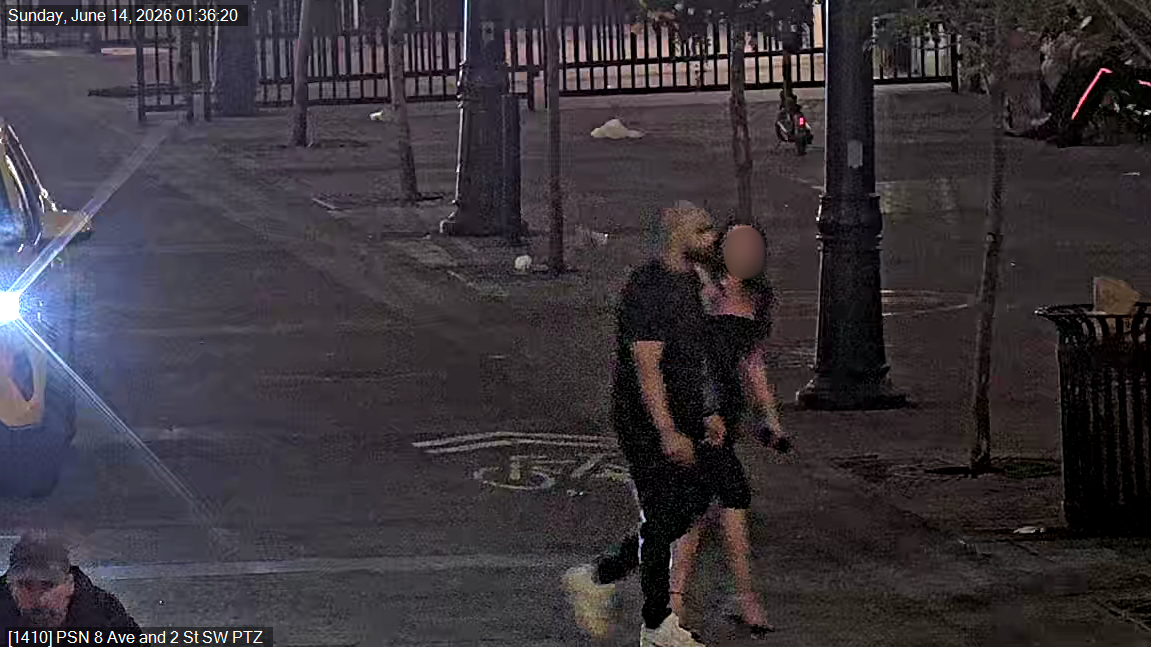
Another violent assault in downtown Calgary. Another blurry security camera photo released to the public. Another police press release asking for citizens to "help identify the suspect."
We have seen this script play out dozens of times this year alone. The media mindlessly copies and pastes the police bulletin. The public expresses standard outrage on social media. The authorities pretend that catching this one specific individual will somehow make the core of the city safer. Learn more on a related topic: this related article.
It is a comforting lie.
The standard narrative surrounding urban violence in Calgary is built on a fundamental misunderstanding of public safety. We treat systemic, predictable structural failures as isolated incidents of random bad luck. By focusing entirely on reactive policing—chasing the perpetrator after the blood has already been spilled—we guarantee that the next assault will happen exactly on schedule. More analysis by BBC News explores related perspectives on this issue.
I have spent over fifteen years analyzing urban crime patterns and corporate security infrastructure. I have watched municipal governments sink millions into reactive enforcement strategies that yield zero long-term reduction in violent crime. The hard truth nobody wants to voice is that the suspect in the latest downtown assault is merely a symptom. The real culprit is a broken urban design and a failure of municipal accountability.
The Reactive Policing Trap
When a violent incident occurs near a transit hub or a downtown alley, the immediate institutional response is a manhunt. This satisfies the public's desire for retribution, but it does absolutely nothing for prevention.
Criminologists have long recognized a phenomenon known as crime displacement. If you arrest a drug dealer on one corner without addressing the underlying market dynamics, another takes their place within forty-eight hours. Violent crimes of opportunity operate under a similar logic. The physical environments of certain downtown corridors—characterized by poor lighting, dead zones created by vacant commercial properties, and a lack of continuous foot traffic—actively invite predatory behavior.
[Systemic Vulnerability] + [Lack of Natural Surveillance] = High-Risk Zone
Chasing a single suspect after a violent event is the municipal equivalent of mopping the floor while the pipe is still bursting. The police are forced to play an endless game of whack-a-mole because our city planners and commercial property owners have created an environment where crime thrives.
The Failure of "Eyes on the Street"
Jane Jacobs famously coining the phrase "eyes on the street" decades ago was not just folksy urbanist wisdom; it was a foundational principle of environmental criminology. A street is safe when it is naturally self-policing because people are actively using it.
Look at the geography of recent Calgary assaults. They rarely happen in vibrant, mixed-use zones where restaurants, residences, and retail co-exist on a 24-hour cycle. Instead, they occur in the barren stretches of the downtown core that empty out entirely after 5:00 PM.
Our corporate-centric downtown is a ghost town for twelve hours a day. When you design a district solely for commuters, you create a massive security vacuum the moment those commuters head back to the suburbs. No amount of police patrols can adequately cover a multi-block radius of empty concrete canyons.
The standard fix proposed by local politicians is always the same: throw more money at high-definition CCTV cameras. This is a massive waste of taxpayer resources.
Imagine a scenario where a city installs a thousand new cameras across its downtown core. What happens? You get better footage of crimes occurring, but unless those cameras are monitored in real-time by actionable dispatch units—which they rarely are due to staffing constraints—they serve as historical archives, not deterrents. A criminal acting on impulse or under the influence of substances does not look for a camera before striking. Cameras do not protect victims; they merely document their victimization.
The Flawed Premise of Public Assistance Appeals
"Police seek public assistance in identifying suspect."
This headline is a symptom of institutional helplessness. While community engagement is necessary, relying on the public to solve violent crimes via low-resolution security footage is a highly inefficient strategy. It shifts the burden of public safety from the institutions paid to maintain it onto the average citizen walking to their car.
Furthermore, these appeals ignore the reality of witness intimidation and the transient nature of both perpetrators and victims in high-crime urban sectors. The people most likely to recognize these suspects are often embedded in the same precarious social ecosystems and are the least likely to call a tip line.
Fix the Environment, Not Just the Docket
If we want to stop writing the same article every week about another downtown assault, we have to completely shift our approach from reactive law enforcement to environmental design and aggressive zoning reform.
- Abolish Single-Use Corporate Zoning: The city must penalize commercial landlords who leave ground-floor retail spaces vacant for years. Empty storefronts create dead zones that attract illicit activity. Force the conversion of underutilized office towers into high-density residential spaces immediately to ensure continuous human presence.
- Enforce Crime Prevention Through Environmental Design (CPTED): Property owners should face strict municipal fines if their buildings feature blind alcoves, unlit loading docks, or obstructed sightlines near public rights-of-way. Safety is a structural obligation of property ownership.
- Tactical Urbanism over Static Patrols: Instead of parking a cruiser with flashing lights on a corner for an hour, the city needs to activate public spaces with high-output lighting, evening markets, and mobile food vendors. Criminality loathes a crowd.
This approach has downsides. It requires massive capital realignment, it upsets commercial real estate trusts, and it forces city council to admit that their current policing-first strategy is a multi-million dollar failure. It is far easier to just post a grainy photo of a man in a black hoodie and hope the problem solves itself.
Stop asking the public to find the suspect. Demand that the city fix the broken environment that produced him.