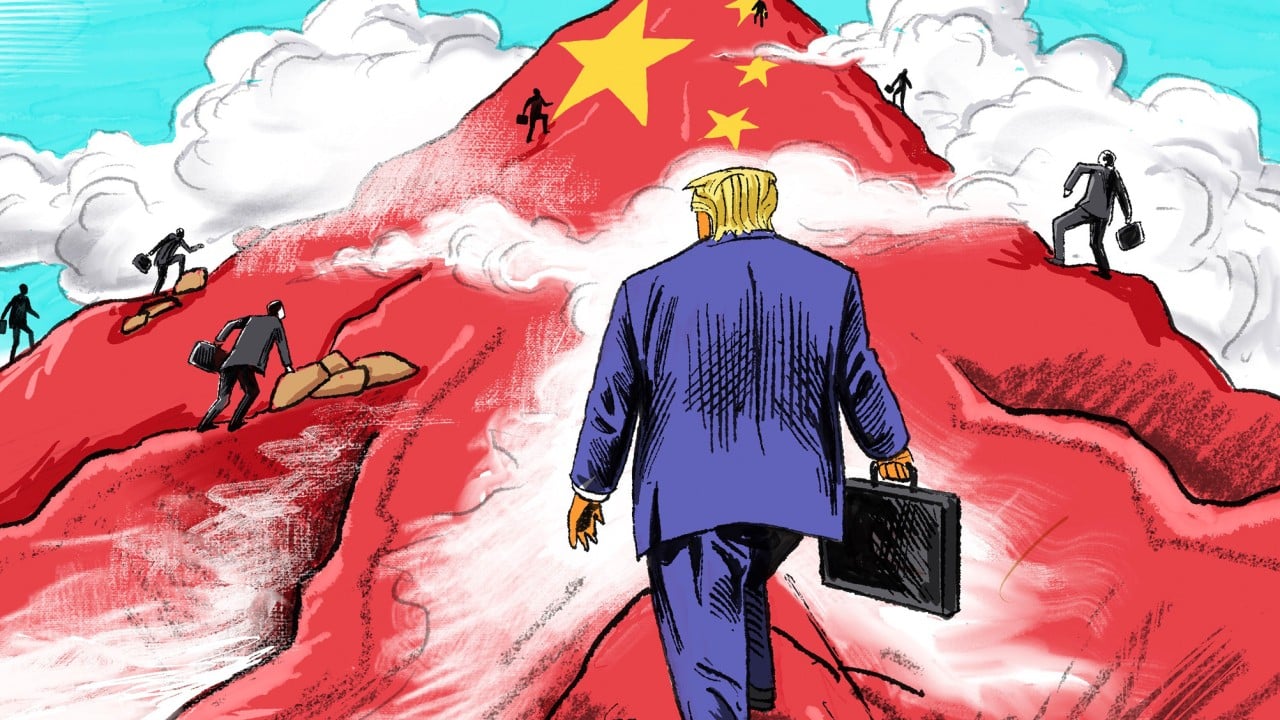
Geopolitical analysts love a grand narrative, especially when it involves the decline of the West. The breathless commentary surrounding high-profile summits between Washington, Moscow, and Beijing invariably falls into a familiar trap. The talking heads look at a handshake in the Kremlin or a bilateral trade agreement in Asia and declare that global power is moving inexorably eastward.
They are reading the map entirely wrong.
The lazy consensus states that theatrical diplomacy and surging raw commodity exports equal a permanent migration of global hegemony. It is a surface-level reading of international relations that mistakes noise for signal. True geopolitical leverage does not sit in the hands of nations that merely extract resources or assemble components. It belongs to the entities that control the global financial plumbing, the core intellectual property, and the foundational software of modern commerce.
When you strip away the optics of these summits, the reality becomes clear. The so-called Eastward power shift is not a strategic migration of strength. It is a desperate realignment of volatile economies trying to survive their own structural fragility.
The Currency Delusion
The most common argument for this supposed power shift is the "de-dollarization" narrative. Pundits point to bilateral trade agreements settled in yuan or rubles as proof that the US dollar's dominance is crumbling.
This is financial illiteracy disguised as statecraft.
A currency’s power does not come from a forced bilateral agreement between two autocracies. It comes from liquidity, rule of law, and open capital accounts. I have spent two decades advising institutional investors on sovereign risk, and I can tell you exactly how many fund managers want to lock up billions in assets denominated in a currency that can be arbitrarily frozen or devalued by a central committee on a Tuesday morning: zero.
Consider the basic mechanics of international finance. The Swift network and the Clearing House Interbank Payments System (CHIPS) still handle the overwhelming majority of global transactions. When a nation agrees to accept yuan for oil, they face an immediate bottleneck. What do they buy with those yuan? They cannot easily convert them into global assets without facing strict capital controls. They end up recycling that capital back into low-yield Chinese state debt or buying specific Chinese manufactured goods. It is not financial liberation; it is a closed-loop company store.
True economic sovereignty requires deep, liquid capital markets. The United States and its Western allies possess an ecosystem where property rights are enforceable in predictable courts. The moment a regime removes those protections, their currency becomes a tool of barter, not a global reserve. The summits we see are not a display of new financial architecture. They are a desperate attempt to build a workaround for nations locked out of the only financial system that actually matters.
The Manufacturing Trap
Another pillar of the Eastward shift argument is manufacturing output. The metrics look intimidating on paper. China produces more steel, refines more rare earths, and builds more electric vehicles than the rest of the world combined.
But volume is not value.
The Western panic over manufacturing dominance ignores the smiling curve of value creation. This economic concept demonstrates that the highest value-add stages of production exist at the beginning (R&D, design, advanced engineering) and the end (branding, marketing, proprietary software integration). The physical assembly in the middle yields the lowest profit margins and carries the highest environmental and labor liabilities.
       Value Add
          ^
High      |   R&D / Design                      Software / Branding
          |      \                                    /
          |       \                                  /
          |        \                                /
Low       |         \______ Physical Assembly ______/
          +---------------------------------------------------->
                               Production Stage
When an advanced Western aerospace firm or tech giant outsources the production of a component, they are not ceding power. They are shedding low-margin weight. The intellectual property, the software stack, and the ultimate distribution rights remain firmly in Western jurisdictions.
If a nation's entire economic strategy relies on underpricing its labor and subsidizing its energy to win manufacturing contracts, it is caught in a dependency trap. The moment wages rise or another developing nation offers cheaper terms, that manufacturing dominance evaporates. We are already seeing this shift as capital migrates to Vietnam, India, and parts of Latin America. The summits do not change the underlying math: if you do not own the IP, you are just an expensive contractor.
Demographics as Destiny
You cannot rewrite geography, and you certainly cannot rewrite demography. The narrative of an unstoppable Eastern bloc ignores the catastrophic demographic collapse facing the very nations supposedly leading the charge.
A country cannot achieve global hegemony when its working-age population is shrinking at a historic rate. The structural reality inside Russia and China paints a grim picture for the mid-century. Russia faces a prolonged public health and emigration crisis that has hollowed out its skilled labor force. China’s working-age population peaked years ago, a lagging consequence of decades of strict family-planning policies.
Compare this to the West. Despite real political polarization and broken immigration systems, Western economies possess an unparalleled mechanism for talent absorption. The world’s brightest engineers, scientists, and entrepreneurs still overwhelmingly fight to move to Silicon Valley, London, Zurich, and Munich. They are not clamoring for visas to Moscow or Beijing.
This talent drain creates a compounding deficit. Innovation is not something a state can decree through a five-year plan. It requires an environment of open critique, intellectual freedom, and the ability to fail spectacularly without disappearing from public life. The summits we watch on television are gatherings of rigid hierarchies trying to command innovation by fiat. It has never worked historically, and it will not work now.
The Alliance Asymmetry
Let’s look at the actual nature of these Eastern alignments. The media presents the meetings between Moscow, Beijing, Pyongyang, and Tehran as a formidable new axis.
This is a profound misunderstanding of the word "alliance."
The Western alliance system—headlined by NATO, the G7, and Five Eyes—is built on institutionalized, treaty-bound integration. It features interoperable military command structures, shared intelligence networks, and deeply integrated economies that have functioned collaboratively for generations. It is a resilient framework designed to withstand political shifts within its member states.
The alternative bloc is an alliance of convenience, driven entirely by shared grievances rather than shared values. There is deep, historical mistrust between Moscow and Beijing over borders, migration, and regional influence in Central Asia. They do not share intelligence freely. They do not have interoperable military doctrines. They are transactional partners who will gladly underwrite each other's actions until the costs outweigh the immediate benefits.
I have seen corporate partnerships built on this exact foundation. They look terrifying on a press release, but they fracture the moment the market turns. A coalition built on a mutual dislike of the global status quo cannot build a sustainable alternative status quo.
The True Cost of Containment
To be absolutely fair, the Western model has a gaping vulnerability, but it isn't the one the pundits talk about. The danger to the West is not that the East will outcompete it; the danger is that the West will destroy its own competitive advantages through imitation.
In reacting to the perceived Eastward shift, Western governments are increasingly adopting the bad habits of their competitors. We see a rise in aggressive industrial policy, state-directed subsidies, and protectionist tariffs. This is an admission of fear, and it is entirely counterproductive.
When the West attempts to play the game of state-directed capitalism, it loses. The strength of the Western market lies in its chaotic, decentralized efficiency—the fact that capital allocation is decided by thousands of competing funds and entrepreneurs rather than a centralized bureaucracy. By trying to pick winners and losers to counter the Eastern model, Western nations risk choking the very engine that won the Cold War.
Dismantling the Premise
The questions being asked by international observers are fundamentally flawed.
- Is the East winning the economic war? No. They are winning the volume war while losing the value war.
- Will the yuan replace the dollar? Not until Beijing permits free capital flight and establishes an independent judiciary—two things that would destroy the ruling party's domestic control.
- Do these summits signal a new world order? They signal the creation of an isolated, defensive enclave for regimes locked out of the primary global economy.
Stop looking at the seating arrangements at these summits. Stop analyzing the body language of autocrats as if it translates to GDP growth or technological breakthroughs.
Power in the modern world is invisible. It is found in the clearing codes of global banks, the operating systems of advanced machinery, the patents for semiconductor lithography, and the legal frameworks that protect a founder's right to their own creation. Until the tents in the East can replicate that infrastructure, the global shift is nothing more than a media hallucination.