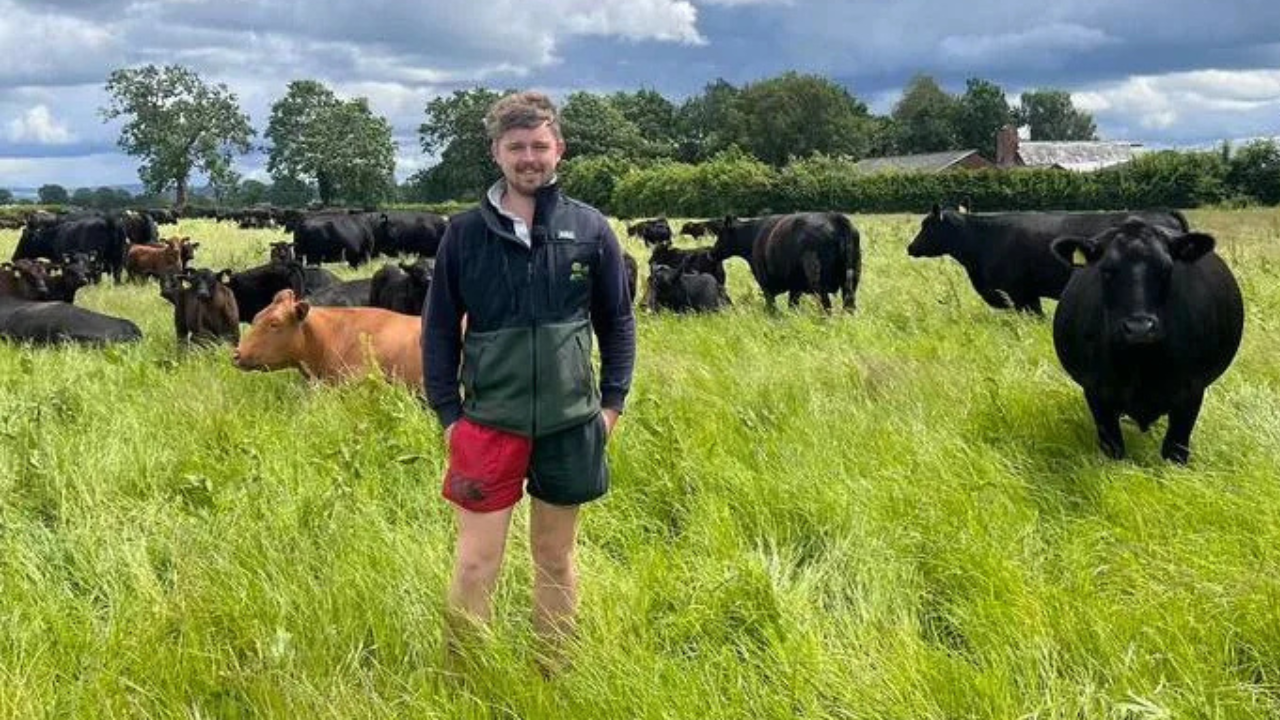
The feel-good media engine loves a good agricultural fairy tale. You have probably read some variation of it recently: a bright-eyed ten-year-old boy writes a handwritten letter to a local farm owner begging for work experience. Flash forward thirteen years, and that same kid is now twenty-three, standing in a muddy field, helping run the entire multi-million-dollar business.
Cue the applause. Cue the commentary about traditional work ethic, grit, and the timeless beauty of mentorship.
It makes for a fantastic headline. It is also an absolute disaster for the agricultural industry.
When we celebrate these isolated stories of exceptional, hyper-local devotion as the blueprint for industry survival, we are actively ignoring a systemic collapse. Relying on ten-year-olds with serendipitous initiative to save farming isn't a labor strategy. It is an admission of operational failure.
I have spent nearly two decades analyzing labor structures across capital-intensive industries. I have watched legacy sectors blow millions of dollars trying to replicate romanticized, word-of-mouth talent pipelines while their actual workforce ages into obsolescence. Agriculture is currently running headfirst into this wall, blinded by its own nostalgia.
The lazy consensus says we need more Jacks—more passionate kids willing to knock on doors and sweep barn floors for pennies until they inherit the keys. The brutal reality? The industry needs to stop looking for unicorns and start building a scalable, corporate pipeline that appeals to adults who can code, analyze supply chains, and manage heavy capital expenditure.
The Dangerous Romance of the Legacy Pipeline
Let us dismantle the premise of the feel-good mentorship narrative.
The classic agricultural pipeline relies heavily on what economists call informal human capital acquisition. Translation: learning by osmosis because your dad did it, your neighbor did it, or you hung around the tractor shed long enough to figure out how to swap a hydraulic filter.
This model worked brilliantly in 1950. It does not work today.
When an industry relies on an unscalable anomaly—like a child committing to a career path before their brain is fully formed—it masks the deep structural flaws that repel outside talent. Consider the actual mechanics of the story everyone loves to share. A kid works for over a decade to achieve a managerial position. In any other high-stakes sector, a thirteen-year path to middle management without formal equity guarantees or a transparent corporate ladder would be flagged as an exploitative retention strategy.
By framing this as a heartwarming triumph, legacy operators avoid asking the terrifying questions they actually need to answer:
- Why does your business model require thirteen years of cheap, hyper-local loyalty to produce one manager?
- Why can you not recruit a highly qualified twenty-five-year-old graduate from an elite agricultural college or tech program to do the same job tomorrow?
- What happens to your business continuity when the local kid decides he wants to move to the city or build software instead?
If your succession plan depends on lightning striking twice in the same geographic zip code, you do not have a business. You have a ticking time bomb.
The Technological Illiteracy of Agricultural Recruiting
Farming is no longer about brute strength and a love for the land. It is an industry driven by autonomous machinery, satellite telemetry, variable-rate nitrogen application, and predictive yield modeling.
Yet, agricultural recruitment marketing still looks like a John Deere commercial from the mid-90s: sunsets, dirt, and calloused hands.
This marketing strategy attracts a very specific, dwindling demographic while alienating the exact professionals the sector desperately needs. If you look at the data from institutions like the USDA or the European Commission, the average age of a farm operator hovers around 58 to 60 years old. The demographic cliff is real, and it is steep.
To bridge this gap, operations require professionals who understand data architecture as well as they understand crop rotation. When you highlight a story about a kid who worked his way up from sweeping floors, you send a clear signal to high-tier, tech-adjacent talent: We value tenure over skill. We value tradition over optimization.
Imagine a scenario where a logistics tech company tried to recruit software engineers by bragging about a manager who started by sorting mail in the basement at age ten. They would be laughed out of the room. Yet, agriculture treats this exact pipeline as its crowning achievement.
The Dark Side of Intrinsic Motivation
There is a dark truth that nobody in agribusiness wants to say out loud: the industry leverages intrinsic motivation to underpay talent.
People enter farming because they love the lifestyle, the animals, or the heritage. Legacy operators know this. Because the talent is driven by passion rather than pure financial incentive, the industry has historically gotten away with brutal hours, substandard safety protocols, and compensation packages that lag far behind comparable corporate roles.
But the "passion tax" has hit its absolute limit.
When a young professional looks at the current macroeconomic environment—housing costs, inflation, the necessity of healthcare infrastructure—passion stops being a viable currency. A twenty-three-year-old helping run an agricultural enterprise should not be a remarkable anomaly celebrated in a local newspaper. They should be a highly compensated executive executing a data-driven strategy with clear equity milestones.
If the industry does not shift from a lifestyle-first pitch to a compensation-and-equity-first pitch, the brain drain will accelerate. The smart kids from rural communities will continue to take their talents to tech firms, financial institutions, and logistics giants, leaving legacy operations to be swallowed up by massive corporate syndicates that view land purely as an asset class.
Redefining the Agricultural Labor Question
If you look at public forums or industry panels, the most frequent questions center around a flawed premise: "How do we get kids interested in farming again?" or "How do we preserve the family farm model?"
These are the wrong questions. They assume the problem is a lack of interest rather than a lack of viability. Let us answer the real, uncomfortable questions instead.
Why can't independent operations compete with corporate agriculture for talent?
Because independent operations refuse to institutionalize. Corporate agribusiness combines farm management with clear corporate frameworks: 401(k) matching, defined working hours, structured bonuses based on metric-driven performance, and distinct boundaries between personal life and work life. The independent sector still expects employees to work eighty-hour weeks during harvest because "that is just how it is done." It is not sustainable, and it is a massive competitive disadvantage.
What is the actual cost of the apprenticeship model?
It is incredibly inefficient. Training an unqualified individual over a decade costs more in hidden operational drag, unoptimized decision-making, and missed technological adoption than hiring an expensive, pre-trained expert. The industry must stop treating long-term apprenticeship as a cost-saving measure. It is a capital drain disguised as mentorship.
Stop Looking for Disciples. Start Hiring Executives.
If you are running an agricultural business and you are waiting for a passionate ten-year-old to write you a letter, you are choosing slow death. Here is the contrarian blueprint for building a resilient operational workforce that doesn't rely on folklore:
1. Decouple Tenure From Authority
The fact that someone has worked on a specific piece of land for a decade does not make them qualified to optimize a digital supply chain or manage a multi-million-dollar credit line. Stop promoting based on time served. Start hiring based on systemic capability. If a twenty-four-year-old candidate with zero farming background understands how to optimize automated asset deployment better than a twenty-year veteran, give the young candidate the keys to the operation.
2. Implement Phantom Equity and Succession Milestones
If you find elite talent outside your family, you cannot retain them with vague promises of "helping run the business." They need skin in the game. Implement phantom stock options, performance-tied profit sharing, or contractual pathways to asset ownership. If your operational managers do not see a direct line between yield optimization and their own personal net worth, they will eventually leave you for an industry that does.
3. Kill the "Lifestyle" Narrative in Job Descriptions
Stop writing job listings that ask for a "passionate self-starter who loves the rural way of life." Write listings that look like they came from a silicon-valley logistics firm. Focus on the scale of the capital under management, the sophistication of the tech stack, the clear boundaries of the shift work, and the exact financial upside. Treat your labor force like professionals, not disciples.
The heartwarming story of the boy who wrote a letter and stayed for thirteen years is a beautiful relic of a passing era. It belongs in a museum, not a corporate strategy session. If agriculture wants to survive the radical shift toward automation, climate volatility, and capital consolidation, it needs to burn the old storybook. Stop looking for kids who want to sweep the barn. Start hiring the professionals who want to automate it.