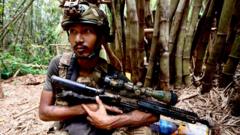
The junta in Myanmar is running out of soldiers. Faced with relentless pressure from coordinated rebel offensives, the military regime resorted to a desperate measure that is shaking the country to its core: enforcing a long-dormant conscription law. But instead of reinforcing their depleted ranks, the generals in Naypyidaw are triggering an unprecedented wave of resistance, economic chaos, and mass flight.
If you are trying to understand why the conflict in Myanmar is suddenly shifting, you have to look at what is happening inside the villages and urban wards. The military is desperate. They are losing bases, major trade routes, and thousands of troops to casualties and defections. Forcing young men and women into uniform was supposed to turn the tide. Instead, it is blowing up in the regime's face. Don't miss our recent coverage on this related article.
The Reality of Forced Recruitment Inside Myanmar
The People’s Military Service Law, dusted off and enacted by junta leader Min Aung Hlaing, makes conscription mandatory for men aged 18 to 35 and women aged 18 to 27. In some professional categories, the age limit pushes even higher. The enforcement is brutal.
Local administrative officials, acting under direct pressure from the military, use lottery systems to select names from neighborhood registries. But it doesn't stop at a random draw. Reports from human rights groups and local media outlets like Myanmar Now and the Irrawaddy confirm that night raids, random street abductions, and forced disappearances have become standard operating procedures. To read more about the background here, Associated Press provides an excellent breakdown.
If a selected youth flees, the military routinely takes family members hostage. They demand massive bribes—often thousands of dollars, a fortune in Myanmar's wrecked economy—to release a son or daughter from the draft lists. The system is corrupt, chaotic, and driven entirely by fear.
Why the Conscription Strategy is Failing the Junta
Putting a gun in the hands of someone who hates you is a terrible military strategy. The junta is finding this out the hard way. The forced recruitment drive is actively harming the military’s war effort in several ways.
Low Morale and Green Troops
The junta is sending raw, untrained, and deeply resentful recruits to the front lines. These individuals receive minimal training before being thrust into active combat zones against highly motivated, battle-hardened resistance fighters. The result? High rates of desertion and surrender at the first sign of combat.
Fueling the Resistance
Instead of submitting to the draft, thousands of young people are making a deliberate choice. They are choosing to fight against the regime. The People’s Defense Forces (PDFs) and various Ethnic Armed Organizations (EAOs) have seen a massive surge in volunteers since the conscription law took effect. Young people from Yangon, Mandalay, and small rural towns are fleeing to liberated territories, trading their civilian lives for guerrilla warfare.
Junta Conscription Push -> Widespread Fear -> Flight to Liberated Zones -> Explosion in Rebel Recruitment
The Brain Drain and Economic Collapse
The economic fallout is staggering. Myanmar's youth are the backbone of its remaining workforce. As young professionals, factory workers, and students flee the country or go into hiding, businesses are shutting down. Factories cannot find labor. The banking sector is under immense strain as families scramble to liquidate assets to pay for bribes or smuggling fees to get their children out of the country.
The Neighboring Crisis and the Flight to Thailand
The desperate rush to escape the draft has spilled over Myanmar's borders, creating a massive humanitarian and diplomatic headache for neighboring countries, especially Thailand.
Long lines snake outside the Thai embassy in Yangon every single day. Visas are gold. For those who cannot secure legal entry, illegal border crossings have skyrocketed. Towns like Mae Sot on the Thai-Myanmar border are overflowing with young Burmese citizens hiding from the junta's reach.
Thailand faces a delicate balancing act. While Thai authorities have increased border patrols, the sheer volume of people fleeing the draft makes total containment impossible. This influx changes the regional dynamic, forcing international observers to realize that the crisis in Myanmar cannot be contained within its own borders.
Rebel Positions and the Shifting Front Lines
The context to all of this is Operation 1027, the massive rebel offensive launched by the Three Brotherhood Alliance that shattered the myth of the junta's military invincibility. The military lost control of vital border crossings with China, dozens of towns, and hundreds of military outposts.
The conscription drive was a direct response to these humiliating defeats. The generals needed bodies to hold the line. But the resistance isn't slowing down. While the junta has managed to reclaim a few pockets of territory through scorched-earth tactics and indiscriminate airstrikes, their ground forces are stretched incredibly thin. They rely heavily on artillery and air power because their infantry units are fractured and understaffed.
The resistance forces are playing a long game. They are integrating these new, highly educated urban volunteers into their structures, utilizing their tech skills for drone warfare, fundraising, and cyber operations. The gap between the junta's forced, demoralized army and the resistance's tech-savvy, motivated volunteer force is widening every month.
What You Can Do to Monitor and Support
Understanding the crisis is only the first step. The situation on the ground changes rapidly, and staying informed requires looking at the right sources and taking practical steps to support those affected.
- Follow Ground-Level Reporting: Avoid state-run propaganda. Rely on independent Myanmar media outlets like Frontier Myanmar, Myanmar Now, and the Irrawaddy for verified updates on conscription enforcement and front-line shifts.
- Support Mutual Aid Networks: Grassroots organizations on the Thai-Myanmar border provide food, shelter, and legal support to fleeing youth. Direct donations to these local, trusted networks cut through bureaucratic red tape and deliver immediate relief.
- Amplify Local Voices: Use social media platforms to share firsthand accounts and verified reports from activists inside the country who risk imprisonment or death to document the junta's abuses.
The junta thought forced conscription would save them. Instead, it has unified a fractured nation against them, turning an entire generation of young people into their fiercest enemies.


