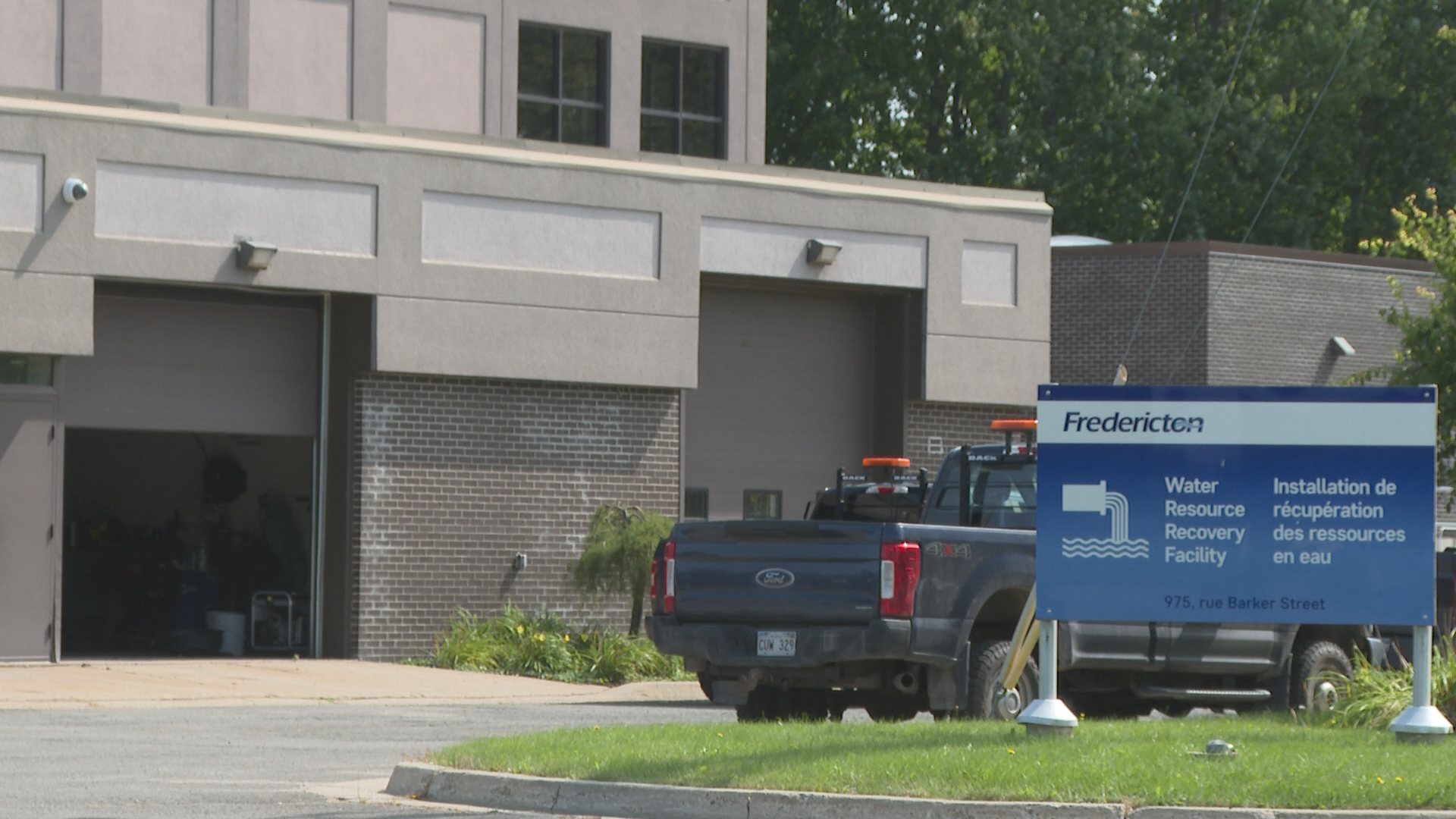
Urban infrastructure bottlenecks expose municipal governance flaws when capacity thresholds fail to match demographic expansion. The chronic stench emanating from the Barker Street wastewater treatment facility in Fredericton demonstrates a classic operational failure mode: processing infrastructure scaling linearly while organic load inputs scale exponentially. When local residents report that the airborne effluent is potent enough to taste, they are registering the downstream sensory impact of an overloaded municipal asset operating far beyond its original design parameters.
Understanding this failure requires examining the mechanical realities of the Barker Street Water and Sewer Utility. Wastewater treatment relies on controlled biological decomposition. Microorganisms consume organic waste, producing stabilized byproducts known as biosolids. These solids are mechanically dewatered and diverted toward manufactured topsoil production. This entire biological loop is temperature-dependent and volume-sensitive. If you enjoyed this article, you should check out: this related article.
Population growth across the municipality has driven raw sewage inflows upward. Historical throughput numbers hover around 4,500 tonnes of annual biosolids, but current metrics register closer to 6,000 tonnes. That represents a 33 percent surge in solid waste volume requiring stabilization, dewatering, and transport. The facility has responded by extending operational windows, adding roughly 28 hours of overtime work to a standard 40-hour operating schedule.
This operational adjustment creates a distinct conflict between municipal output and community habitability. The primary vectors for community-level odour pollution are twofold: active biological processing and solids transportation. For another perspective on this story, refer to the recent update from NBC News.
The biological processing vector intensifies during warm weather months. Elevated ambient temperatures accelerate bacterial metabolism inside the treatment basins. Faster microbial reproduction rates increase volatile organic compound generation and hydrogen sulfide release. When the plant increases processing hours to manage higher hydraulic and organic loads, it extends the temporal window during which these odorous gases escape into the surrounding Devon neighbourhood.
The transportation vector compounds the issue. Dewatered biosolids must be loaded into heavy dump trucks for removal. Every time a loaded vehicle cycles through the facility gates, agitated sludge exposes fresh surface area to the atmosphere, releasing concentrated bursts of odorants that drift directly into residential sightlines and patios.
Municipal authorities have attempted to mitigate the friction by shifting the operational schedule, concentrating the heaviest processing phases between midnight and mid-afternoon. While altering operating hours shifts the temporal distribution of emissions, it fails to alter the underlying mass balance equation. Processing 6,000 tonnes of biosolids annually through a plant engineered for a smaller footprint generates an unavoidable volume of gaseous byproducts. Chemical treatments currently under experimental evaluation offer variable efficacy and require extended calibration cycles before achieving measurable reductions in ambient volatility.
Resolving chronic municipal odour pollution of this scale requires moving past reactive scheduling adjustments and implementing structural engineering upgrades. Capital allocation must prioritize enclosed bioreactors equipped with negative air pressure systems and biofilter scrubbers to intercept volatile compounds before atmospheric dispersion occurs. Until the capital expenditure matches the demographic reality, urban proximity to municipal utility assets will remain an exercise in environmental friction.