Everyone covering the relisting of Mt. Waterman is selling the exact same lazy romanticism.
An hour from downtown Los Angeles. Historic 1939 heritage. Steep double-black diamond tree runs. And all of it yours for the bargain-basement price of $3,275,000. Real estate blogs and ski publications are framing the collapsed October 2024 takeover—and the subsequent death of its boldest pitch, the members-only "Waterman100" club—as a temporary financing hiccup. They imply that if the right angel investor simply steps up with a wire transfer and a heart of gold, Southern California’s legendary mom-and-pop ski hill will rise from the ashes.
That narrative is pure fiction.
The deal didn't fall apart merely because the buyers ran out of cash or because a Pineapple Express storm battered Chair 1. The deal collapsed because Mt. Waterman, as a standalone public ski area, is fundamentally broken by federal land law, Southern California hydrology, and modern liability economics. Anyone writing a $3.3 million check expecting to run a profitable winter ski resort isn't buying a mountain. They are buying an uninsurable, capital-starved regulatory trap.
The $3.3 Million Illusion vs. Real Capital Expenditure
Let's dismantle the price tag first. In a Los Angeles real estate market where a tear-down bungalow in Venice trades for $2.5 million, $3.275 million for 390 acres of skiable terrain and three chairlifts sounds like the steal of the century.
It isn't. The asking price is merely the cover charge to enter a brutally expensive construction zone.
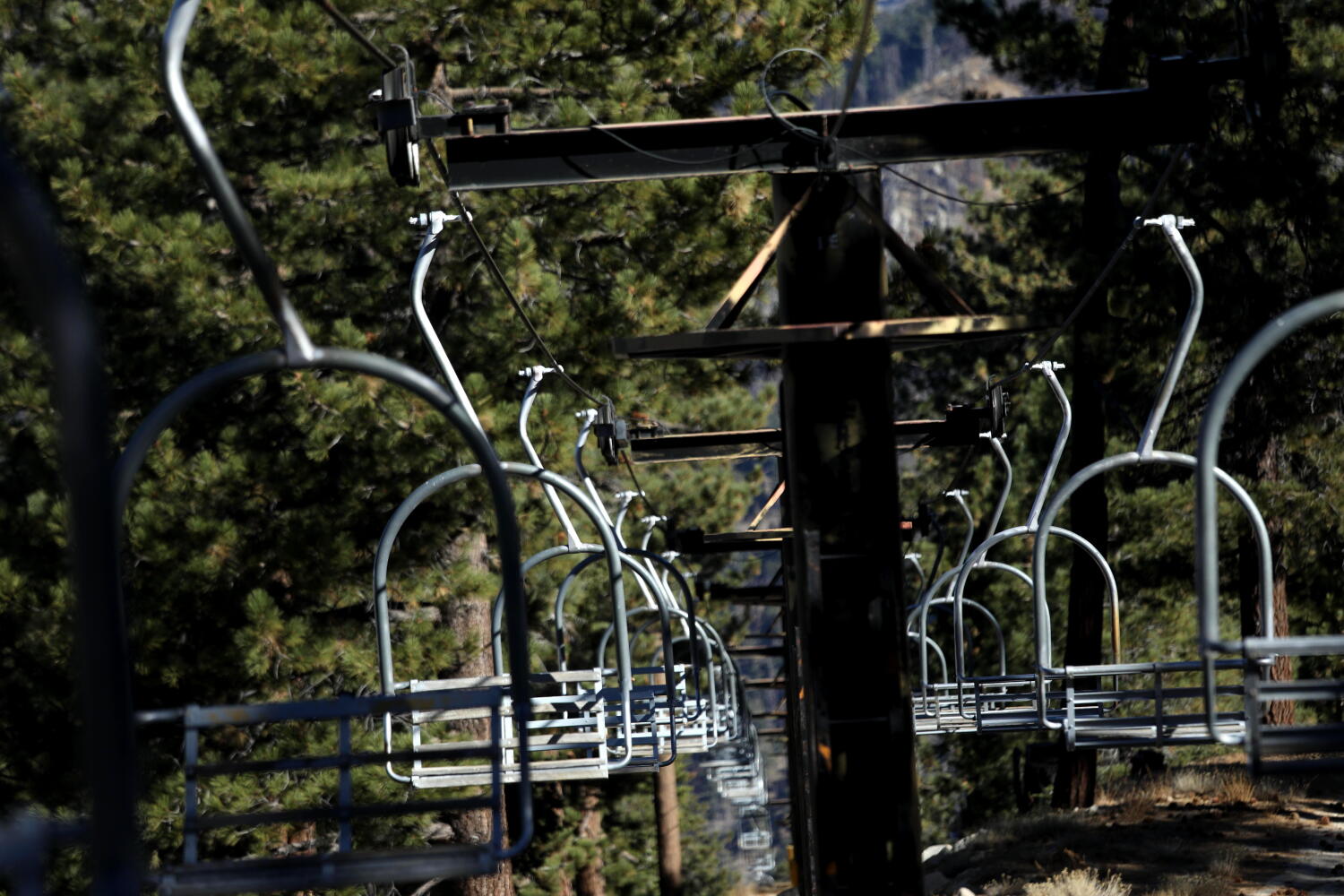
When you buy Mt. Waterman, you aren't buying land. You are buying aging iron—specifically, three fixed-grip double chairlifts dating back decades—and a 20-year U.S. Forest Service Special Use Permit (SUP). Right now, Chair 1, the primary artery that hauls skiers from the base parking lot at 7,000 feet up to the Warming Hut and upper mountain, is inoperable after severe storm damage.
I have watched regional operators bleed millions trying to resuscitate legacy fixed-grip lifts. You don't just order replacement parts on Amazon for 20th-century haul ropes, bullwheels, and grip assemblies. Custom fabrication, non-destructive testing, California Passenger Tramway Unit inspections, and helicopter concrete pours can easily swallow $1.5 million to $3 million before a single paying customer loads a chair.
And that only gets you back to baseline—a baseline that relies entirely on Mother Nature.
| The Broker Pitch | The Operational Reality |
|---|---|
| $3.275M "Turnkey" Entry | Requires immediate seven-figure CapEx just to repair storm-damaged Chair 1 and satisfy state tramway inspectors. |
| 180 Inches of Annual Snowfall | Boom-or-bust precipitation swings that leave the mountain closed for years at a time, averaging just 12 to 25 operating days in viable winters. |
| 60% Advanced Terrain | Inverted mountain layout places beginner terrain at the summit, forcing novices to download Chair 1—a logistical nightmare. |
| 1 Hour from Downtown LA | Dependent on Angeles Crest Highway (SR-2), a landslide-prone mountain road that Caltrans regularly closes for months after big storms. |
Why the "Private Club" Model Was DOA on Public Land
To understand why the previous buyers—an investment group called AMP—failed, you have to look at the fatal collision between private equity math and federal land policy.
AMP knew a brutal truth that mainstream ski media refuses to print: you cannot pay off multi-million-dollar debt selling $70 lift tickets 18 days a year.
So they engineered the "Waterman100" plan. The pitch was textbook exclusivity: sell 100 ultra-wealthy Los Angeles buyers inheritable memberships featuring private powder days, shared equity liquidity, and helicopter shuttles straight from the basin to bypass traffic. On paper, it was the Yellowstone Club of the San Gabriels.
There was just one problem. The Yellowstone Club sits on private deeded land in Montana. Mt. Waterman sits inside the Angeles National Forest.
Under the National Forest Ski Area Permit Act of 1986, a Special Use Permit grants a private operator the right to build and maintain commercial recreation infrastructure on public land for the benefit of the general public. The U.S. Forest Service does not lease federal forests so 100 millionaires can lock the gates on a powder Tuesday. When word of private powder days and exclusive club tiers hit the press in late 2024, Forest Service officials publicly poured cold water on the concept, noting they would not allow exclusive use.
Once federal regulators signaled that the exclusivity model was non-compliant, AMP’s entire capital stack evaporated. Without guaranteed high-margin initiation fees to underwrite the acquisition and lift repairs, no institutional lender or sane private investor would touch the debt. Listing agent Marc Ramirez summarized the collapse bluntly to reporters: they didn't have the money. More accurately, they didn't have a legally permissible business model that could raise the money.
The Three Structural Flaws Nobody Wants to Admit
Even if a benevolent billionaire buys Mt. Waterman in cash tomorrow and vows to keep it 100% open to the public, three structural realities stand between the ticket booth and solvency.
1. Zero Snowmaking in a Boom-or-Bust Climate
Compare Mt. Waterman to its regional competitors. Bear Mountain and Snow Summit in Big Bear pull roughly 700,000 skier visits a year because they sit next to a massive reservoir and run one of the most aggressive snowmaking systems in North America. Mountain High in Wrightwood pumps water from deep wells to blanket its slopes regardless of whether storms show up.
Mt. Waterman has zero snowmaking. None.
It relies exclusively on natural snowfall across an elevation band of 7,000 to 8,030 feet. In the San Gabriel Mountains, precipitation is wildly erratic—wet years deliver five to ten times the moisture of dry years. Between 2020 and early 2024, Mt. Waterman failed to open for over four consecutive years. When it finally spun its lifts in March 2024, staffing shortages—a direct consequence of irregular, unpredictable operations—forced it to run just one or two days a week. You cannot retain certified lift mechanics, ski patrollers, and snowcat operators when you cannot guarantee them a paycheck from December to April.
2. The Caltrans Bottleneck
Mt. Waterman's greatest marketing hook—its proximity to Los Angeles—is also its single biggest point of failure. Access depends entirely on State Route 2, the Angeles Crest Highway.
Whenever a massive Pacific storm dumps the four to eight feet of snow Waterman needs to open its steep, un-groomed terrain, that exact same storm triggers rockslides, washouts, and avalanche hazards along SR-2. In February 2023, eight feet of snow buried the mountain, yet Caltrans couldn't clear and repair the highway until the storm window had largely passed. In February 2024, five to seven feet fell in week one, yet road closures kept the public locked out until February 21. Imagine owning a retail store where the state police barricade the only road to your parking lot on your highest-volume sales days of the year.
3. An Upside-Down Mountain Built for the Wrong Demographic
Modern Southern California snow sports are overwhelmingly driven by beginner-to-intermediate families and park-focused snowboarders. Mt. Waterman is the exact opposite.
Sixty percent of its 150 skiable acres are rated advanced. Worse, the mountain is physically inverted. The gentle beginner slopes and the Warming Hut sit at the top of the mountain, while the steep, ungroomed mogul runs and tight tree chutes drop down to the base. Novice skiers have to ride Chair 1 up to the beginner zone, and then—because they cannot safely ski the lower mountain—they must take their skis off and ride the chairlift back down at the end of the day. That kills uphill capacity, doubles loading liability, and alienates the exact beginner demographic that pays full retail for lessons and rentals. (And currently, Mt. Waterman doesn't even offer on-hill gear rentals.)
Stop Asking Who Will Save the Ski Hill
If you search online for Mt. Waterman right now, you'll see the same predictable questions: When will Mt. Waterman reopen? Can an indie pass like Indy Pass save it? Why doesn't Alterra or Vail buy it?
Those questions are built on a broken premise.
First, Alterra Mountain Company (owner of Mammoth and Big Bear) and Vail Resorts wouldn't touch Mt. Waterman if it were free. Megapass conglomerates don't buy 150-acre, non-snowmaking liabilities with zero base-area real estate to monetize. Their business model relies on predictable season-pass volume and high-margin lodging, food, and retail—none of which exist at a roadside parking lot on SR-2.
Second, joining a multi-mountain coalition like the Indy Pass solves marketing, not physics. An Indy Pass partnership brings skier traffic on peak powder weekends—the exact weekends when Waterman's tiny roadside parking lot already overflows by 7:30 AM. It does nothing when the mountain is bare dirt in January or when SR-2 is washed out in March.
The Only Play That Actually Works
To make Mt. Waterman viable, the next buyer has to stop treating it as a winter ski resort that occasionally does summer stuff, and invert the entire business model.
Make it a four-season gravity bike park and high-altitude retreat first, and treat winter skiing as a high-margin weather bonus.
Look at the math. Winter operations at Waterman are capped at roughly 15 to 25 days a year. Meanwhile, Southern California has 18 million residents starving for cool, high-elevation outdoor recreation from May through November. At 7,000 to 8,030 feet, Mt. Waterman sits 20 to 30 degrees cooler than the scorching San Gabriel Valley floor below.
Right now, Waterman charges $40 a day for lift-served mountain biking on basic fire roads and offers an 18-hole disc golf course. That is barely scratching the surface. Consider a scenario where an operator invests $1.5 million not into pipe dreams of winter snowmaking—which lacks both water rights and reservoir infrastructure—but into professionally sculpted, flow-style downhill mountain bike trails, e-bike charging hubs, and high-altitude trail-running events.
- Predictable Revenue: Summer and fall weather in the San Gabriels is dry and reliable. You can sell season bike passes, host weekend enduro races, and run wedding/corporate retreats at the 8,000-foot Warming Hut for 26 consecutive weekends without praying for a Pacific storm.
- Staff Retention: Full-time trail builders and bike patrollers in summer transition directly into lift operations and ski patrol in winter. You solve the seasonal labor crisis overnight.
- Zero Snowmaking CapEx: Gravity trails require dirt work and drainage, not multi-million-dollar high-pressure water mains, compressor houses, and scarce mountain aquifers.
When an atmospheric river does slam the San Gabriels in February, you spin the lifts, drop the ropes on the best tree skiing in Southern California, and pocket pure upside.
The Catch Nobody Mentions
Even this four-season pivot comes with brutal friction. The U.S. Forest Service National Environmental Policy Act (NEPA) review process for cutting new singletrack bike trails or expanding summer events on federal land moves at a glacial pace. A buyer will spend 18 to 36 months navigating environmental assessments, biological surveys for endangered mountain yellow-legged frogs, and public comment periods before moving a single cubic yard of dirt.
You cannot fund that timeline with high-interest bridge loans. It requires patient, unleveraged capital and an operator fluent in federal land bureaucracy—not real estate developers looking for a quick private-club flip.
Mt. Waterman is an irreplaceable piece of California ski soul. Its tree runs are legendary, and its history is unmatched in the Southland. But nostalgia doesn't pay for haul-rope inspections, and romanticizing a $3.3 million listing price won't clear landslides off Highway 2.
If the next buyer steps up thinking they just bought a cheap ski resort, they'll be back on the market in two years—right alongside Chair 1.


