Depth does not always mean safety. Sometimes, it is merely a cage carved from stone, waiting for the right key to turn in the lock.
Consider the geography of ambition. Deep beneath the jagged ridges of Iran, far from the prying eyes of roadside checkpoints and the casual gaze of satellite imagery, engineers poured thousands of tons of concrete into the earth. They built a sanctuary for atoms, a labyrinth designed to split the building blocks of the universe away from the sunlight. To the outside world, it is known by dry coordinates and strategic designations. To the men who built it, it was meant to be impregnable. A vault buried so deep within the mountain that history itself could not touch it.
Stone remembers pressure.
I remember the smell of dust that hangs heavy in underground command bunkers, the kind of stillness that presses against your eardrums before the sirens even begin to wail. It is a specific kind of quiet, born of the terrible knowledge that human error and human pride share the same narrow hallway. When political leaders speak of a nuclear lair as a temporary obstacle or dismiss an escalating theater of war as minor friction, they are talking in the abstract. They are speaking from mahogany rooms thousands of miles away from the damp earth and the ticking sensors.
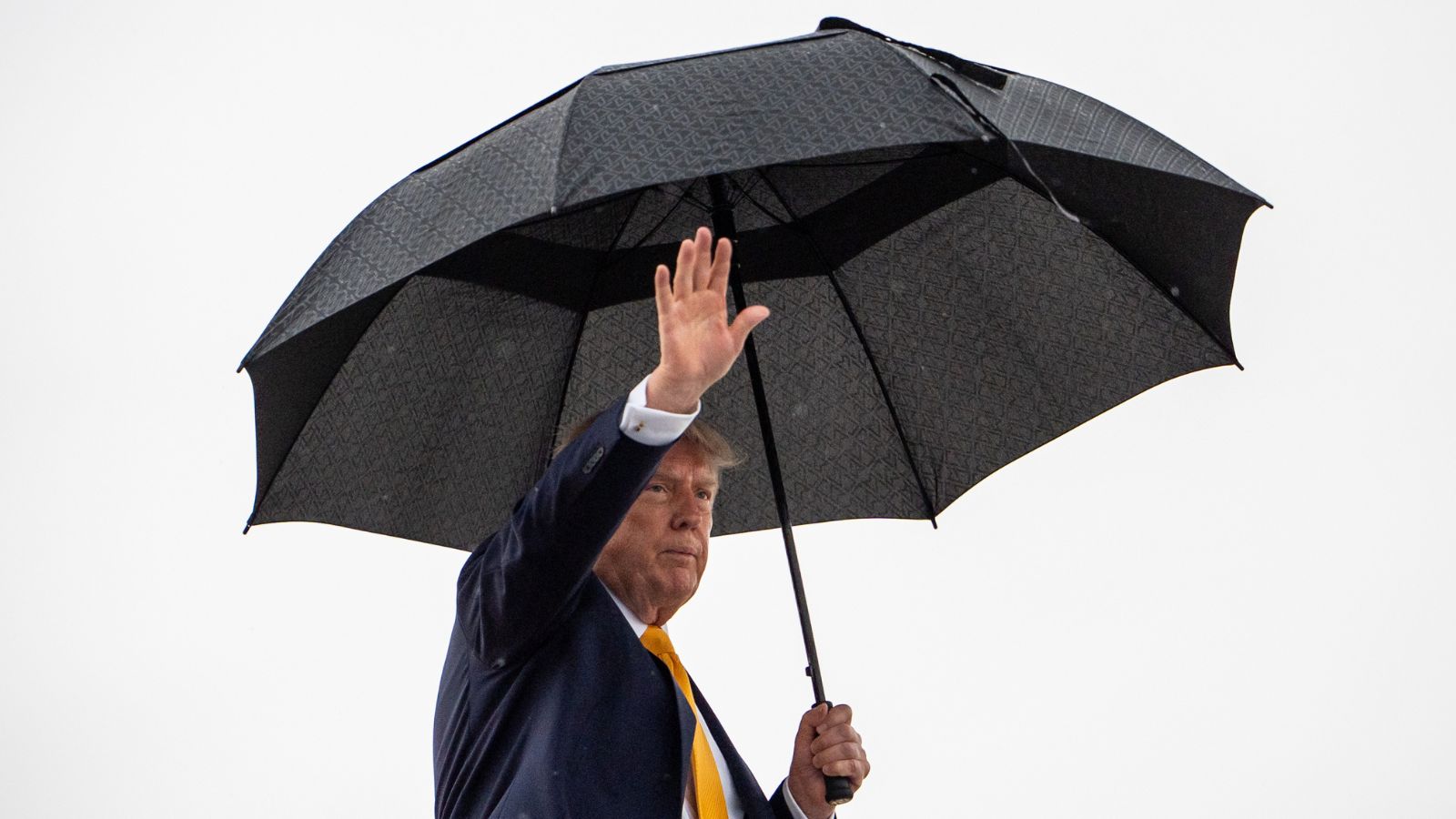
Donald Trump recently broke that quiet with a characteristic bluntness, warning that a strike on these fortified subterranean sites could happen very soon, casually labeling a potential flashpoint as small potatoes for a superpower. The phrasing is designed to minimize, to compress a terrifying geopolitical precipice into a soundbite. But anyone who has ever stood near the blast door of a reinforced facility knows there is nothing small about the threshold of escalation.
Think about the architecture of modern deterrence. For decades, the strategy relied on distance, on diplomacy, on the slow, grinding machinery of sanctions that felt like watching glaciers move. Yet, when diplomacy stalls, governments reach for heavier tools. They reach for bunker-busters, ordinances designed to burrow through hundreds of feet of granite before detonating.
This is where the metaphor of the mountain breaks down. A mountain is supposed to be permanent. It outlasts dynasties, languages, and borders. Yet modern military technology treats mountains like fragile crusts.
Imagine an anonymous shift supervisor inside that subterranean facility. Let us call him Reza, though his name matters less than the digital readouts flickering across his console. For years, his life has been measured in centrifuge rotations and coolant temperatures. He does not think about the United Nations Security Council or campaign speeches on American television screens. He thinks about power surges. He thinks about the fragile seals on containment valves. When he hears that leaders are casually weighing the timeline of a strike against his workplace, the abstract debate transforms into a visceral panic. For Reza, the war is not small potatoes. It is the ceiling collapsing.
There is a dangerous rhythm to how modern conflicts are narrated. We consume threats like weather reports. A storm is coming, someone says, but it will probably miss us. We read headlines about nuke lairs and impending deadlines while eating breakfast, scrolling past the gravity of the situation with a flick of a thumb. We have normalized the abnormal. We treat the brink of catastrophe as background noise.
History tells us that mountains do not protect the people who hide inside them when the calculus of war shifts. From the ancient citadels of the Peloponnesian War to the deeply buried bunkers of the twentieth century, fortification has always invited heavier destruction. The deeper you dig, the more absolute the ambition to reach you becomes.
When a superpower declares that a confrontation with a heavily armed adversary is negligible, it sends a signal that restraint is merely a matter of convenience. It signals that the threshold for crossing the Rubicon has been lowered until it is flush with the ground.
We are standing at the edge of a precipice disguised as routine news. The concrete will not save them. The rhetoric will not save us.
The mountain stands silent against the evening sky, holding its heavy secret in the dark, waiting to see who will strike the match first.