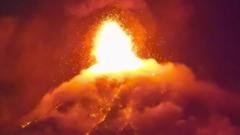
The air tasted like pennies and burnt hair.
Before the sound arrived, there was the pressure. It was that heavy, sickening drop in the ears that comes right before a thunderstorm, except this storm was rising from the earth itself. Mateo knew that pressure. He had lived his fifty-two years in the shadow of Guatemala’s Volcán de Fuego, a jagged, majestic giant that locals simply call Fuego. Fire. For a different perspective, see: this related article.
He didn't need to look out his kitchen window to know what was happening. The coffee cups on his wooden shelf were already chattering against one another, a frantic rhythm set by the trembling floorboards.
When Fuego breathes, the world listens. Similar analysis on the subject has been published by Reuters.
The Geography of Fury
To understand what happened on that violent day, one must first understand the anatomy of a stratovolcano. Towering more than thirty-seven hundred meters above sea level, Fuego is one of Central America's most active peaks. It sits along the Pacific Ring of Fire, a massive horseshoe-shaped basin where tectonic plates grind, slip, and collide with immense, unforgiving force.
Imagine two colossal slabs of rock, miles thick, shoving against each other with the weight of continents. For centuries, pressure builds. Magma melts beneath the crust, searching for a weak spot. When it finds a fracture, it shoots upward like liquid white-hot iron through a tube.
On this particular day, the eruption did not just rumble. It detonated.
Ash plumes surged miles into the stratosphere, blotting out the tropical sun and plunging nearby villages into a suffocating, midday twilight. Pyroclastic flows—avalanches of superheated gas, ash, and rock exceeding temperatures of one thousand degrees Celsius—raced down the slopes at hurricane speeds. Nothing survives a pyroclastic flow. It consumes forests, melts vehicles, and buries homes in seconds.
The Human Cost
Statistics tell us numbers. They tell us about evacuation radiuses, wind speeds, and cubic meters of ash. But statistics do not smell the sulfur or hear the frantic barking of stray dogs fleeing up the mountain paths.
Take Sofia, a hypothetical composite of the mothers and daughters who work the fertile, volcanic soil of the region. Volcanic ash is rich in minerals, creating some of the best coffee-growing land on earth. The soil is a gift, but the mountain is a demanding landlord. Sofia spent her morning hanging laundry in the crisp mountain air. By noon, she was running, her young son gripped tightly by the hand, while the sky turned the color of bruised iron behind them.
"We plant our seeds in the ash," Sofia might have told you, her voice steady despite the chaos. "We feed our children from this earth. How can we hate the mountain when it gives us life?"
This is the eternal paradox of living near Fuego. The very forces that threaten annihilation also sustain generations. Agriculture thrives in the rich andosols—volcanic soils packed with potassium and phosphorus. People stay because leaving means abandoning their heritage, their livelihood, and the graves of their ancestors.
The Anatomy of a Crisis
When the eruption peaked, emergency responders from Guatemala's CONRED (National Coordinator for Disaster Reduction) sprang into action. Sirens wailed through the winding mountain roads of Alotenango and San Miguel Los Lotes. Evacuation orders were broadcasted, echoing off tin roofs.
Yet, warnings are only as good as their reception. Many residents hesitated. They had seen minor eruptions before—puffs of smoke, a dusting of grey ash swept off porches with a broom. They mistook a sleeping beast for a tame one.
This is where human psychology collides with geological reality. Normalcy bias convinces us that because something hasn't happened in our immediate experience, it won't happen today. We underestimate the fury of nature until the heat is at our doorstep.
As darkness fell at three in the afternoon, visibility dropped to zero. Headlights cut futile yellow beams through thick, choking clouds of particulate matter. Rescue workers navigated by memory and instinct, pulling stranded families from rooftops and guiding terrified livestock away from descending mudflows, known as lahars.
Lahars are the secondary terror of volcanic eruptions. When heavy rains mix with loose ash and debris on steep slopes, they form rivers of concrete-like slurry that roar down riverbeds, swallowing bridges, cars, and entire neighborhoods whole.
Standing at the Edge
By nightfall, the crater of Fuego was still visible through intermittent breaks in the storm, glowing with a demonic, brilliant orange crown. Rivers of molten rock carved luminous canyons down the dark flank of the mountain. It was terrifying. It was magnificent. It was a stark reminder of humanity's fragile tenancy on this dynamic, restless planet.
The air cleared slowly over the following days, leaving a heavy, grey blanket over the landscape. Roofs sagged under the weight of ash. Crops were choked out. But down in the temporary shelters, alongside the grief and the exhaustion, something else flickered.
Hot tortillas were pressed by hand. Neighbors shared what little water they had salvaged. Children played makeshift games with sticks in the dirt, their laughter piercing the heavy silence of displacement.
The mountain had spoken. It had claimed land, disrupted lives, and rewritten the geography of the valley. But it had not broken the spirit of the people who call its slopes home. They will sweep the ash from their doorsteps. They will plant new seeds in the dark, fertile earth. They will wait for the next rumble, knowing full well the power of the giant above them, and they will look up at the towering peak with a mixture of reverence, defiance, and enduring grace.

.png?itok=1mb05mKJ)

