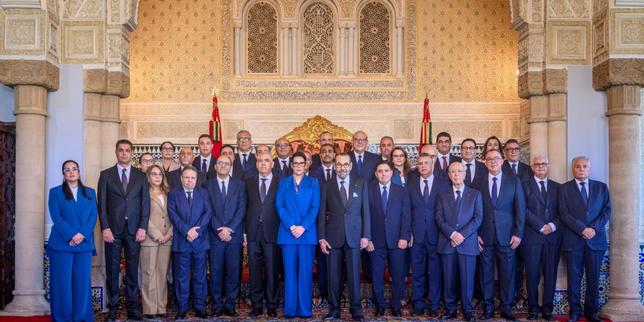
Morocco's new government is led for the first time by a woman, Fatima Ezzahra El Mansouri, yet its core power centers remain remarkably familiar. Sworn in before King Mohammed VI at the Royal Palace in Rabat on October 16, 2026, the 32-member executive combines a historic ceiling-shattering appointment at the top with heavy continuity across key ministries and a notable presence of women.
Look past the press releases celebrating a milestone in North African politics, and a sharper tension emerges. For decades, observers watching Rabat have learned to separate symbolic firsts from structural shifts. Putting a woman at the head of government after the September 23, 2026 legislative elections changes the face of executive authority. It does not automatically rewrite who controls security, diplomacy, budget priorities, or coalition discipline. For an alternative look, read: this related article.
A Historic Appointment Inside Familiar Walls
El Mansouri did not arrive in Rabat as an outsider storming the gates. She has spent years inside Morocco's political machinery as mayor of Marrakesh, coordinator of the Authenticity and Modernity Party (PAM) collegial leadership, and housing minister in the outgoing cabinet. When PAM finished first in the September 23 vote with 97 seats out of 395, King Mohammed VI tapped her on September 29 to form a government.
That pedigree matters. In Moroccan politics, durability requires fluency in both party arithmetic and palace expectations. El Mansouri built a four-party coalition uniting PAM with Istiqlal, the Socialist Union of Popular Forces (USFP), and the Party of Progress and Socialism (PPS), leaving former prime minister Aziz Akhannouch's National Rally of Independents (RNI) outside the cabinet despite RNI's second-place finish with 66 seats. Further analysis on this matter has been published by The Guardian.
Still, continuity runs deep through the lineup. Roughly 40 percent of the team came straight from the previous administration. Heavyweights like Nasser Bourita at foreign affairs, Abdelouafi Laftit at the interior, and Abdellatif Ouahbi at justice stayed put. Meanwhile, Fouzi Lekjaa moved up from minister delegate for the budget to lead economy, finance, and public performance.
A new face at the prime minister's desk alters political optics immediately, but institutional weight in Rabat still rests heavily on seasoned operators who already know every file.
Where Women Actually Sit in the Cabinet
The most visible shift in the new lineup is female representation. Alongside El Mansouri as head of government, women occupy senior ministerial and minister-delegate posts across social policy, urban development, energy, and parliamentary relations.
Names drawing attention include Charafat Afailal taking energy, mines, and sustainable development, Najwa Koukouss leading family, social development, and equality, and Fatima Saadi stepping in as minister delegate for housing and urban policy. Kouloub Faitah took on relations with parliament and civil society as a minister delegate, and Aïcha Kellaa entered on the administrative reform track.
Yet women's presence in the cabinet tells a two-sided story. On one hand, having a woman as prime minister alongside several women in ministerial and delegate roles signals a real shift in visibility at the top of the executive branch. On the other hand, critics and political analysts often ask whether appointments cluster disproportionately around social portfolios and junior minister-delegate slots rather than core economic or security command posts.
Even an early shakeup underlined how fragile ministerial appointments can be. Just two days after the swearing-in ceremony, Madiha Khayr, named minister delegate for vocational training and qualification, was dismissed at El Mansouri's request and subsequently resigned from parliament. That rapid removal showed that even on day two, party quotas and coalition bargains do not guarantee untouchable tenure.
Continuity Versus Change Across Key Portfolios
To judge whether this cabinet represents real renewal or managed continuity, look at how portfolios were reshuffled and renamed. Some ministries absorbed new mandates, signaling priorities like food sovereignty, artificial intelligence, and administrative efficiency.
| Portfolio Area | Key Figure | Shift vs. Continuity |
|---|---|---|
| Head of Government | Fatima Ezzahra El Mansouri | First woman prime minister; veteran insider |
| Economy, Finance & Public Performance | Fouzi Lekjaa | Promoted from budget delegate into top fiscal seat |
| Foreign Affairs & Moroccans Abroad | Nasser Bourita | Retained in a core diplomatic and diaspora role |
| Interior | Abdelouafi Laftit | Retained at the helm of internal security and elections |
| Energy, Mines & Sustainable Development | Charafat Afailal | Returning veteran taking a strategic energy portfolio |
| AI, Digital Transformation & Admin Reform | Ahmed Rahhou | Newly structured push on tech and state modernization |
Consider a hypothetical example of how that balance plays out in practice. Suppose a mid-sized Moroccan manufacturer wants faster customs clearance and clearer digital permitting rules. Even if a newly created digital and administrative reform portfolio promises smoother bureaucracy, real execution still depends on coordination with finance, interior administration, and entrenched civil service routines.
That tension is why voters and business leaders watch 38.02 percent election turnout alongside cabinet appointments. Low turnout in the September 2026 legislative vote reflected lingering public skepticism. A new prime minister can set a fresh tone, yet public trust will turn on visible improvements in cost of living, jobs, public hospitals, schools, and reconstruction.
Big-Ticket Bets Behind the Coalition
El Mansouri's government takes office amid major state commitments. Morocco is pushing ahead with massive infrastructure and stadium preparations ahead of co-hosting the 2030 World Cup with Spain and Portugal, while also launching industrial plans such as the "Morocco Offer" defense and security industry roadmap backed by four billion dirhams from the Hassan II Fund.
Those multi-year projects carry real economic upside. They can attract foreign capital, build industrial supply chains, and create jobs. At the same time, they demand strict fiscal discipline and clear delivery timelines so household purchasing power and basic social services do not get squeezed.
There is also a gray area that simple headlines miss. Having a woman as prime minister is indisputably historic in Morocco, yet gender representation at the top does not automatically translate into broad social reform or higher labor-force participation for women across every region. Real progress requires measurable policy follow-through long after the swearing-in photographs fade.
Watch how the 2027 finance bill moves through parliament and how quickly social aid, housing, and public service bottlenecks ease on the ground.