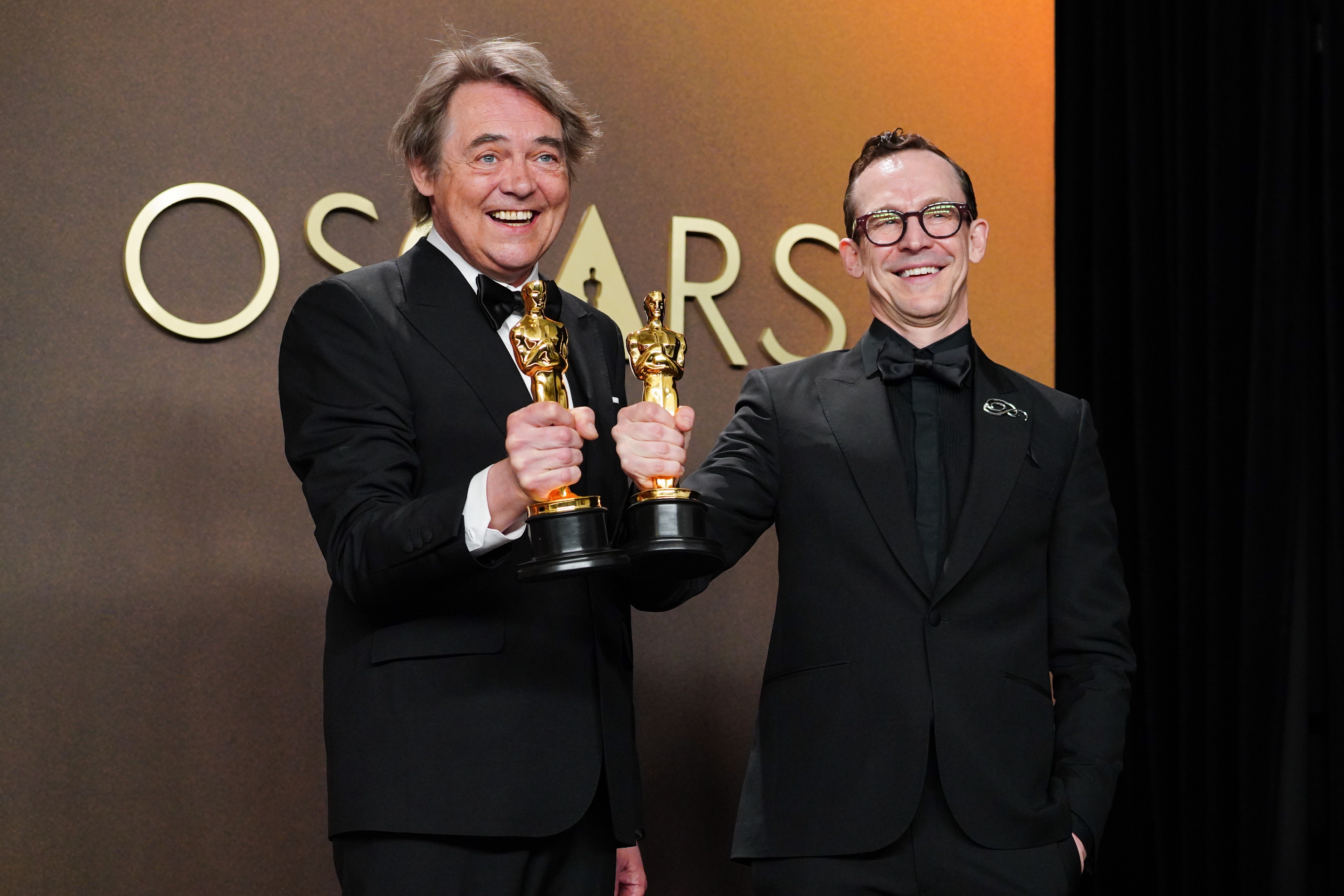
The Academy Awards often serve as a glittering distraction from the industrial mechanics of the film world, but the recent win for a Montreal-based animated short film exposes a deeper truth about where the creative power has shifted. While Toronto manages the bank accounts and Vancouver handles the massive green-screen arrays for superhero sequels, Montreal has quietly become the global nervous system for high-stakes animation. This latest Oscar victory is not a fluke of artistic lightning striking twice. It is the result of a deliberate, decade-long convergence of aggressive tax policy, a localized talent pipeline, and a rejection of the Hollywood assembly-line model.
Canada took home the gold because Montreal has mastered the art of the "boutique powerhouse." In a sector where massive studios often crush the soul out of a project through endless committee reviews, the Quebec scene has cultivated a middle ground. They have the money to compete and the freedom to fail. That combination is exactly what Oscar voters, who are increasingly weary of sanitized corporate content, are looking for.
The Architecture of a Creative Monopoly
To understand why Montreal keeps winning, you have to look past the red carpet and into the provincial ledger. The Quebec government provides some of the most aggressive tax credits in the world for film and television production. We are talking about a base credit that can cover up to 20% of all production costs, with additional bonuses for labor and computer-aided special effects.
When you layer those incentives on top of a federal credit, a production can effectively operate at a 40% discount compared to Los Angeles or New York. This financial floor allows directors to take risks. If a project doesn't have to recoup every single cent just to break even, the director can spend an extra six months perfecting the movement of a shadow or the texture of a character’s skin.
But money is only the bait. The hook is the talent. The city hosts a dense cluster of schools like the Mel Hoppenheim School of Cinema and specialized technical colleges that feed directly into local studios. It is a closed loop. A student graduates, works on a massive Ubisoft title or a Framestore blockbuster to learn the technical ropes, and then spins off into a smaller collective to chase an Academy Award. This cross-pollination between the billion-dollar gaming industry and the prestige film world is Montreal's secret weapon.
Why the Short Film Category Matters More Than Ever
Most industry outsiders dismiss the Animated Short category as a niche interest. They are wrong. In the current market, the short film is the research and development department for the entire industry. It is where new software is tested and where the visual styles of the next decade are born.
The recent Montreal win showcased a specific visual language that moves away from the "plastic" look perfected by early 2000s American studios. Instead, the Canadian winners are leaning into painterly, tactile aesthetics. They are making digital work look handmade. This is a direct response to the fatigue audiences feel toward hyper-realistic CGI. By embracing imperfection, these filmmakers are creating an emotional resonance that big-budget features often miss.
The victory also highlights a shift in distribution. Short films used to die on the festival circuit. Today, they are the crown jewels of streaming platforms looking for "prestige" branding. A win in this category gives a studio the cultural capital to attract top-tier talent for their next $100 million feature.
The Cultural Insulation Factor
There is a psychological component to Montreal’s success that often gets ignored by analysts. The city exists in a state of cultural tension—a French-speaking enclave in an English-speaking continent. This creates a natural insulation.
Filmmakers in Montreal are not just looking at what is trending in Burbank. They are heavily influenced by European traditions, particularly from France and Belgium, where animation is treated as a high-art form for adults rather than just a babysitting tool for children. This "Third Way" of filmmaking—not quite Hollywood, not quite European arthouse—gives Canadian shorts a distinct identity. They feel familiar enough to be accessible to a global audience but strange enough to stand out to Academy voters who see hundreds of generic entries every year.
The Myth of the Lone Genius
The media loves a narrative about a starving artist working in a basement. The reality is much more corporate and much more interesting. The Oscar-winning team didn't work in a vacuum; they worked within an ecosystem that includes organizations like the National Film Board of Canada (NFB).
The NFB is an anomaly in the modern world. It is a government-funded body that exists purely to produce non-commercial, culturally significant work. While it has faced budget cuts over the years, its shadow looms large. It provides the institutional memory for Canadian animation. It ensures that the techniques used forty years ago are taught to the animators of tomorrow. When a private Montreal studio wins an Oscar, they are often building on foundations laid by the NFB’s decades of taxpayer-funded experimentation.
The Technical Breakdown of the Win
If you look closely at the winning film, the technical achievement isn't about the number of polygons or the resolution of the textures. It’s about the timing.
Animation is, at its core, the management of time and space. The Montreal school of animation emphasizes "acting" through movement. They don't just move a character from point A to point B; they give that character a hesitation, a weight, and a physical presence that feels grounded in reality. This requires a level of patience that is rare in modern production.
- Variable Frame Rates: Using different speeds for different objects in the same frame to direct the viewer's eye.
- Subsurface Scattering: Advanced lighting techniques that simulate how light penetrates human skin or fabric, giving a warm, living glow to digital puppets.
- Non-Photorealistic Rendering (NPR): Software tools that make 3D models look like 2D charcoal drawings or oil paintings.
These aren't just buttons you press. They are instruments that require years of mastery. The Montreal victory is a testament to the fact that the city has become the world's premier conservatory for these digital instruments.
The Economic Ripple Effect
What happens the morning after the Oscars? The phone starts ringing. For every filmmaker who takes home a statue, a dozen studios in the city see their stock rise. Producers in London, Paris, and Los Angeles are currently looking at Montreal not just as a place to save money, but as the only place where this specific level of quality can be achieved.
This creates a "success loop." The win attracts more investment, which draws more talent, which leads to more ambitious projects. However, this growth brings its own set of problems. As the industry scales, the very "boutique" feel that led to the Oscar win is under threat. Large multinational corporations are buying up independent Montreal studios at a record pace. The challenge for the next five years will be maintaining that scrappy, experimental edge while integrated into the machinery of global media conglomerates.
The Talent Drain Counter-Narrative
For decades, the story of Canadian cinema was one of talent drain. You made it in Montreal, and then you moved to LA. That narrative is dead.
The most talented animators in the world are now choosing to stay in Quebec. They have realized that the quality of life, combined with the concentration of high-end work, makes it a better home base than the increasingly unaffordable and chaotic California coast. When the talent stays, the IP stays. When the IP stays, the profits stay. We are seeing the birth of a permanent creative capital that doesn't need Hollywood's permission to exist.
The Unseen Obstacles
It isn't all victory laps and champagne. The industry is facing a massive labor shortage. The demand for high-end animation and VFX is growing faster than the schools can churn out graduates. This has led to "poaching wars" between Montreal studios, driving up salaries and potentially pricing out the smaller, more experimental projects that win Oscars in the first place.
There is also the looming shadow of generative automation. While the Montreal winners are celebrated for their "human touch," the tools they use are becoming increasingly automated. The industry is currently in a quiet civil war over how much of the process should be handed over to algorithms. The studios that survive will be the ones that use technology to amplify the artist’s voice, rather than replace it.
The New Standard
The Montreal win has set a new benchmark for what is possible in the short form. It has proven that a localized hub, supported by smart policy and a deep respect for the craft, can outmaneuver the largest media companies on earth. This wasn't just a win for a few filmmakers; it was a proof-of-concept for an entire industrial model.
The world is watching Montreal, and more importantly, the world is now trying to copy the Montreal playbook. But you can't just transplant a culture that has been simmering for fifty years. You can't buy the "human touch" with a tax credit alone. You need the history, the tension, and the cold winters that keep people inside, hunched over their tablets, dreaming of something better.
Go watch the winning short again. Don't look at the characters. Look at the background. Look at the way the light hits the dust motes in the air. That isn't math. That is the sound of a city that has decided it is no longer content to be Hollywood’s backlot, but intends to be its brain.