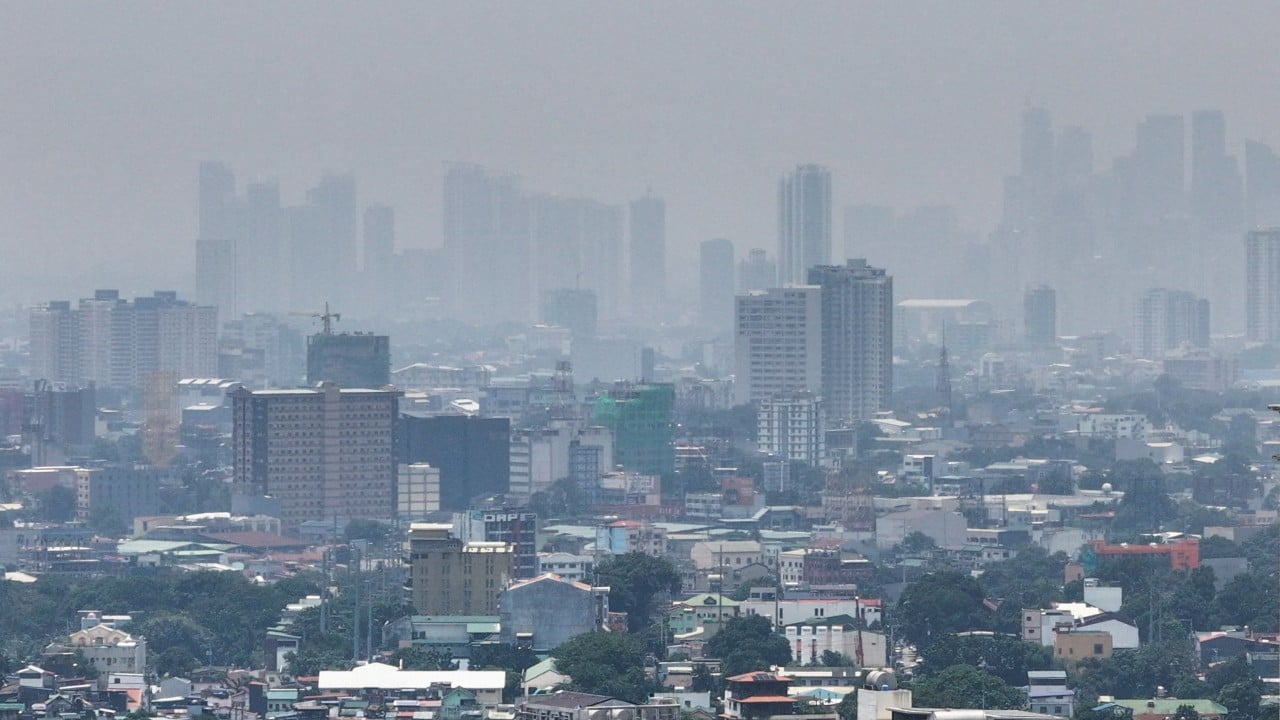
Smog does not respect maritime borders. When the autumn seasonal winds shift across Southeast Asia, an invisible plume of carbon, ash, and particulate matter lifts from forest clearings and agricultural burn zones thousands of miles away, drifting silently across the South China Sea until it hits the concrete barrier of Metro Manila.
Philippine capital air quality plummeted to acutely unhealthy levels as transnational haze from Indonesian land and forest fires mingled with local vehicular exhaust, triggering urgent public health advisories across the metropolis. This is not a weather anomaly. It is an annual meteorological collision between weak domestic regulatory enforcement and industrial agricultural practices operating beyond national jurisdiction. The toxic air choking the capital region exposes the fatal gaps in regional environmental pacts, leaving millions of urban residents to breathe a soup of fine particulate matter while government agencies trade bureaucratic memoranda.
The Anatomy of a Transnational Smog Event
Particulate matter measuring 2.5 microns or less, known simply as PM2.5, forms the backbone of this crisis. These microscopic particles bypass the human respiratory system's natural filtration defenses, penetrating deep into the pulmonary alveoli and entering the bloodstream directly.
When Indonesian peatland fires ignite during the dry season, millions of tons of carbon dioxide and organic aerosols discharge into the upper troposphere. Prevailing southwesterly monsoon winds act as an atmospheric conveyor belt, pushing the particulate mass northward. By the time this plume reaches the Philippine archipelago, it encounters a bowl-shaped topography trapped by temperature inversions over Metro Manila.
Local urban emissions compound the disaster. Jeepneys, aging diesel buses, and relentless construction dust act as local catalysts. The imported smoke does not merely arrive in a vacuum; it collides with domestic pollution, creating a chemical cocktail that lingers over the urban core for days.
[Indonesian Peatland Fires]
        │
        ▼ (Southwesterly Monsoons)
[Atmospheric Transport Corridor]
        │
        ▼
[Topographic Trap over Manila] + [Local Diesel & Industrial Exhaust]
        │
        ▼
[Acutely Unhealthy PM2.5 Concentrations]
Atmospheric stagnation prevents dispersion. Without heavy localized rainfall to scrub the lower atmosphere, the haze hangs low, turning the skyline a dirty, sepia yellow and driving up hospital admissions for acute respiratory distress.
The Blind Spots of Regional Diplomacy
Diplomatic frameworks designed to mitigate cross-border pollution have proven functionally toothless. The ASEAN Agreement on Transboundary Haze Pollution remains the primary multilateral instrument meant to hold perpetrators accountable. Yet, the agreement relies entirely on voluntary compliance, consensus-based decision-making, and non-punitive dispute resolution.
Governments caught in the diplomatic crossfire rarely escalate tensions. Accountability vanishes behind closed doors during summit negotiations. Wealthy corporate conglomerates behind industrial palm oil and pulp plantations often register offshore, insulating parent companies from domestic fines or international lawsuits.
Meanwhile, downwind nations like the Philippines bear the externalized health costs. Hospitals across Quezon City, Makati, and Manila report surges in emergency room visits for asthma exacerbations, chronic obstructive pulmonary disease flare-ups, and acute cardiovascular events during peak haze months.
Insurance payouts and lost productivity drain billions from the national economy. Yet, the state treats the phenomenon as a temporary weather event rather than a chronic public health emergency requiring aggressive foreign policy intervention.
Public Health Fallout on the Ground
Urban populations cannot simply evacuate an entire metropolitan area. Street vendors, traffic enforcers, construction workers, and delivery riders absorb the brunt of the exposure, lacking the luxury of remote work or high-grade indoor air filtration systems.
Standard surgical masks offer zero protection against PM2.5 intrusion. Only tightly fitted N95 respirators provide a verifiable barrier against sub-micron particles, yet these remain economically inaccessible for daily wage earners.
Public health warnings issued by environmental protection bureaus typically rely on passive advisories. Citizens are told to stay indoors and avoid strenuous outdoor exercise. For millions living in informal settlements with poor housing ventilation, staying indoors provides no escape from ambient outdoor air seeping through corrugated tin roofs and poorly sealed windows.
Medical professionals note that chronic exposure to transboundary haze accelerates vascular aging and systemic inflammation. Children and the elderly face irreversible lung development issues and accelerated cognitive decline. The burden falls disproportionately on urban working classes who inhabit high-density corridors adjacent to major transport arteries, where local pollution compounds the drifted agricultural smoke.
Challenging the Domestic Mitigation Narrative
Local officials frequently point to domestic vehicle emission testing programs and tree-planting initiatives as proof of proactive governance. These measures miss the structural reality of the crisis. Planting urban pocket forests will not scrub regional skies laden with thousands of square miles of imported particulate matter.
Enforcing localized anti-smoke belching campaigns addresses only a fraction of the total pollutant load during a transboundary haze event. Without real-time satellite tracking linked to actionable diplomatic sanctions, municipal authorities are essentially bailing out an ocean with a teaspoon.
True mitigation requires elevating transboundary air pollution to a security priority rather than a mere environmental inconvenience. The Philippine Department of Foreign Affairs must utilize bilateral channels to demand stricter enforcement and land-use transparency from neighboring states. Financial mechanisms, including carbon border adjustments and trade penalties levied against corporations linked to illegal slash-and-burn clearing, represent the only language large-scale agricultural enterprises understand.
Until governments stop treating regional smoke as an act of nature and start treating it as an act of policy negligence, Manila will continue to choke on the invisible fires burning across the sea.