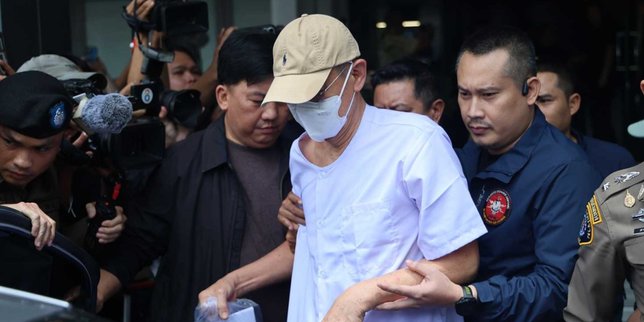
Every few months, Western media outlets trot out the exact same predictable outrage piece. A Thai monk gets caught on camera with a luxury handbag, a sports car, or a romantic partner, and the moral panic machine shifts into high gear. Foreign journalists write mournful op-eds about the corruption of ancient traditions, lamenting how material greed has infiltrated the pure, ascetic world of Theravada Buddhism.
It is a deeply lazy narrative. It relies on a flat, orientalist caricature of Asian spirituality that demands monks live like impoverished museum pieces to satisfy Western romantic fantasies.
The lazy consensus says that Thai Buddhism is facing an unprecedented crisis of moral decay because globalization and consumerism have seduced men in saffron robes. The truth is much more uncomfortable. Monastic wealth and entanglement with secular power are not modern aberrations. They are foundational features of the institution that have existed for over a millennium.
When you strip away the tourist board brochures, you find an administrative and economic machine that was built from day one to handle vast sums of capital, real estate, and political influence. Pretending that a few scandals represent a departure from a golden age of pure poverty is historical illiteracy.
The Myth of the Starving Ascetic
To understand why the Western framing misses the mark, you have to look at the economic reality of the Thai monastic order, known as the Sangha. The Sangha is not a loose collective of meditating hermits living off wild berries in the jungle. It is a massive, state-sanctioned religious bureaucracy with hundreds of thousands of ordained members, formal education systems, real estate holdings, and multi-million-dollar annual budgets managed through temple treasuries.
In the Theravada tradition, laypeople gain spiritual merit by donating money, food, and goods to temples. This is known as tham bun. In a booming emerging economy like Thailand, rising middle-class wealth means that the scale of these donations has exploded. Temples do not receive meager bowls of rice anymore. They receive corporate sponsorships, land deeds, and electronic bank transfers.
When millions of dollars flow directly into temple accounts, financial scandals are an inevitability, not an anomaly. Human incentives do not vanish the moment someone shaves their head and puts on a yellow robe.
Critics love to point fingers at individual monks driving Mercedes-Benzes or hoarding luxury goods as proof that the system is broken. But these high-profile scandals are symptoms of a structural reality. The Thai state regulates the Sangha through a supreme council, but local temple abbots hold immense financial autonomy. When oversight is decentralized and cash is abundant, bad actors will exploit the system.
Yet, treating these bad actors as proof that the entire religion has lost its soul is like looking at a corporate embezzlement scandal and declaring that capitalism itself is a failure. It misunderstands how power and money operate within large social institutions.
The State, The Monks, and The Throne
Religion and politics in Thailand have never been separate. From the Sukhothai kingdom to the modern constitutional monarchy, the Thai state has relied on the Sangha to legitimize its authority, and the Sangha has relied on the state for legal protection and financial support.
When a prominent abbot builds a massive, futuristic temple complex that looks like a spaceship from a science fiction movie, Western observers gasp at the commercialization of faith. What they miss is that grand architecture has always been used by religious and political elites to project power, stability, and cosmic order. Ayutthaya was built on massive temple complexes financed by royal patronage. Modern megatemples are simply the industrial-era evolution of the exact same dynastic impulse.
The friction arises because foreign commentators want Thai Buddhism to remain frozen in a romanticized, pre-industrial past. They want quiet forest dwellers who offer simple wisdom to weary travelers. They reject the reality of a modern, institutionalized religion that acts as a major social welfare provider, an educational hub, and a powerful political lobby.
Monks in Thailand run schools, manage community dispute resolution, provide disaster relief, and sometimes act as political activists. When you occupy that level of civic importance, you are going to get dirty. You are going to deal with real estate developers, local politicians, and bureaucratic infighting. Insulating a religious order from worldly concerns while expecting it to anchor society is a logical impossibility.
Hypocrisy on a Global Scale
There is a profound double standard in how Western societies judge religious institutions in the Global South. The same media outlets that publish breathless exposés about Thai monks spending donation money on designer watches rarely hold their own domestic religious institutions to the same impossible standard of ascetic purity.
When a televangelist in Texas buys a private jet using donations from working-class parishioners, it is treated as a localized grift or a punchline on a late-night talk show. When a Catholic diocese in Europe or North America sits on billions in untaxed real estate while paying out settlements for institutional abuses, the coverage focuses on legal accountability rather than the existential purity of Christian theology.
Yet, when a Buddhist monk in Chiang Mai or Bangkok violates his vows of celibacy or financial restraint, it is framed as a cultural tragedy. It is treated as evidence that Eastern spirituality has sold its soul to Western materialism.
This perspective denies Thai people their agency. It assumes that everyday Buddhists in Thailand are naive dupes being manipulated by corrupt clerics, blindly handing over their hard-earned baht without knowing where it goes. In reality, Thai laypeople are pragmatic. They understand the flaws of individual monks just as well as anyone else. They separate the institutional role of the monkhood from the flawed human beings wearing the robes. They donate because the ritual maintains social cohesion and community welfare, not because they believe every abbot is a living saint.
The Real Crisis in the Sangha
If you want to talk about the actual crisis facing Thai Buddhism, ignore the tabloid headlines about sex scandals and luxury cars. Those are easy distractions that generate clicks.
The real threat to the Sangha is demographic and institutional calcification. The number of young men entering the monkhood as a lifelong vocation has plummeted. As Thailand’s economy has modernized and education levels have risen, becoming a full-time monk is no longer seen as the primary vehicle for social mobility for rural youth. Instead, ordination has increasingly become a temporary rite of passage or a refuge for older men seeking retirement security.
Compounding this is a gerontocratic leadership structure. The Supreme Sangha Council is dominated by elderly conservatives who resist modernization, transparency, and internal reform. They operate behind closed doors, protecting institutional prestige over public accountability. This lack of transparency is what breeds the very scandals that outrage foreign observers.
When an institution refuses to modernize its governance, it creates fertile ground for corruption. If the Sangha wants to survive the 21st century with its authority intact, it needs radical financial transparency, independent auditing of temple accounts, and decentralized accountability that gives younger, reform-minded monastics a voice.
The media will keep writing their moralizing pieces about fallen monks and lost traditions because outrage sells. But the story isn't about the corruption of an ancient ideal. It is about a traditional institution wrestling with the messy realities of modern wealth, power, and statecraft.
Stop mourning the death of an imaginary ascetic paradise. Look at the balance sheets, understand the political economy of merit-making, and realize that power has always left stains, no matter what color your robes are.