Faith is rarely a straight line. For most, it is a messy map of detours, construction zones, and sudden, blinding U-turns.
Think about the traditional image of a religious conversion. We tend to picture the dramatic lightning bolt on the road to Damascus. We imagine a solitary soul, broken and desperate, finding a Bible in a dusty drawer or hearing a sermon that shatters their worldview in an instant. It is a cinematic trope, clean and isolated.
But life outside the movies is crowded. It is loud. Our beliefs do not form in a vacuum; they are hammered out over kitchen tables, debated during late-night drives, and tested by the people who share our beds.
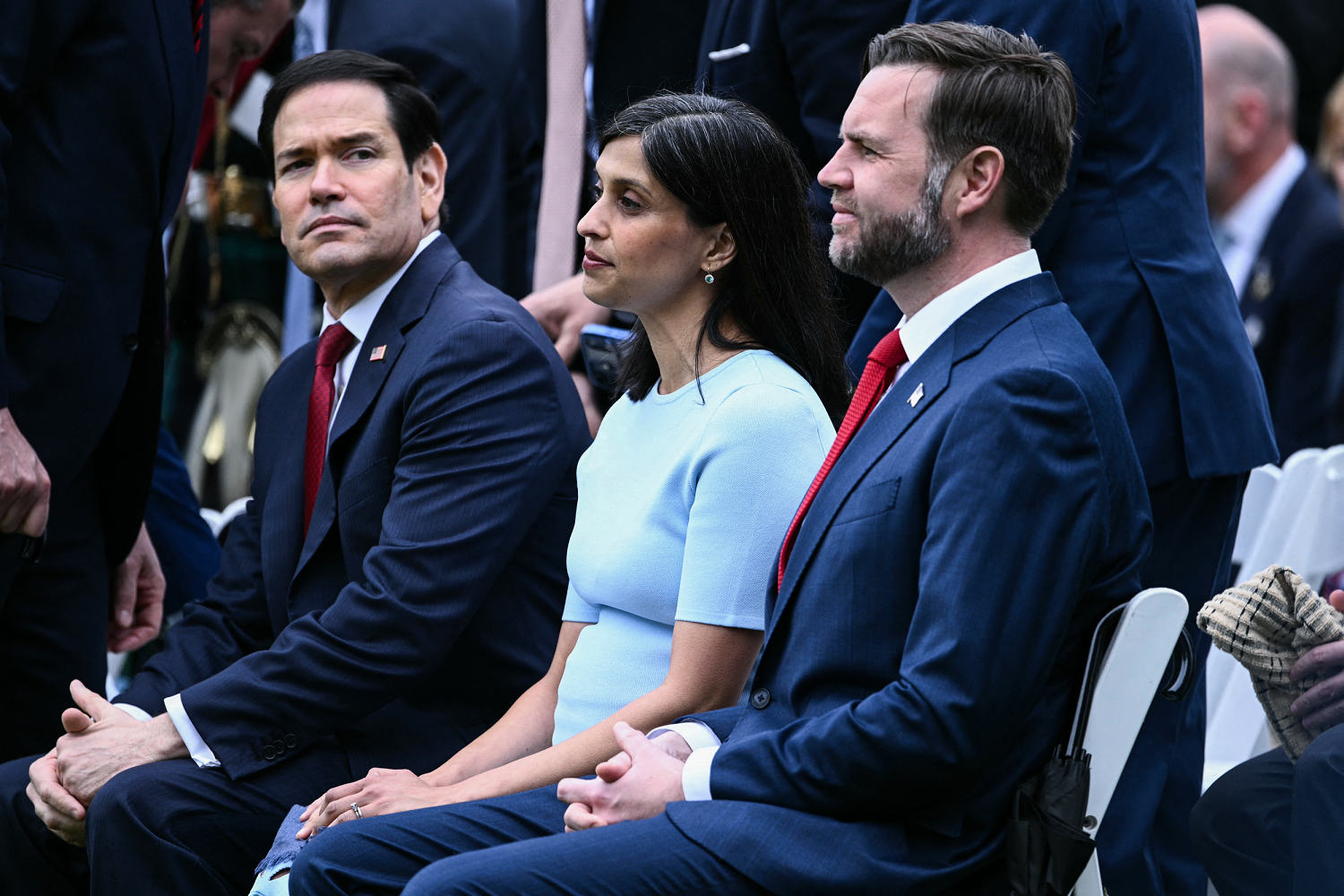
When JD Vance set out to find his soul, he did not walk into the wilderness alone. He brought his wife, Usha, into a complex dance of tradition, skepticism, and ultimate surrender. Her role in his conversion to Catholicism is not just a footnote in a political biography. It is a case study in how two modern, highly educated minds navigate the ancient, friction-filled waters of religious devotion.
The Boy from the Rust Belt and the Secular Skeptic
To understand where a man lands, you have to look at the mud on his boots. Vance’s early life in Middletown, Ohio, was defined by a specific kind of Midwestern chaos. Religion was present, but it was sporadic, emotional, and often weaponized by the adults around him. It was a faith of survival, not philosophy. By the time he joined the Marines and later walked through the ivy-covered gates of Yale Law School, that chaotic childhood faith had evaporated. He adopted the crisp, intellectual armor of atheism. It was comfortable. It made sense of a world that had felt senseless for so long.
Then came Usha Chilukuri.
Usha was the daughter of Indian immigrants, raised in a culturally Hindu household. She was brilliant, analytical, and deeply rooted in her own heritage. When they met at Yale, they were two hyper-ambitious students looking toward a future defined by meritocracy, law briefs, and secular success.
When a couple operates on the same intellectual wavelength, a sudden shift in one partner's worldview can feel like a betrayal. Imagine building a house together, agreeing on every blueprint, and suddenly one partner decides they want to install a cathedral ceiling and a confessional booth. It changes the structural integrity of the relationship.
Vance began to feel a pull toward something older, heavier, and more demanding than the secular optimism of his twenties. He was drawn to Catholicism. Not for its comfort, but for its rigor. He wanted an intellectual anchor that could withstand the cultural currents of the modern world.
Yet, he faced a massive barrier. How do you tell your non-Christian, fiercely intelligent wife that you want to bind yourself to a two-thousand-year-old institution with strict dogmas and ancient rituals?
The St. Augustine Strategy
The answer lay not in preaching, but in processing. Vance did not try to convert Usha. Instead, he invited her into the intellectual laboratory of his doubt.
Every book he read, she read. Every agonizing question he had about theology, morality, and the human condition, he aired out in front of her. This was not a passive observation. Usha became the sounding board for his spiritual crisis.
Consider the sheer vulnerability required for that dynamic. To allow the person whose respect you value most to see you grope around in the dark for something you cannot quite define. Vance was reading St. Augustine’s Confessions, a text obsessed with the flaws of the self and the pursuit of truth. He was looking at the Catholic Church not as a political country club, but as a hospital for the broken.
Usha, looking through her own cultural lens, did not flinch. She did not dismiss his searching as a phase or a political calculation. Her response was rooted in a profound level of security. She knew who she was. Her own faith, grounded in Hindu tradition, gave her a peaceful vantage point from which to view her husband’s turbulent spiritual migration.
She did not see his search as a threat to their marriage. She saw it as a necessity for his peace.
The Baptism at the Monastery
The culmination of this long, intellectual courtship with the Church did not happen in a grand cathedral filled with cameras and dignitaries. It happened in 2019, in a remarkably quiet, austere setting: St. Gertrude Priory in Ohio.
The Dominicans are known as the Order of Preachers, intellectuals of the Catholic world who prize rigorous logic alongside deep devotion. It was the perfect fit for a man who needed to argue his way into faith. Father Dominic Legge, a prominent Dominican friar, became Vance's guide, helping him navigate the intellectual hurdles that hold so many modern minds back from religious commitment.
On the day of his baptism, the room was small. The air was likely cool, smelling of old wood and bees-wax candles. Vance stood there, a grown man, ready to be washed clean of his past. And standing right beside him was Usha.
She was not there as a convert. She was there as a witness.
There is an incredible, understated power in that image. A practicing Hindu woman standing in a Catholic monastery, supporting her husband as he takes a vow of allegiance to Jesus Christ. It defies the standard, polarized narratives of our culture. It suggests that true marital unity does not require total theological conformity. It requires something far rarer: the willingness to accompany your partner to the edge of their own abyss and hold their hand as they leap.
The Invisible Stakes of a Public Faith
It is easy to look at this story through a cynical lens. We live in an era where faith is frequently treated as a branding exercise, a calculated costume donned to win over specific demographics. But true faith—the kind that alters how you treat your spouse, how you raise your children, and how you view your own mortality—is too heavy a burden to carry just for show.
Vance has been open about the fact that his Catholic faith changes how he views his obligations. It provides a framework for forgiveness, a counterweight to the intoxicating allure of power and public applause. It forces a man to look inward, to reckon with his own capacity for cruelty and pride.
And for Usha, the stakes were equally high. She had to navigate the public scrutiny that comes with being a woman of color, from an immigrant background, married to a man ascending the ranks of conservative politics. Her presence at his side during his religious evolution was a silent statement of solidarity. It signaled to the world that their bond was forged in something deeper than political expediency. It was rooted in mutual respect for each other's soul.
The Quiet Room
The world will continue to debate the politics, the policies, and the public statements. That is the noise of the arena.
But behind the podiums and the headlines is a quiet room. In that room, a husband and a wife are still talking. One is Hindu, one is Catholic. They are raising children in a world that demands everyone pick a side, build a wall, and fire across the divide.
They chose a different path. They chose to listen, to tolerate the discomfort of difference, and to allow space for grace to operate in its own strange, unpredictable time.
The true test of a modern marriage is not whether you agree on everything. It is whether you can stand in the sacred space of your partner’s truth, even if it is not your own, and whisper, I am here.