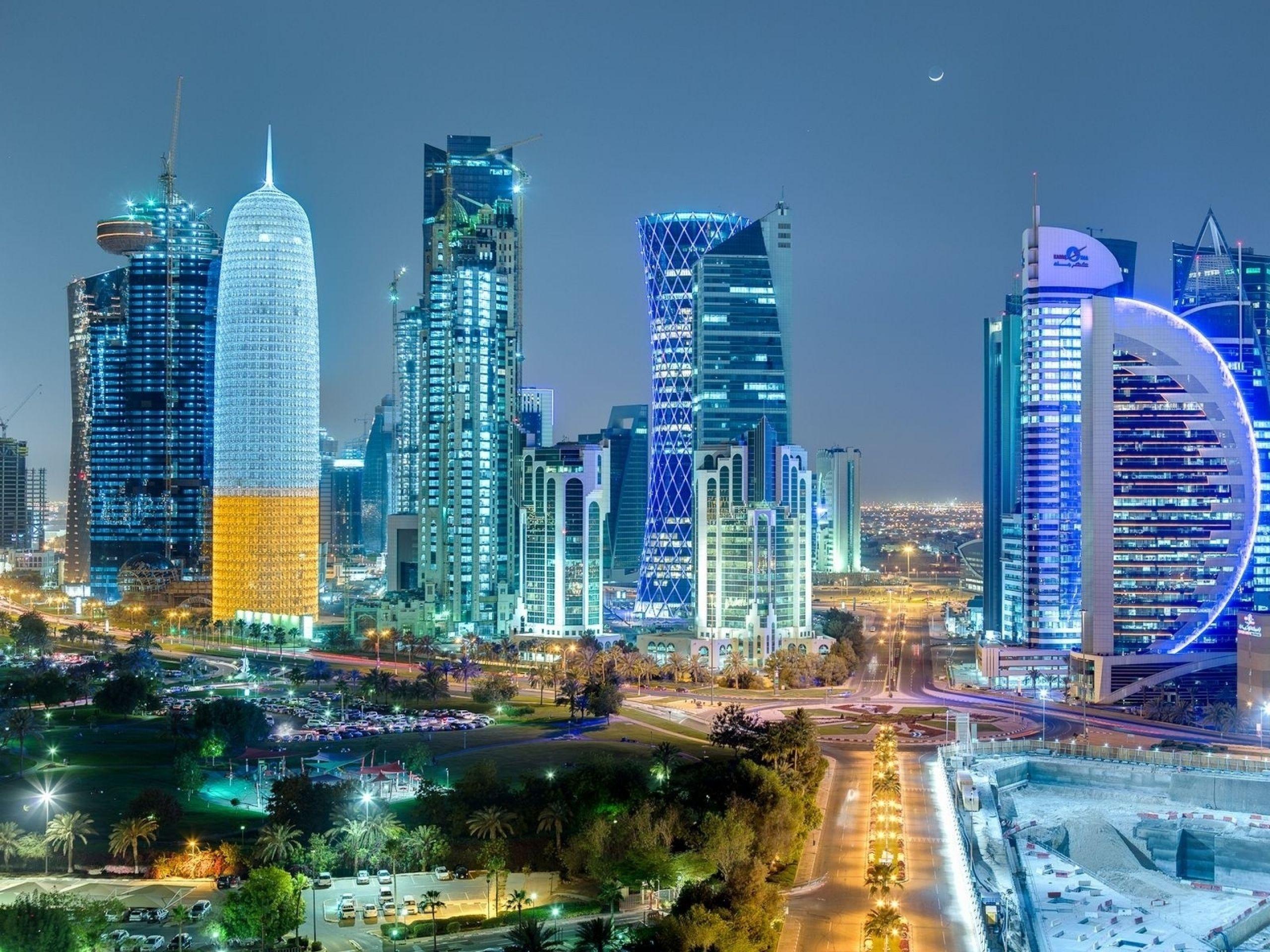
The air on the forty-second floor of a Manhattan skyscraper does not feel like the air on the street. It is cooler, filtered to a sterile perfection, and carries the faint, electric scent of dry ice and high-end carpet. Beneath the soft hum of the climate control, a different kind of energy vibrates.
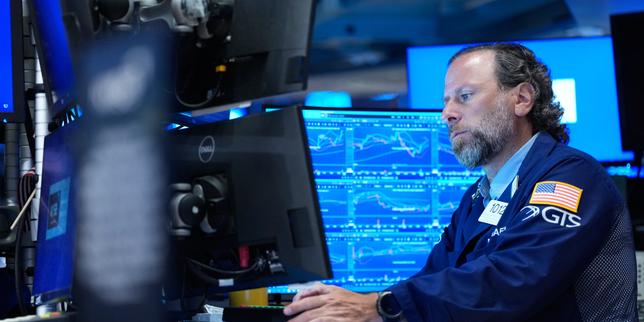
Marcus does not look at the view of the East River. He looks at three curved monitors. On them, numbers cascade in neon green and amber, ticking upward with the frantic energy of a hummingbird’s heart. Marcus is a market maker at one of the five largest investment banks in the United States. His job is not to guess whether the stock market will go up or down today. His job is to stand in the middle of the torrent, catching the droplets as they fly past.
Every time a pension fund rebalances, every time an algorithmic trading firm fires off a million micro-orders, and every time a terrified retail investor panic-sells at midnight, Marcus’s employer takes a microscopic slice.
Multiply that microscopic slice by trillions of transactions.
Suddenly, you understand why, while the rest of the country spent the last year squinting at grocery receipts and putting off home repairs, the titans of Wall Street quietly reported some of the most staggering profits in financial history. The narrative we are told about banking is often simple: banks take deposits, they lend money, they collect interest. But that traditional engine is old, slow, and currently creaking under the weight of high interest rates. The real magic—the phenomenon keeping the glass towers gleaming—happens in the trading pits and the investment banking suites.
It is a world where volatility is not a threat. It is the fuel.
The Tollbooth at the End of the World
To understand how a bank makes billions when the average citizen feels broke, we must abandon the idea of banks as vaults. Think of them instead as tollbooths erected across the fastest highways of global capital.
Consider a hypothetical business owner named Sarah. She runs a precision manufacturing plant in Ohio. For Sarah, the Federal Reserve’s relentless campaign against inflation has been a slow-motion disaster. The cost of borrowing money to purchase a new CNC machine has doubled. Her local bank, nervous about the commercial real estate market, is suddenly asking for mountains of collateral she does not have. To Sarah, money is dry, scarce, and incredibly expensive.
But now look at the highway Sarah’s world doesn't see.
While Sarah is struggling to secure a five-hundred-thousand-dollar equipment loan, giant corporations are navigating a completely different financial landscape. They are restructuring billions in debt. They are acquiring competitors who stumbled during the inflation shock. They are issuing new stock to capitalize on the public’s obsession with artificial intelligence.
Who facilitates these massive movements of capital? Marcus’s bosses.
When a multi-billion-dollar corporation decides to issue new bonds, they do not post an ad. They hire an investment bank to underwrite the deal. The bank structures the debt, markets it to sovereign wealth funds, and guarantees the sale. For this service, they charge a fee that would make a lottery winner blush.
When the stock market surges, as it has done on the back of tech stock euphoria, the trading desks go into overdrive. High stock prices tempt companies to go public through Initial Public Offerings. Every IPO is a feast for the underwriting banks. The fees are not measured in percentages of a percent; they are measured in hundreds of millions of dollars.
For the banks, it is a heads-I-win, tails-you-lose proposition. If the market goes up, they make money on IPOs and asset management fees. If the market crashes, the resulting panic causes trading volumes to explode, and the banks collect even more tolls on the frantic buying and selling.
Chaos is profitable.
The Illusion of the Safe Haven
During the regional banking panic that sent shockwaves through the financial system a while back, a strange migration occurred. Terrified depositors withdrew their savings from regional, community banks—the institutions that actually lend to people like Sarah—and wired them to the "Too Big to Fail" giants.
The giants did not even have to ask for the money. It simply arrived, seeking safety.
This created a bizarre paradox. The largest banks found themselves swimming in cheap capital at the exact moment interest rates were peaking. They could take those deposits, pay the depositors a measly fraction of a percent in interest, and park the money in risk-free government securities yielding significantly more.
It was the financial equivalent of buying gold for the price of silver.
Yet, this net interest margin—the difference between what a bank pays depositors and what it earns on loans—is a delicate thing. As consumers grew wiser and demanded higher yields on their savings, that easy profit engine began to cool. To maintain their historic altitude, the banks needed a new thermal updraft.
They found it in the casino.
The stock market’s relentless climb, driven by a handful of mega-cap technology companies, created an insatiable appetite for trading. Wealthy clients wanted to hedge their portfolios. Hedge funds wanted to leverage their bets. Retail brokerages needed market makers to execute their trades.
Every single one of these actions requires a counterparty. The big banks are the ultimate counterparties. They do not gamble; they hold the house’s cards. When a client wants to make a complex bet on the direction of interest rates, the bank structures a derivative contract. The bank charges a premium, hedges its own risk, and pockets the difference.
The house always wins because the house does not care who wins the game. It only cares that the game keeps playing.
The Great Disconnect
There is a growing, quiet anger on the streets below the forty-second floor. It stems from a realization that the financial system has become entirely decoupled from the daily reality of human labor.
When the news anchor reports that the Dow Jones has reached another record high and that JPMorgan Chase or Goldman Sachs has beaten profit expectations by billions of dollars, the reaction in a suburban diner is not celebration. It is bewilderment.
Why does a soaring stock market feel like a spectator sport we aren't allowed to play?
The answer lies in the nature of modern wealth distribution. The wealthiest ten percent of Americans own over ninety percent of the outstanding stock. When the market rallies, it is an insular cycle of wealth creating wealth. The banks are the engines of this cycle, pumping the blood through an organism that has long since stopped caring about the ground level.
Marcus finishes his shift. His eyes are bloodshot, reflecting the cool blue light of the screens. He grabs his coat, steps into the elevator, and descends forty-two floors in silence.
Outside, the air is thick, warm, and smells of asphalt and street food. Marcus walks past a shuttered storefront. The sign in the window says Space for Lease, a casualty of a small business loan that became too expensive to service.
Just two blocks away, a digital billboard flashes the day's financial headlines. Another record quarter. Another milestone reached.
The city lights stretch out into the darkness, brilliant, cold, and entirely indifferent to the shadows they cast.