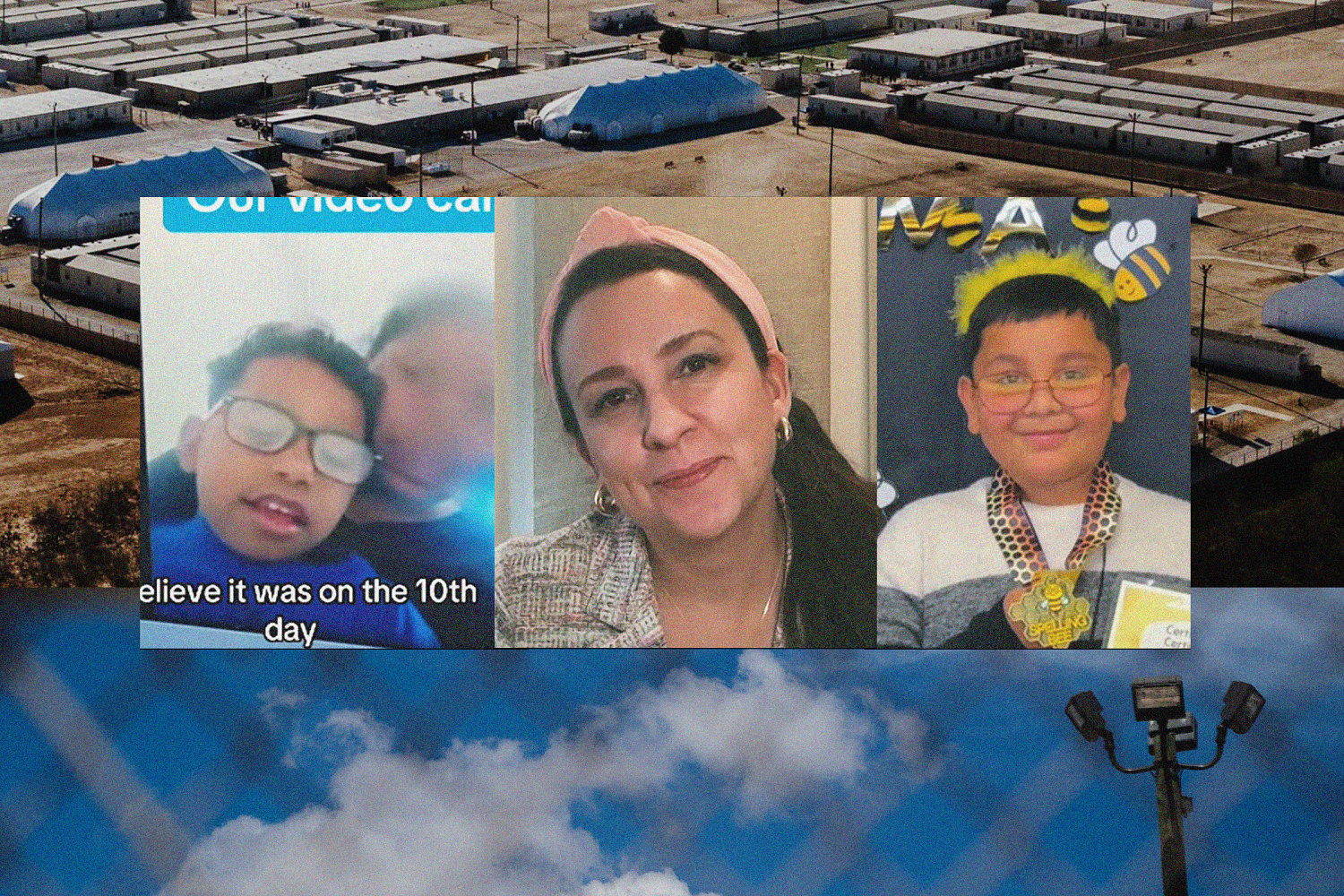
The entry of Rachel Griffin Accurso, known globally as Ms. Rachel, into the advocacy space regarding the Immigration and Customs Enforcement (ICE) detention system represents a fundamental shift in how digital influence intersects with federal policy. While traditional advocacy relies on institutional lobbying and grassroots organizing, the Accurso intervention utilizes a high-trust, high-frequency media channel—early childhood education—to bypass traditional political gatekeepers. The efficacy of this movement is not measured by legislative change in the immediate term, but by the reallocation of "moral attention" within a demographic that typically remains insulated from border policy debates: parents of toddlers and preschoolers.
The Architecture of Trust in Educational Media
The Ms. Rachel brand operates on a foundation of "Parasocial Pedagogical Trust." This is a specific subset of influencer marketing where the creator assumes a quasi-parental or educator role, creating a feedback loop of perceived safety and developmental value. When a figure with this level of saturation—reaching billions of views—pivots toward a highly polarized geopolitical issue, the "Trust Transfer" mechanism occurs.
- The Audience Anchor: The core demographic is not the children, but the gatekeepers (parents and caregivers) who utilize the content as a developmental tool.
- The Neutrality Baseline: By maintaining a strictly educational, non-partisan aesthetic for years, the creator establishes a "neutrality baseline." Any deviation from this baseline is perceived by the audience not as political posturing, but as an urgent moral imperative.
- The Cognitive Dissonance Gap: For the audience, the juxtaposition of "nursery rhymes" and "detention centers" creates a sharp cognitive dissonance that demands resolution through action, usually in the form of micro-donations or social sharing.
This transition from "Edu-Tainer" to "Advocate" utilizes the same neuro-linguistic triggers used in her educational videos—direct eye contact, simplified language, and high emotional resonance—to deconstruct complex administrative law into a binary moral choice.
The Operational Reality of ICE Family Detention
To understand the target of this advocacy, one must define the operational mechanisms of the U.S. immigration detention system. The "Freeing Kids" narrative specifically addresses the family residential centers and the broader apparatus of the Office of Refugee Resettlement (ORR) and ICE.
The detention system functions through a three-pillared cost and logistics model:
- Pillar I: Capacity Management: The federal government maintains a "bed mandate," a statutory requirement that influences the number of individuals held in detention. When advocacy movements seek to "empty" these beds, they are effectively challenging a line-item budget that has been stabilized over decades of bipartisan governance.
- Pillar II: Private-Public Interdependency: A significant percentage of detention facilities are managed by private prison corporations. These entities operate on a "per-diem" model, where revenue is directly tied to the occupancy rate. High-profile advocacy threatens the long-term viability of these contracts by increasing the political cost of renewal for local and federal officials.
- Pillar III: The Flores Settlement Agreement: This is the primary legal constraint on the detention of minors. It stipulates that children must be held in the "least restrictive setting" and generally released within 20 days. Advocacy efforts like Accurso's often target the "loophole" periods where administrative processing exceeds these limits or where family separation occurs due to various enforcement priorities.
The Economics of the Save the Children Fundraiser
The specific vehicle for this advocacy is the "Save the Children" emergency fund. From a strategic consulting perspective, this is a "Liquidity Event for Social Capital." Accurso is not merely asking for awareness; she is directing a massive, untapped stream of capital toward a specific NGO.
The "Conversion Funnel" of this campaign differs from standard non-profit marketing:
- Top of Funnel (Awareness): 10 million+ subscribers on YouTube and millions on TikTok are exposed to the "Call to Action" (CTA).
- Middle of Funnel (Validation): The creator uses her personal brand to vet the charity, reducing the "due diligence" friction that usually prevents donors from contributing to international causes.
- Bottom of Funnel (Transaction): The "Cameo" model—where Accurso offers personalized videos in exchange for donations—gamifies the philanthropic process. This transforms a selfless act into a value-exchange, significantly increasing the Average Gift Size (AGS).
However, a bottleneck exists in the "Impact Attribution" of these funds. While the capital is raised under the banner of "freeing children," the actual deployment of funds by large NGOs often goes toward "Wraparound Services" (legal aid, nutrition, psychological support) rather than the direct legal termination of detention. This creates a potential "Expectation-Reality Gap" between the donor's intent and the operational outcome.
Logical Fallacies and Sentiment Backlash
The campaign has faced significant friction, primarily because it disrupts the "Apolitical Safe Space" expected by certain segments of the consumer base. The backlash can be categorized into two primary logical vectors:
- The Domain Expertise Fallacy: Critics argue that an entertainer lacks the geopolitical expertise to comment on border security. This ignores the "Influencer-as-Lobbyist" reality of 2026, where reach is a more potent form of currency than traditional expertise in the court of public opinion.
- The "Protect the Bubble" Response: A segment of the audience views the introduction of "adult" themes (detention, human rights) into a "child-centric" brand as a breach of contract. This creates a churn rate in the subscriber base, though data suggests this is usually offset by a "Surge Acquisition" of new, politically aligned followers.
The cause-and-effect relationship here is clear: The more polarized the response, the higher the algorithmic reach. In the current attention economy, controversy acts as a force multiplier for the fundraiser's visibility, even if it degrades the brand's universal appeal.
Structural Limitations of Celebrity Advocacy in Federal Policy
While the Accurso campaign is a masterclass in mobilization, it faces structural limitations that "viral" energy cannot easily overcome. Federal immigration policy is governed by the Immigration and Nationality Act (INA), and executive actions are subject to the Administrative Procedure Act (APA).
- The Judicial Bottleneck: No amount of funding can bypass the backlog in the Executive Office for Immigration Review (EOIR). Currently, millions of cases are pending. Even with increased legal aid funded by this campaign, the "Time-to-Resolution" remains a fixed variable dictated by court capacity.
- The Sovereign Constraint: Immigration is a core function of national sovereignty. Public pressure rarely changes the fundamental "Enforcement-First" posture of the Department of Homeland Security (DHS) unless it is coupled with a legislative "Grand Bargain."
- The Sustainability Problem: High-intensity influencer campaigns have a short half-life. The "Cost Per Acquisition" (CPA) for a donor remains low during the initial surge but rises exponentially once the "trend" cycle moves on.
The Strategic Shift to "Parent-Advocate" Networks
The true innovation of the Ms. Rachel intervention is the creation of a "Parent-Advocate" network. By framing the detention of children as a "parenting issue" rather than a "border issue," Accurso has successfully reclassified the political as the personal. This is a potent psychological pivot. When a parent sees a child in detention not as a "migrant" but as a "child," the political barriers dissolve in favor of biological empathy.
This strategy mimics the successful "Moms Demand Action" framework used in gun control advocacy. It moves the needle by:
- Hyper-Localizing the Issue: Encouraging parents to contact local representatives under the guise of "protecting childhood."
- Normalizing the Discourse: Taking the conversation out of news cycles and into playgroups and parenting forums.
- Leveraging Purchasing Power: Using the threat of "brand boycott" against companies that support or provide services to the detention industry.
The long-term impact of this movement will not be found in the total dollars raised for Save the Children, but in the permanent shift of the "Ms. Rachel" audience's demographic profile. She is no longer just a digital babysitter; she is a political mobilization node.
Final Strategic Assessment
The Accurso model demonstrates that in a fragmented media environment, the most effective way to challenge federal policy is to weaponize high-trust niche channels. For the detention industry, this represents a new form of "Reputational Risk." Corporations and government agencies are no longer just fighting activists at the gates; they are fighting the digital habits of the American household.
The strategic play for observers is to monitor the "Secondary Contagion" of this movement. If other major children’s brands—Disney, Nickelodeon, or major YouTube creators—adopt similar "Moral Imperative" frameworks, the political cost of maintaining the current detention infrastructure will become unsustainable. The friction will not come from the ballot box, but from the collapse of the social license to operate.
For the donor and the advocate, the next tactical step is to demand "Outcome Transparency." The transition from "Capital Raised" to "Children Released" must be quantified through independent audits of the recipient NGOs. Without this, the campaign risks becoming a "Sentiment Loop" that provides emotional catharsis for the donor without structural relief for the detained. High-authority advocacy requires high-authority accountability.
![[Analytical, powerful title]](https://media-cldnry.s-nbcnews.com/image/upload/t_fit_1500w/rockcms/2026-03/260319-Joseph-Duggar-ch-1152-9a731e.jpg)