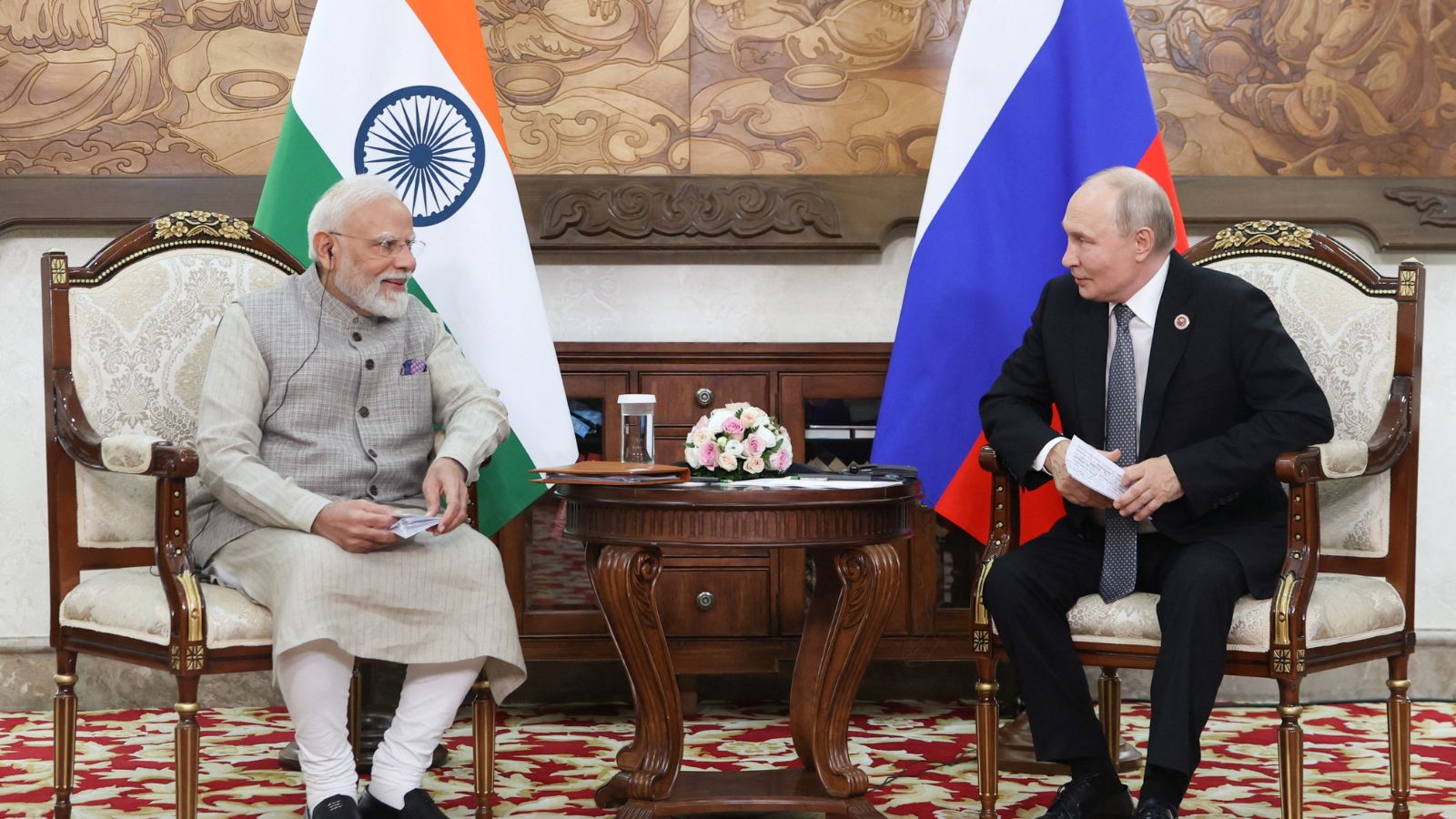
Geopolitics rarely moves in a straight line. When Indian Prime Minister Narendra Modi and Russian President Vladimir Putin sit down for bilateral talks on the sidelines of a BRICS summit, diplomats across Western capitals grab their coffee and lean in close. They are trying to decode a friendship that defies Western expectations.
For decades, people have predicted the demise of the Delhi-Moscow axis. Critics argue that India's growing defense partnerships with the United States should naturally push Russia away. They assume New Delhi will eventually pick a side. That calculation misses the point entirely. India doesn't play zero-sum games. Modi and Putin understand each other because their relationship sits on a foundation of historical pragmatism that survived the Cold War and will likely outlast current global flashpoints.
The Real Agenda Behind Closed Doors
When the cameras turn off and the official handshakes end, the conversation gets real. Trade deficits, energy supplies, and alternative payment mechanisms dominate the room.
Russia needs Asian markets more than ever right now. Western sanctions turned Moscow's economic compass sharply toward the East. India stepped up as a major buyer of discounted Russian crude oil, saving billions in the process while keeping domestic inflation manageable. Critics scream about compliance, but New Delhi answers to its own 1.4 billion citizens first. Energy security trumps Western foreign policy preferences every single time.
At the same time, India keeps buying critical spare parts for its Soviet-origin military hardware. You cannot swap out an entire nation's defense inventory overnight. It takes decades. Modi knows this, and Putin knows this. Their bilateral meetings ensure that the supply lines keep moving, even when global banking networks throw up roadblocks.
BRICS as a Counterweight
Let us talk about the room itself. BRICS is expanding. New members joined recently, transforming the bloc from a catchy acronym coined by an investment banker into a genuine geopolitical heavyweight.
Modi uses BRICS to project strategic autonomy. India refuses to become a junior partner in any Western alliance. By sitting alongside Russia, China, and newer members, New Delhi signals that the future belongs to a multipolar world. They want reformed multilateral institutions. They want a voice in global finance that reflects economic reality, not 1945 power dynamics.
Putin wants the exact same thing, albeit for different reasons. Moscow needs BRICS to prove it is not isolated. Every handshake with Modi is a visual reminder to Washington and Brussels that Russia still has heavy hitters in its corner.
The Delicate Balancing Act
Managing this relationship is an extreme sport. India shares a bloody, contested border with China. Russia and China enjoy a very close partnership. If you are sitting in the Prime Minister's Office in New Delhi, you lose sleep over that triangle.
Modi has to walk a tightrope. He needs Russian diplomatic backing at the United Nations, but he also needs American intelligence sharing to counter Chinese aggression in the Himalayas. So far, Indian foreign policy managed this paradox with cold-blooded realism. They buy oil from Russia, sign defense deals with France, conduct joint military exercises with the United States, and host summits with everyone.
People call it hedging. Diplomats call it multi-alignment. Whatever you name it, it works.
What Comes Next for Bilateral Trade
If you want to understand where India-Russia ties are actually heading, look at the logistics, not the rhetoric. The International North-South Transport Corridor and the Chennai-Vladivostok maritime route are changing how goods move between the two nations.
Payment systems remain a persistent headache. Western banks shut Russian institutions out of SWIFT. To bypass this, both countries experiment with national currency settlements, trading in rupees and rubles. It is messy. It is slow. But it creates a financial firewall that protects their bilateral commerce from extraterritorial sanctions.
Expect more friction with the West. Expect more smug headlines in foreign newspapers questioning India's loyalty. Ignore the noise. Watch the trade volumes instead. Modi and Putin aren't meeting for photo ops. They are hardening their economies against a volatile world order, and they are doing it on their own terms.
Take a close look at how regional energy corridors shift over the next twelve months. Keep an eye on how local currency trade agreements scale up beyond oil. That is where the actual story lives.