The hum of a server rack is a sterile sound, but out on the damp, basalt-strewn ridges of the western Pacific, the most critical sound in modern defense is often the silence of a dead battery.
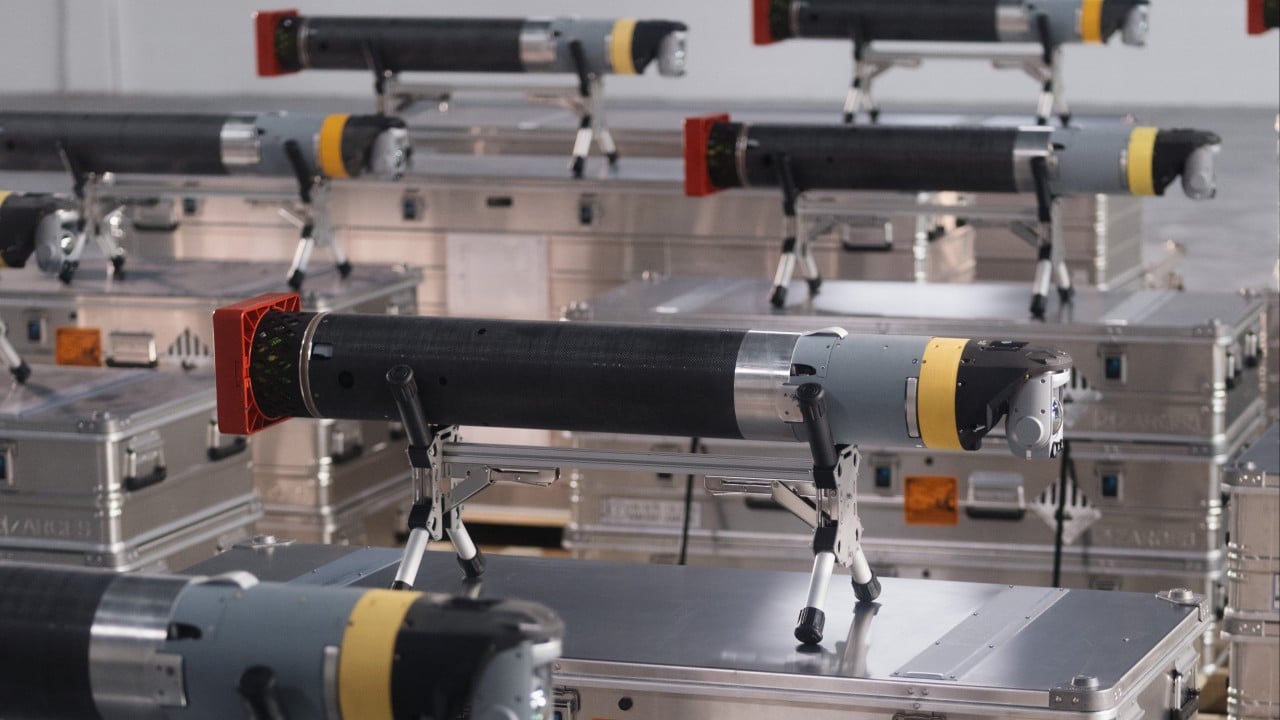
Consider a hypothetical logistics officer standing in a concrete bunker just outside Taipei. Let us call him Chen. It is three o'clock in the morning. A heavy mist clings to the tree line, smelling of wet earth and distant diesel exhaust. Chen holds a clipboard in gloved hands, his breath pluming in the damp air. Before him sits a high-end, tactical aerial reconnaissance drone—a vital sentinel meant to sweep the Taiwan Strait for unusual naval movements. It is a masterpiece of modern engineering, capable of loitering quietly above grey-green swells for hours.
Except for one glaring, infuriating detail.
It cannot fly.
The charger is missing. Not broken. Not destroyed in a fiery training accident. Simply absent. A proprietary power adapter, small enough to fit inside a pocket, has vanished from the supply chain paper trail. Multiply that missing brick of plastic and copper by dozens of units scattered across coastal outposts, and you arrive at a sobering vulnerability. Modern defense logistics rarely collapse because of epic, cinematic battles. They fracture over missing cables.
The Anatomy of Invisible Friction
We tend to think of military preparedness in terms of steel and thunder. We picture sleek titanium hulls cutting through heavy seas, hypersonic interceptors streaking across the stratosphere, and encrypted command centers glowing with amber displays.
Reality is far more mundane.
Defense is maintained by warehouse clerks checking manifests, supply sergeants arguing over shipping invoices, and quartermasters hunting for compatible plugs in labyrinthine storage facilities. When a multi-million-dollar unmanned aerial system arrives on an island garrison without the specific voltage converter required to juice its power cells, the multi-billion-dollar deterrence strategy stumbles.
This is the hidden cost of rapid technological adoption. For years, defense planners have rushed to integrate commercial-grade and specialized unmanned systems into their defensive architecture. These tools offer unprecedented situational awareness. They are cheap relative to manned fighter jets, endlessly reproducible, and capable of saving lives by flying into harm's way instead of humans.
Yet, hardware is only as good as its sustainment. If the supply chain is an Achilles heel, the mundane accessory is the pebble in the boot.
Think about your own life for a moment. You buy a sophisticated electronic device, tear open the cardboard box with eager anticipation, and realize the manufacturer used a proprietary charging port. Now imagine that device is not a smartphone, but a critical reconnaissance asset guarding a narrow maritime corridor against a massive amphibious threat. The stakes shift from mild annoyance to profound strategic exposure.
The Weight of Paper Trails
Why do these disconnects happen? The answer lies in the friction between rapid procurement and bureaucratic inertia.
When urgent defense requirements emerge, acquisition agencies move quickly. Contracts are signed, crates are loaded onto transport aircraft, and hardware arrives at forward-operating bases with astonishing speed. But the administrative tail often fails to keep pace with the teeth of the operation. Maintenance manuals, spare parts catalogs, and secondary sustainment kits get backordered, overlooked, or misfiled in translation.
A box arrives labeled "Aerial Reconnaissance Kit A." It contains the airframe, the gimbal-stabilized camera, the control station, and the tactical display. Everyone breathes a sigh of relief. The box is checked off on a digital manifest.
Then the sun goes down, the crew sets up for a night patrol, and someone reaches for the power supply. Silence.
The oversight exposes a deeper systemic vulnerability. In a sustained crisis, supply lines do not merely face enemy interdiction; they choke on their own complexity. When different tiers of military units rely on a patchwork of foreign-supplied hardware—some American, some domestic, some commercial off-the-shelf—the inventory requirements explode. A single unit might need three different charging standards, four types of data cables, and a rotating cast of proprietary lithium-ion batteries.
Confusion reigns when simplicity is required most.
Bridging the Gap Between Iron and Idea
To understand why this matters beyond the headlines, we have to look past the hardware and into the psychology of readiness.
Soldiers, sailors, and airmen live in a state of perpetual anticipation. They train for the worst day of their lives, running drills until muscle memory overrides fear. When they encounter administrative failures—like missing hardware components or mismatched sustainment packages—it erodes trust in the architecture that supports them. It introduces a gnawing doubt. If the basic accessories are missing in peacetime, what else will fail when the sirens finally sound?
Fixing this requires a cultural shift in how defense logistics are perceived. For decades, logistics was treated as the unglamorous cousin of combat arms. The glory went to the pilots, the infantry commanders, and the artillery chiefs. The logisticians labored in the background, noticed only when something broke.
That era is over.
In modern asymmetric deterrence, supply chain integrity is combat power. A well-organized warehouse is as much a weapon system as a missile battery. Tracking every single component—down to the humblest power adapter—is the difference between holding a line and watching it dissolve into chaos.
As the morning mist begins to burn off the Taiwanese coast, our hypothetical officer, Chen, finally finds a workaround. Improvised wiring, a compliant power inverter salvaged from an older vehicle, and a heavy dose of sheer human ingenuity bridge the gap. The drone whirs to life, its rotors slicing the heavy air as it lifts into the grey dawn.
It worked this time. But reliance on last-minute improvisation is a dangerous substitute for a functioning supply chain. The real defense of a nation is not just built on the courage of those who stand watch. It rests on the quiet, unglamorous dedication of those who make sure every single cable is in its place before the sun goes down.