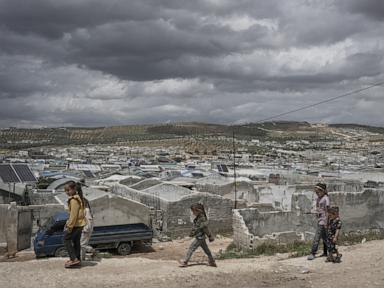
Bashar al-Assad is gone, but the tents remain. When the regime fell, the immediate assumption across global newsrooms was that millions of displaced people would pack their bags and head home. It makes sense on paper. The dictator fled, the war shifted, so the refugees should return.
But it isn't happening. Not at the scale people expected.
Walk through any informal tent settlement in Idlib, northern Syria, or across the borders in Lebanon and Jordan, and you'll find a brutal reality. People are stuck. The barrier to returning isn't a lack of desire. Every single family in these camps wants to go home. The real problem is a devastating mix of financial ruin, obliterated infrastructure, and the deadly remnants of a decade-long war. They are cash-strapped, exhausted, and effectively trapped in purgatory.
The Financial Wall Blocking the Road Home
Moving a family costs money. Returning to a decimated hometown costs a fortune. Most families living in the tent settlements have spent years burning through their savings. They've sold heirlooms, jewelry, and livestock just to buy bread and clean water.
Right now, the average Syrian refugee family survives on less than two dollars a day. They don't have the cash to rent a truck to haul their meager belongings across provincial lines. They don't have money for fuel, which is both scarce and prohibitively expensive.
Even if they manage to scrape together the transit fare, what awaits them?
In cities like Homs, Aleppo, and the suburbs of Damascus, entire neighborhoods are just mountains of pulverized concrete. A returnee doesn't just open their front door and sweep the floor. They face a skeleton of a building. Often, their home is completely leveled. Rebuilding a single room to make it habitable requires hundreds of dollars for cement, cinder blocks, and basic tools. When you're choosing between buying dinner or buying bricks, dinner wins every time.
No Power No Water No Economy
Let's look past the rubble. Imagine a family finds their home intact. They still face a massive survival challenge because the basic systems that keep a society running are dead.
The electrical grid in Syria is a disaster. Some areas get less than an hour of state-provided power a day, forcing residents to rely on expensive private generator networks. The water infrastructure is equally ruined. Pumping stations are offline, water networks are contaminated, and sewage systems have collapsed. Human Rights Watch and various UN agencies have repeatedly highlighted how these conditions trigger outbreaks of waterborne diseases like cholera.
Then there is the job market. There isn't one. The Syrian economy is non-existent. The local currency lost virtually all its value over the years of conflict. Factories are destroyed, agricultural land is scarred by shelling, and businesses are gone. Returning home means leaving a tent where international aid groups occasionally provide food baskets, only to move to a ruined village where there are no jobs, no schools, and no clinics. It's a risk many parents simply refuse to take with their children.
The Invisible Killers in the Dirt
Money and infrastructure aren't the only hurdles. The ground itself is lethal.
Syria is heavily contaminated with unexploded ordnance. We are talking about landmines, cluster munitions, and improvised explosive devices scattered across agricultural fields, highways, and residential areas. According to data from the United Nations Mine Action Service, millions of Syrians live in areas littered with these hidden killers.
For a displaced farmer, going home means risking their life to plant crops. Children returning to their old neighborhoods frequently mistake unexploded submunitions for toys. Until massive, coordinated demining operations happen, vast swaths of the country remain off-limits for safe human habitation.
Land Grabs and Legal Nightmares
There is also a massive legal mess to untangle. During the war, the Assad regime passed several property laws, most notably Decree 11, which allowed the government to confiscate lands and redevelopment zones without compensating the original owners.
Many refugees fled with nothing but the clothes on their backs. They don't have their original property deeds, land registries, or identification papers. Those documents were burned, lost in transit, or left behind during frantic escapes from airstrikes.
Now, families face a bureaucratic nightmare. They have to prove they own their homes in front of local authorities or newly formed local councils. In many cases, squatters or opportunistic local factions have occupied these vacant properties. Evicting them without official paperwork is almost impossible, leading to localized conflicts over ownership rights.
Shifting Focus From Temporary Aid to True Rebuilding
The international community needs to shift its mindset completely. For years, the strategy was simple: provide tents, blankets, and monthly food rations to keep people alive in the camps. That was a band-aid solution for a temporary crisis.
Now that the political landscape has shifted, the funding model must change too. Continuing to fund tent cities just keeps people trapped in dependency. The international aid apparatus, including donor countries and major NGOs, must pivot toward stabilization and rehabilitation funds.
This means directing resources into structural reconstruction. Money needs to go toward clearing rubble from main transit routes, restoring water pumping stations, and deploying specialized demining teams to clear agricultural lands. Providing small micro-grants directly to families so they can buy construction materials locally would do far more to empty the camps than another decade of distributing plastic tarps. NGOs should also prioritize legal assistance programs to help refugees recover lost property deeds and navigate the complex legal systems required to reclaim their ancestral lands safely. Without this structural shift, the tents will remain a permanent fixture of the landscape.