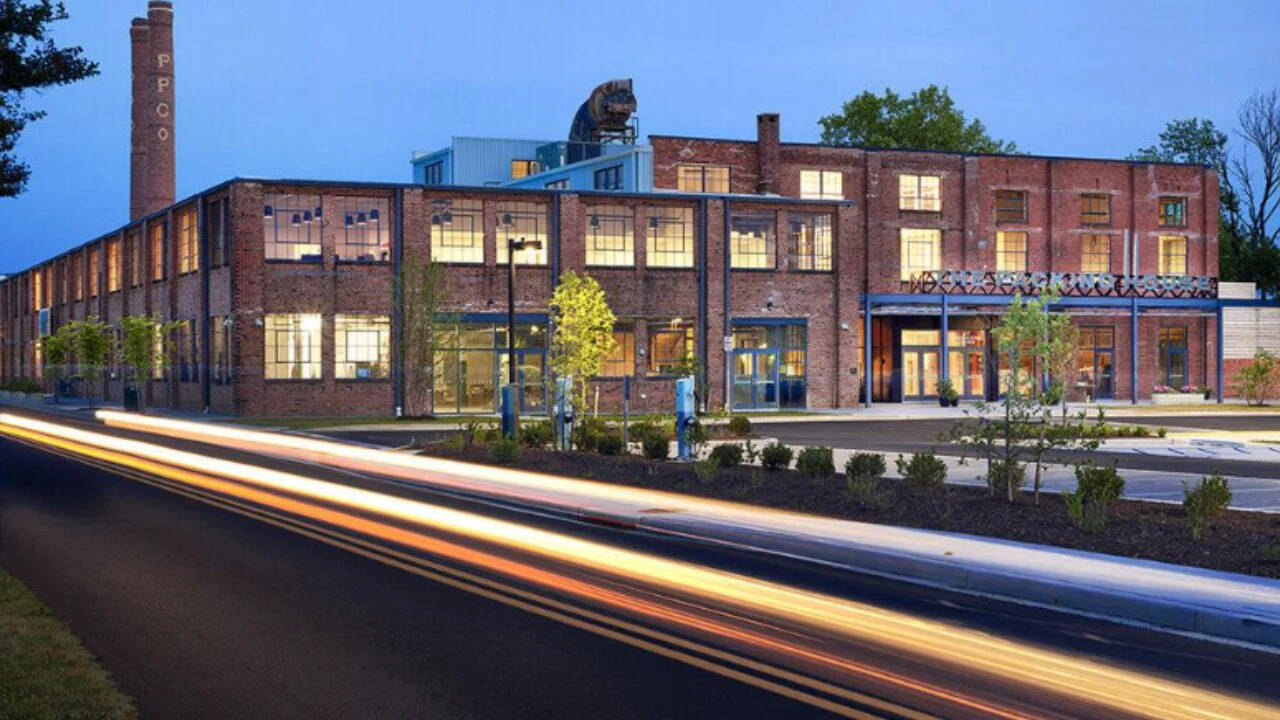
A century-old industrial footprint in Maryland—once humming with the deafening clatter of World War II ration production lines—is undergoing a high-stakes resurrection through a one-million-dollar investment centered entirely on the state's iconic bivalve, the Eastern oyster. Beneath glossy press releases celebrating historic preservation and ecological revival lies a complex economic gamble. Transforming a relic of wartime manufacturing into a modern hub for oyster processing and distribution is not a simple story of architectural nostalgia. It is a calculated stress-test of whether aging infrastructure can anchor the volatile future of Chesapeake aquaculture.
The Industrial Ghost of the Eastern Shore
To understand the weight of this transformation, look back at the physical demands of mid-century Maryland industry. During the Second World War, factories along the Chesapeake tributaries operated as logistical engines for the allied war effort. They stamped out tin cans, processed tons of preserved vegetables, and packed shelf-stable protein rations intended to cross oceans and feed troops in combat theaters. These facilities were engineered for brute force, mass volume, and relentless throughput. Thick masonry walls, heavy timber framing, and cavernous open floor plans were designed to withstand punishing use and house massive steam-cooking vats.
When the wartime contracts dried up and regional canning operations consolidated or collapsed under shifting national supply chains, many of these brick monuments were left to rot. Salt air from the bay ate at their iron fasteners. Weeds cracked through their loading bays. They became ghost sites of an industrial era that Maryland has spent decades trying to reimagine.
Pumping a million dollars into one of these structures to house an oyster center sounds pristine on paper. Yet, adaptive reuse on the waterfront is notoriously punishing. Historic preservation mandates clash directly with modern food safety regulations, cold-chain logistics requirements, and wastewater discharge compliance. Converting a space built for dry canned goods into a high-moisture, pathogen-sensitive seafood processing and innovation facility requires structural gymnastics. Engineers must reinforce foundations eaten by decades of tidal flooding while preserving historical facades mandated by preservationist boards.
Anatomy of the Infrastructure Shift
The mechanics of seafood processing diverge sharply from wartime canning. Rations required heat sterilization and dry warehousing. Oysters demand pristine, rapid-chill cold chains, rigorous bacteriological testing zones, and specialized shucking floors where sanitation protocols dictate every square inch of interior design.
A modern oyster center cannot simply operate as an artisanal shucking shack scaled up. It must function as a distribution node, an educational hub, and a shell-recycling logistics depot all at once. The million-dollar injection covers basic stabilization, electrical upgrades capable of running industrial blast freezers, and state-of-the-art water filtration loops. But capital costs are only the initial hurdle. The true test is operational continuity.
Consider the shell-recycling loop, a vital component of any contemporary Chesapeake oyster facility. When restaurants and wholesalers process bivalves, the empty shells represent the most valuable restoration currency in the state. Millions of discarded shells are needed annually to seed new oyster bars in the bay, providing the hard substrate that infant spat require to settle and grow. A facility anchored in a historic factory must possess the material handling capacity to collect, quarantine, wash, and redistribute thousands of pounds of shell without choking local roads or violating environmental zoning. The footprint that once loaded crates of canned beef onto freight trucks must now handle the messy, wet logistics of biological restoration.
The Financial Mechanics Behind the Capital Injection
One million dollars sounds substantial to a casual observer, but in the realm of heavy industrial restoration and specialized food processing equipment, it represents a tight budget constraint. Industrial-grade refrigeration units, stainless steel shucking tables, automated grading machinery, and compliance-certified wastewater management systems eat through capital with alarming speed.
This financial reality forces a hard look at who actually benefits from such projects. Aquaculture in the Chesapeake Bay is caught in a structural squeeze. On one side, independent watermen face rising fuel costs, shrinking wild harvest quotas, and unpredictable water salinity driven by erratic weather patterns. On the other side, private leaseholders and commercial aquaculture enterprises require high-volume processing capacity to turn a profit against cheaper imported seafood from the Gulf Coast or overseas markets.
A localized center backed by public and private funds must walk a razor-thin line. If it operates purely as a commercial enterprise for high-end restaurants, it risks alienating traditional watermen who view corporate aquaculture encroachment with deep suspicion. If it functions solely as a non-profit educational and restoration museum, it risks burning through its operational endowment the moment maintenance costs spike on a century-old brick building facing sea-level rise.
The economics dictate that the facility must hustle to diversify its revenue streams. It needs to capture retail traffic, host industry training seminars, lease processing space to independent growers, and secure municipal waste-management contracts for shell recycling. Relying on a single revenue model in the modern seafood sector is financial suicide.
The Labor Paradox in Rural Manufacturing
Wartime ration factories relied on cheap, abundant labor pools working assembly lines under grueling conditions. The modern oyster industry faces a fundamentally different, and arguably more difficult, workforce crisis.
Shucking oysters remains a grueling, highly skilled craft that resists full automation despite decades of engineering attempts. While mechanical graders and hydraulic openers exist, the precision required to process wild or farmed oysters without damaging the meat or introducing shell fragments still depends heavily on human hands. Finding and retaining skilled labor in rural or semi-rural Maryland communities is a constant battle.
The industry cannot rely on local workers alone. Much of the seasonal shucking workforce across the Eastern Shore has historically relied on temporary visa programs, bringing in experienced processors from abroad. A physical center attempting to anchor year-round operations must navigate complex immigration policies, housing shortages in rural coastal towns, and fierce competition from larger poultry and seafood plants across the Delmarva Peninsula.
Furthermore, running an innovation center requires a new breed of worker. Marine biologists, water quality technicians, logistics coordinators, and compliance officers are required to operate a facility that meets modern health standards. Merging these technical roles with the traditional culture of local watermen creates inevitable friction. Cultural distrust between corporate-backed aquaculture managers and generational harvest families runs deep across Maryland tidewaters. A brick building cannot solve that cultural divide; at best, it provides a neutral arena where negotiations can occur over a workbench.
Ecological Tipping Points in the Chesapeake Basin
The ultimate justification for investing in regional oyster infrastructure goes beyond economics. Oysters are ecosystem engineers. A single adult oyster can filter up to fifty gallons of water per day, stripping suspended sediments, algae, and excess nutrients from the water column. In a bay suffocated by agricultural runoff and urban development, ramping up oyster cultivation and restoration is an environmental necessity.
However, the physical location of a processing and restoration center on the water exposes a stark vulnerability. Climate change is rewriting the baseline metrics of the Chesapeake Bay. Increased storm intensity, rising sea levels, and severe salinity fluctuations driven by massive freshwater surges from torrential rain events create hostile conditions for bivalves. Diseases like Dermo and MSX thrive in warmer, saltier waters, wiping out entire harvests before they reach market size.
Pouring capital into fixed brick-and-mortar infrastructure sitting inches above the high-tide line invites long-term risk. A million-dollar facility must be hardened against storm surges that threaten to flood electrical panels and contaminate processing floors with bay water. Environmental resilience is no longer an optional design feature for coastal manufacturing; it is the primary determinant of whether an investment will survive the decade.
The juxtaposition is striking. A building forged during the industrial mobilization of the twentieth century, built to project permanence and military might, now stands exposed to the slow, relentless creep of rising tides. Its survival depends entirely on its utility as a node in a fragile ecological defense network.
If the project succeeds, it will not be because the building is historic, nor because a million dollars bought state-of-the-art machinery. It will succeed only if it manages to bridge the widening gap between historical maritime culture and the harsh, unforgiving realities of modern ecological economics. The machinery will turn, the shells will pile up in the wash bays, and the trucks will depart for city markets. But the margin for error on the water has vanished, and no amount of historical preservation can protect an enterprise from a dying bay.