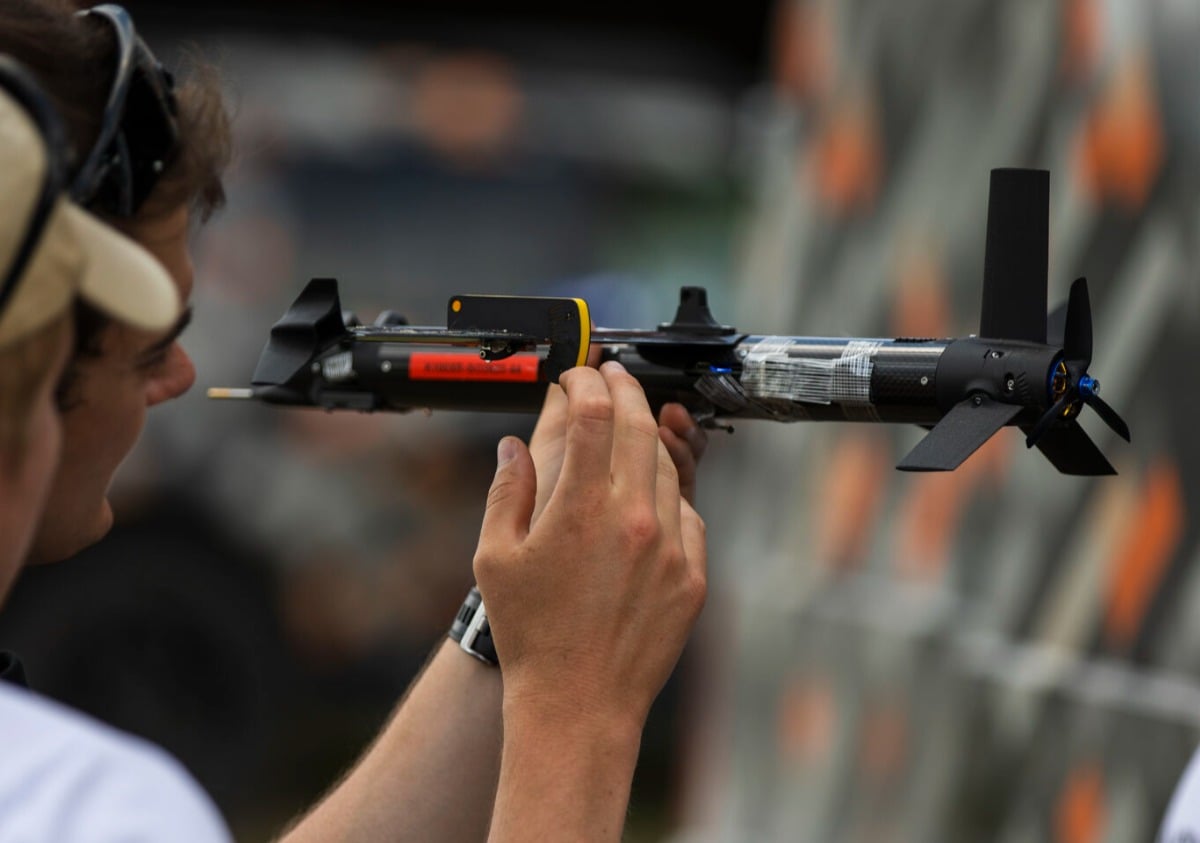
The defense tech sector is currently suffering from a collective delusion. Every time a venture-backed startup unveils a sleek, autonomous drone-killing interceptor designed to ram or shoot down cheap quadcopters, the tech press swoons. They marvel at the carbon-fiber frames, the AI-driven targeting algorithms, and the high-speed pursuit footage. They hail it as the definitive answer to the asymmetric drone threat terrorizing modern battlefields.
They are completely wrong.
Building a complex, high-speed, autonomous interceptor drone to kill a $500 off-the-shelf quadcopter is a classic engineering trap. It is an elegant, incredibly expensive solution to the wrong problem. While startups boast about their kinetic interception success rates in controlled desert testing grounds, they are missing the brutal economic reality of attritional warfare.
We do not have a targeting problem. We have a math problem.
The Asymmetry Trap: Buying Your Way to Bankruptcy
I have spent years analyzing defense procurement and testing electronic warfare systems. I have watched defense contractors burn through tens of millions of dollars trying to build the perfect kinetic kinetic counter-Unmanned Aerial System (c-UAS). The pitch is always the same: "Our interceptor can track, pursue, and destroy any rogue drone in the sky."
But let us look at the actual balance sheet of a modern engagement.
Imagine a scenario where an adversary launches a swarm of 50 mass-produced, commercially available FPV (First-Person View) drones. The total cost to the attacker is roughly $25,000.
To counter this, you deploy a fleet of highly sophisticated, proprietary interceptor drones. Each interceptor requires custom carbon-fiber molding, specialized high-KV brushless motors, onboard optical sensors, and proprietary guidance computing. Even at scale, the unit cost of these interceptors rarely drops below $10,000 to $20,000 when you factor in the launch architecture, maintenance, and tracking infrastructure.
Do the math. You are spending nearly a million dollars to neutralize $25,000 worth of plastic and exposed wiring.
In a true war of attrition, the side that spends more to defend than the attacker spends to strike loses every single time. The adversary does not need their drones to penetrate your perimeter to win; they just need you to launch your expensive interceptors until your inventory is depleted and your budget is hollowed out.
Why Kinetic Interceptors Fail the Logistics Test
The tech industry loves to treat drone defense like a software problem that can be patched with better algorithms. It isn't. It is a grueling logistics and supply chain crisis.
Here is what happens when you try to deploy these celebrated interceptors in real-world combat environments:
- The Reload Bottleneck: A kinetic interceptor is typically a single-use or high-wear asset. Once it rams an enemy drone or detonates its micro-payload, it is gone. Replacing that asset requires a complex aerospace supply chain. The enemy, meanwhile, is assembling their strike drones in a garage using parts ordered off consumer e-commerce sites.
- Storage and Mobility: Interceptors require specialized launching tubes, charging stations, and sensitive climate-controlled storage for their batteries and sensors. Infantry units cannot carry dozens of these bulky systems on their backs.
- The Swarm Vulnerability: Kinetic interceptors are inherently 1-to-1 solutions. Even if your interceptor is 95% effective, a saturated attack of 100 drones means five get through. When the target is an ammunition depot or a command tent, five hits are all it takes.
We must stop trying to match the enemy drone-for-drone. The solution to a swarm of cheap insects is not a swarm of expensive mechanical birds. It is a flyswatter.
Dismantling the Premise of the "Perfect Catch"
If you look at the questions frequently asked by defense planners, you quickly realize they are asking the wrong things entirely.
Flawed Question: How do we increase the top speed and agility of our interceptor drones to catch racing quads?
The Real Answer: You don't. Trying to out-maneuver a 100 mph racing drone with another drone is an aerodynamic nightmare that wastes battery life and processing power. You change the physics of the engagement.
Instead of fighting for airspace superiority at 200 feet, effective defense requires dominating the electromagnetic spectrum and leveraging directed energy. High-power microwave (HPM) systems and advanced electronic jamming do not care how fast an enemy drone can turn. They do not care if the drone is made of carbon fiber or cardboard. They fry the internal circuitry or sever the control links of entire formations simultaneously.
The downside to this approach? It isn't sexy. It doesn't look cool in a promotional video. Electronic warfare happens invisibly. It doesn't offer the cinematic satisfaction of a mid-air explosion. But it works, and more importantly, the marginal cost per shot of an electromagnetic engagement is measured in pennies, not tens of thousands of dollars.
The Hard Truth About Autonomy in the Sky
The current media darlings of the c-UAS world place immense emphasis on total autonomy. They claim their systems use edge computing to track targets without human intervention, rendering them immune to radio frequency jamming.
This sounds bulletproof until you look at the reality of modern electronic combat.
True, an optical-tracking autonomous drone cannot be jammed via its control link because it doesn't have one. But it can be blinded. Simple, low-cost multi-spectral smoke, battlefield debris, or cheap laser dazzlers can severely degrade the optical sensors these interceptors rely on.
Furthermore, relying entirely on autonomous machine vision to identify a threat creates a massive risk of fratricide. In a crowded airspace filled with friendly reconnaissance drones, commercial delivery platforms, and enemy strike craft, relying on a localized AI algorithm to make split-second kill decisions is an invitation to disaster. The coding required to perfectly differentiate between a hostile modified quadcopter and a friendly one in a chaotic environment is an ongoing vulnerability, not a solved feature.
Shift the Target From the Drone to the Factory
Stop trying to shoot down the arrow. Invest your resources into killing the archer, or better yet, burning down the bow factory.
If defense tech startups want to actually solve the drone crisis, they need to stop building boutique hardware. They need to pivot toward deep-tier supply chain disruption, automated wide-area signal mapping, and localized, scalable kinetic denial systems like automated flock-shot nets or low-cost, high-velocity fragmentation systems.
The era of celebrating over-engineered, cost-prohibitive drone interceptors must end. Every dollar spent on a boutique kinetic interceptor is a dollar stolen from scalable, sustainable defense architecture.
Stop buying the hype. Stop funding the tech demos. The startup showing off its shiny new drone-killer isn't building the future of defense; they are building a monument to the military-industrial complex's inability to understand basic arithmetic.