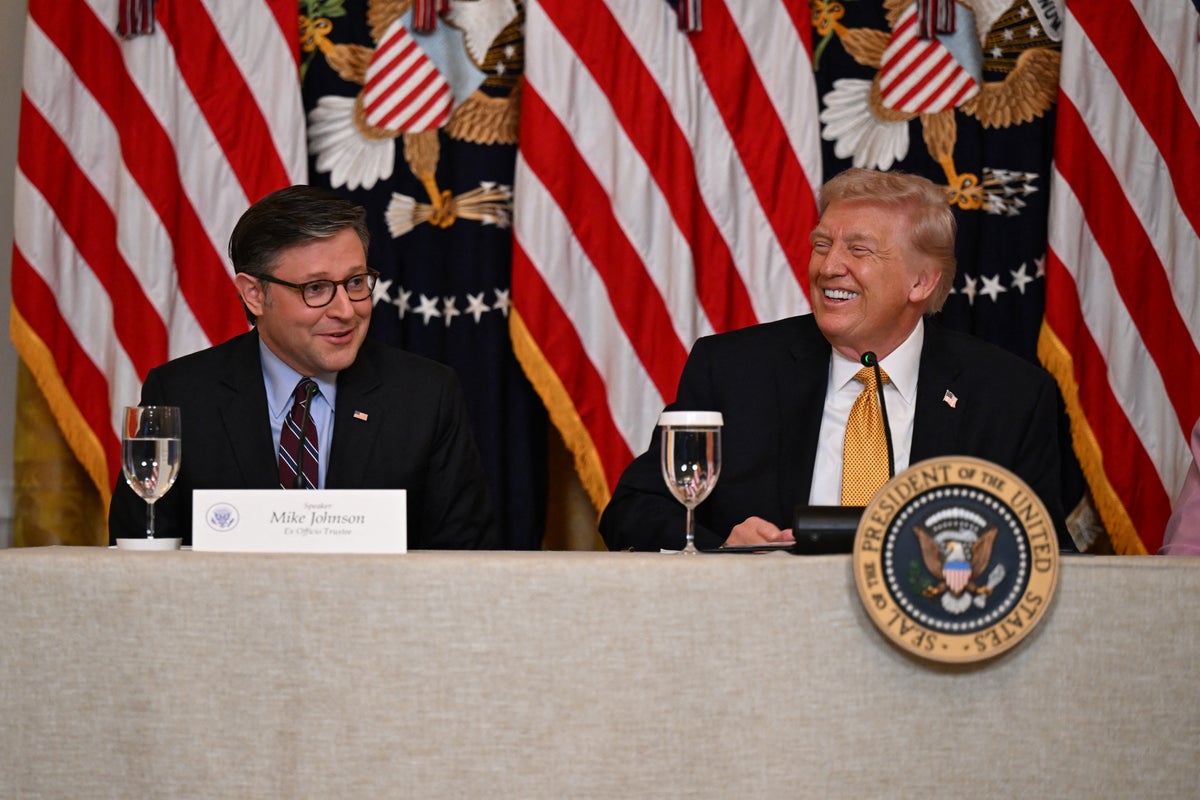
The media machine treats every passing utterance in Washington like a strategic masterclass. When Speaker Mike Johnson reportedly threw around the phrase co president to describe his dynamic with the White House, the pundit class lost its collective mind. They framed it as a vanity project. They wrote breathless columns about ego, overreach, and institutional power grabs.
They are missing the entire plot.
Mike Johnson did not promote himself. He strapped himself to a ticking time bomb and tried to rebrand the explosion as shared custody.
I have spent years watching the mechanics of legislative paralysis up close. I have seen ambitious leaders inherit razor thin majorities and talk themselves into believing that proximity to executive authority equals actual leverage. It is a comforting delusion.
The lazy consensus is that calling yourself a co president is a sign of arrogance. The brutal reality is far more pathetic. It is the defensive mechanism of a man who realizes he cannot control his own caucus, cannot pass a budget without Democratic votes, and must pretend that being managed by the executive branch is actually a partnership.
The Anatomy of a Legislative Subordinate
Let us look at the actual mechanics of power in Washington. True power requires two things: the ability to reward your friends and the capacity to punish your enemies.
Mike Johnson has neither.
His majority is so microscopic that a handful of dissidents can paralyze the entire chamber. Every single vote requires a hostage negotiation with the most extreme faction of his own party. When you cannot pass a rule without begging your internal opposition not to mutiny, you are not a leader. You are an arbiter of chaos.
To call yourself a co president under those conditions is like a captive praising the hospitality of their kidnapper. It is a psychological coping mechanism designed to mask total subordination in the language of executive equality.
The media treats this as a bold power play because they still view Washington through the outdated lens of institutional norms. They assume titles matter. They assume proximity to the conversation equals a seat at the head of the table.
Wrong.
In modern American politics, legislative leaders do not share executive power. They absorb executive blame.
Why the Co President Myth Persists
Why do intelligent analysts keep falling for this narrative? Because attributing hyper competence and grand ambition to politicians is easier than accepting the truth of their impotence.
It is much cleaner to write a profile about a power hungry Speaker expanding his domain than it is to write about a system that is entirely broken. A power grab implies agency. It implies strategy.
Imagine a scenario where a CEO has zero control over their board of directors, cannot fire any employees, and has to clear every major company decision with a rival firm across the street. Would anyone call that CEO a co chief executive? Of course not. We would call them a figurehead waiting for the ax to fall.
Yet when it happens in the halls of Congress, the press corps dresses it up as political maneuvering.
Johnson knows his position is untenable. He knows history will judge this Congress not by its grand legislative achievements, but by its historic dysfunction. By floating the idea that he operates on the same plane as the executive, he is trying to insulate himself from the base that despises compromise and the moderates who demand functionality.
It is not a promotion. It is a protective shield made of empty semantics.
The Real Cost of Institutional Delusion
This isn't just about one man's rhetorical defense mechanism. It exposes a deeper rot in how we analyze governance.
When we pretend that legislative leaders are co pilots of the nation, we let them off the hook for their primary constitutional duty: independent oversight and rigorous lawmaking.
When the legislative branch willingly adopts the framing of the executive, separation of powers dies a quiet death. We stop having a system of checks and balances and start having a system of joint PR campaigns.
Johnson wants you to look at the title and imagine him sitting in the Oval Office dictating terms. He wants you to forget that every major legislative package requires him to surrender his leverage just to keep the lights on.
Stop buying the spin.
The next time a politician tries to rebrand their weakness as shared strength, look at the vote counts. Look at the procedural surrenders. Look at who is actually setting the agenda.
Titles are cheap. Power requires numbers. And Mike Johnson is fresh out of both.