The coffee went cold around three in the morning.
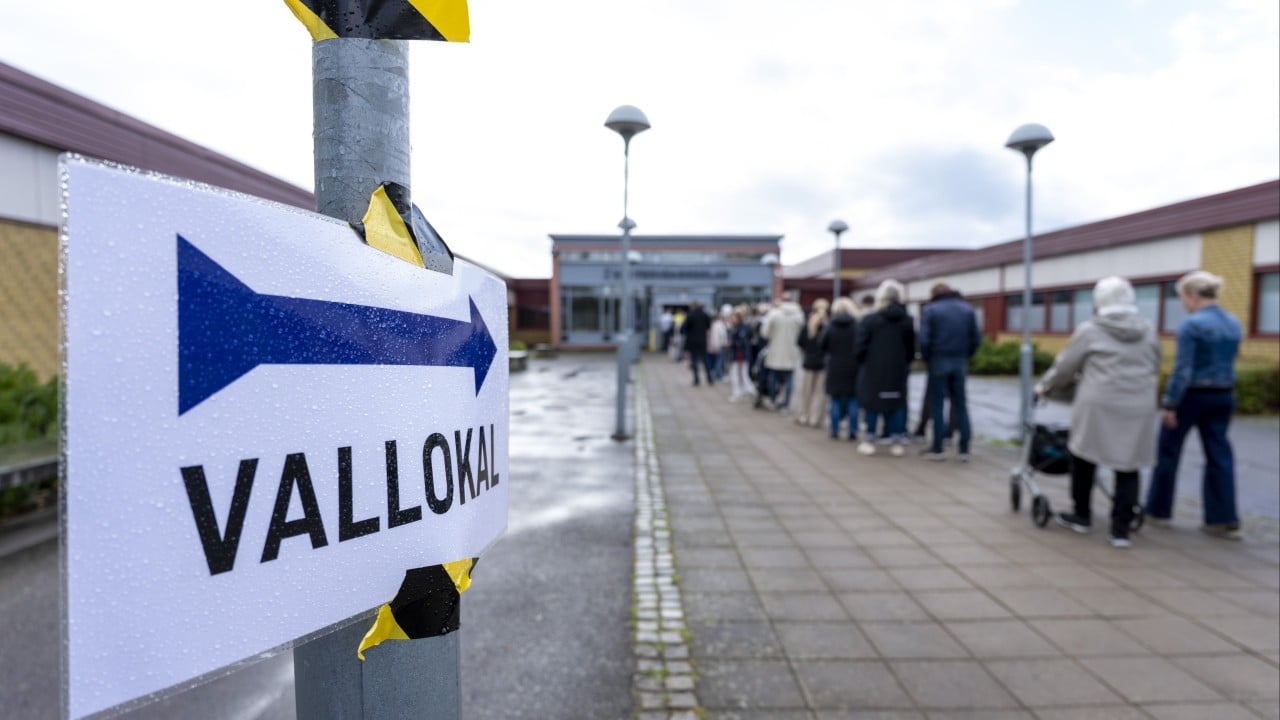
On the third floor of a municipal administration building in central Stockholm, the air smelled of stale espresso, damp wool, and the low, collective anxiety of a country holding its breath. Outside, the Baltic wind whipped through empty cobblestone streets, rattling the wrought-iron frames of outdoor café seating. Inside, piles of paper ballots—blue, yellow, white, and pink—sat stacked like ancient masonry under the harsh, unsparing glare of fluorescent tubes.
Sweden was stalling.
Across the nation, televisions flickered in dark living rooms where citizens stared at flashing percentage bars that refused to tip decisively in either direction. The margin was microscopic. A few thousand votes scattered across remote northern timber towns and suburban southern apartment blocks stood between two entirely different political trajectories. Hours bled into days. The election night that refused to end dragged the country into a state of suspended animation, where every precinct report felt like a tremor on a Richter scale.
Henrik, a veteran election coordinator with twenty years of municipal service behind his belt, wiped his tired eyes and watched another batch of envelopes being slit open. His hands were stained with ballot dust. He had seen close elections before, but this one carried an invisible weight. It was not merely about who would form the next cabinet or control the budget committees in the Riksdag. It was about a deeper reckoning, a silent pivot that had been unfolding in committee rooms and intelligence briefings long before the first vote was cast.
While the domestic political machine convulsed in a nail-biting stalemate, foreign policy had already crossed a Rubicon.
To understand how Stockholm arrived at this cold clarity, you have to look backward. Not decades, but just a few short years, to an era when economic optimism blinded policy to reality. Back then, trade delegations moved fluidly between Arlanda Airport and Beijing, treating commerce as a universal solvent that could dissolve ideological differences. Factories opened. Technology flowed across borders without friction. The official governing philosophy treated economic engagement as an automatic guarantee of mutual democratization.
Then reality intervened. It did not arrive with a dramatic declaration of war, but with the quiet, chilling disappearance of a man.
Gui Minhai, a Swedish citizen, writer, and publisher living in Hong Kong, vanished into the machinery of an opaque state security apparatus. The subsequent years brought a slow, agonizing education for Swedish diplomats, lawmakers, and civil servants. Threats were issued from embassy walls in Kungsholmen. Economic retaliation was hinted at in trade journals whenever Stockholm expressed diplomatic concern over human rights. Academic partnerships came under intense, uncomfortable scrutiny as universities realized their advanced laboratories were acting as incubators for dual-use technology transfers.
The illusion dissolved like morning mist over Lake Mälaren.
By the time the ballot boxes were sealed on that endless September night, the shift was complete. A nation historically defined by its neutrality, its fierce commitment to open internationalism, and its moral diplomacy had collided with a geopolitical competitor that played by entirely different rules.
Consider what happens inside the Swedish Riksdag when committee doors close behind soundproofed glass. Debates are no longer about whether to engage with Beijing, but how fast, how safely, and how thoroughly to untangle decades of economic and technological entanglement. Telecommunications networks were scrubbed of equipment from suppliers deemed vulnerable to foreign state control, a quiet administrative execution of contracts that once promised the dawn of next-generation connectivity. Critical infrastructure was re-evaluated through the lens of national security rather than cost efficiency. Research institutions implemented strict, bureaucratic filters to protect intellectual property from stealthy acquisition.
This was not born of sudden xenophobia or partisan opportunism. It was a reluctant, clear-eyed awakening.
The ordinary Swede walking to work along the freezing canals might not spend their morning pondering supply chain resilience or semiconductor dependencies. Yet, they feel the aftershocks. They feel it in the tightening of municipal budgets, the debates over foreign real estate acquisitions near coastal naval installations, and the lingering public anger over human rights abuses that could no longer be smoothed over by polite diplomatic communiqués and quiet handshakes.
When the final votes were finally tallied after days of agonizing uncertainty, no single party emerged with a clean mandate to govern alone. Fragile coalitions would have to be forged in the fire of intense political compromise. Ministerial portfolios would be traded like currency. The political terrain remained fractured, volatile, and prone to sudden shifts.
Governments would rise and fall on the whims of minor coalition partners, hostage to the daily theater of parliamentary survival.
Yet, through every iteration of the incoming administration, the stance toward Beijing remained bolted to the floor. The political class could disagree fiercely on tax rates, immigration caps, and green energy subsidies, but they agreed entirely on the fence line. China was no longer viewed as a distant market ripe for endless expansion. It was recognized as a systemic rival requiring constant, unyielding vigilance.
Dawn finally broke over Riddarfjärden, painting the stone facades of the Old Town in a pale, bruised shade of rose. The election night was over, replaced by the messy, grinding machinery of coalition formation and the dawn of a new political era. But the deeper shift remained untouched by the domestic turbulence.
In the crisp morning light, Stockholm stood a little further back from the edge, watching the horizon with eyes wide open.



