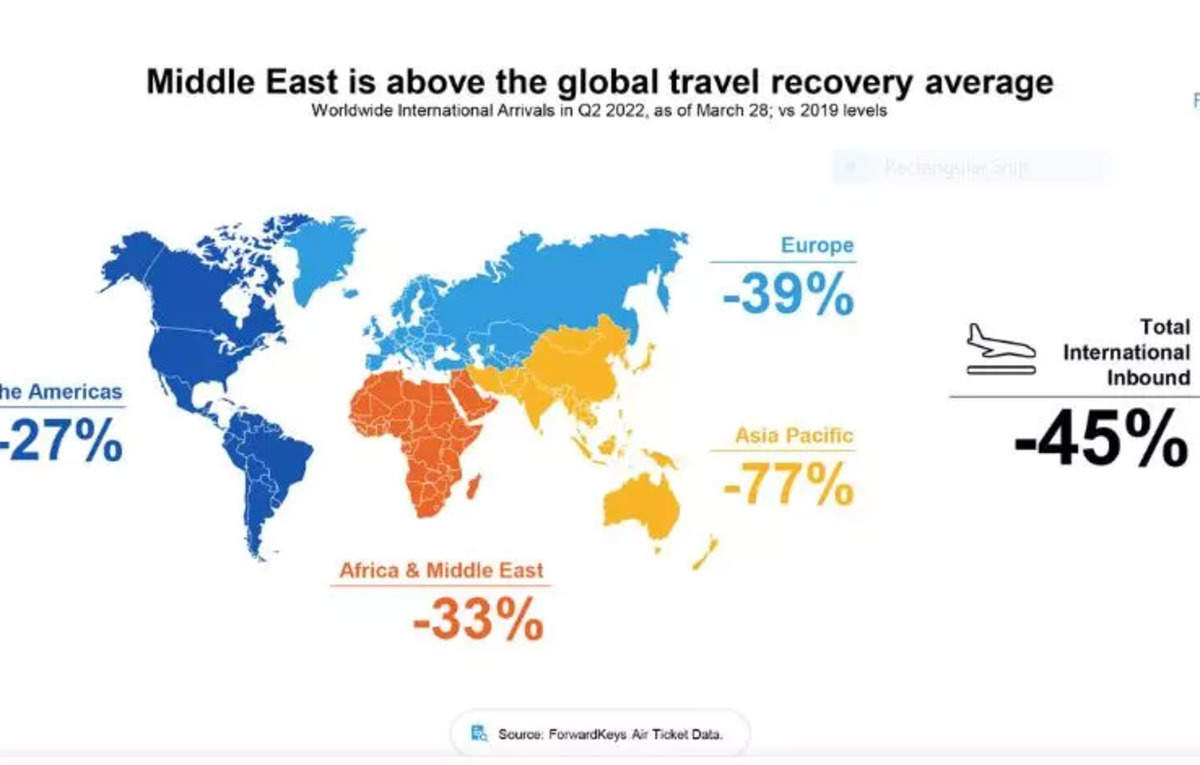
Tourism in the Middle East is currently a walking contradiction. You see the gleaming skylines of Riyadh and Dubai, the record-breaking visitor stats, and the aggressive marketing campaigns during global sports events. Then you look at the flight cancellations and the geopolitical tension that hasn't let up. Saudi Arabia and its neighbors are pushing for a post-conflict travel recovery with everything they’ve got, but the region is still stuck in a post-shock phase that won't go away.
If you’re planning a trip or investing in the region, you need more than a press release. The truth is that while the Gulf states are doing the heavy lifting to diversify their economies away from oil, the broader Middle East remains a patchwork of high-growth success stories and fragile, high-risk zones.
The Saudi Power Move and the Gulf Block
Saudi Arabia isn't just joining the party. They're trying to own the venue. Under Vision 2030, the Kingdom has poured billions into projects like NEOM and the Red Sea Global initiative. They want 150 million visitors annually by the end of the decade. It's an insane goal. Honestly, a few years ago, people laughed at it. They aren't laughing now.
In 2023 and 2024, Saudi Arabia saw a massive surge in international arrivals, often leading the G20 in tourism growth. They’ve simplified the visa process, launched Riyadh Air, and started hosting everything from heavyweight boxing matches to electronic music festivals. They’re following the blueprint set by the UAE and Qatar but on a much larger geographic scale.
Qatar and the UAE have already proven the model works. Qatar used the 2022 World Cup as a massive billboard. They didn't just want a month of football; they wanted to build a permanent stopover hub. Dubai remains the undisputed heavyweight champion of the region, consistently ranking as one of the most visited cities on the planet. Kuwait, Bahrain, and Oman are also carving out niches, with Oman focusing on "low-impact, high-value" eco-tourism and Kuwait leaning into its cultural heritage.
Why the Post Shock Phase Still Hurts
You can build the world’s tallest building or the most luxurious desert resort, but you can’t build a wall around regional instability. This is the "post-shock" reality the industry doesn't want to talk about in brochures. When conflict flares up in the Levant or near the Red Sea shipping lanes, the whole region feels the chill.
Western travelers, especially those from North America and East Asia, often view the Middle East as a single monolith. If there’s trouble in one corner, they cancel their entire Mediterranean or Gulf itinerary. This "contagion effect" hits countries like Jordan and Egypt the hardest. Even though Saudi Arabia or the UAE might be perfectly safe and stable, the perception of risk lingers.
Hotel occupancy rates in some of the more "at-risk" border areas haven't bounced back to pre-2019 levels. Airlines are constantly re-evaluating flight paths to avoid sensitive airspace. This adds cost and time to travel, making the region slightly less competitive against destinations in Southeast Asia or Southern Europe.
The Tourism Paradox in Egypt and Jordan
Egypt and Jordan are the bellwethers for this struggle. They have the history—the Pyramids, Petra, the Dead Sea—that travelers crave. Yet, they’re the first to suffer when tensions rise. Egypt’s tourism revenue is a critical lifeline for its struggling economy, but it fluctuates wildly based on the news cycle.
For these nations, recovery isn't just about marketing. It’s about survival. They’ve had to slash prices and offer massive incentives to tour operators just to keep the lights on. It’s a stark contrast to the luxury-focused, high-spending model seen in Riyadh or Doha.
Turkey and the Balancing Act
Turkey sits in a unique spot. It’s a massive bridge between Europe and Asia and a dominant force in Middle Eastern travel. Despite high inflation and its own share of regional headaches, Turkey remains a powerhouse. Why? Because it’s affordable and it has incredible infrastructure.
Turkish Airlines flies to more countries than any other carrier. That’s a huge advantage. They’ve turned Istanbul into a global crossroads. While the Gulf is focused on creating brand-new destinations from scratch, Turkey is busy refining a product that already has massive global appeal. They’ve shown that a diversified tourism base—mixing medical tourism, beach holidays, and historical tours—can weather almost any storm.
The Problem With the Luxury-Only Strategy
One mistake I see happening across the Gulf is the obsession with the "ultra-luxury" segment. Everyone wants the five-star traveler. Everyone wants the billionaire on a yacht. But there’s a limit to how many $1,000-a-night rooms the world can fill.
To achieve true resilience, these countries need to attract the mid-market traveler. The backpacker, the digital nomad, and the middle-class family. Saudi Arabia is starting to realize this by developing more diverse accommodation options, but the region as a whole still feels "expensive" to the average global tourist.
If a destination is only for the elite, it’s vulnerable to economic shifts in the West or China. A resilient tourism sector needs a foundation of affordable travel. Without it, the post-shock phase will last a lot longer.
Infrastructure is Only Half the Battle
You can have the best airports in the world—and let’s be real, Hamad International and Dubai International make Heathrow or JFK look like bus stations—but you also need the "soft" infrastructure. That means people.
Training a massive hospitality workforce is the secret challenge for Saudi Arabia. They’re hiring thousands of international experts, but the goal is to have Saudis running the show. This cultural shift takes time. You can’t just flip a switch and become a service-oriented economy overnight. It’s a generational project.
How to Navigate the Region Right Now
If you’re a traveler or a business operator, don’t let the headlines scare you off entirely, but don't ignore them either. The "post-shock" phase means you have to be flexible.
- Look for value in "second cities." While everyone is flocking to Dubai, places like AlUla in Saudi Arabia or Muscat in Oman offer a much more authentic and often calmer experience.
- Check the transit hubs. If you’re flying between Europe and Asia, the stopover programs in Doha and Abu Dhabi are legitimately good deals. They often include free or discounted hotel stays.
- Monitor the regional news, not just the local news. Understand that what happens in one country in the Middle East often dictates the travel policies and insurance costs of its neighbors.
The Middle East is currently the most exciting travel market in the world because it's changing so fast. The transition from a region defined by conflict to one defined by "post-conflict recovery" is messy. It’s uneven. It’s often frustrating. But the momentum is real.
The struggle is part of the process. The "shock" isn't over, but the resilience is winning. If you want to see history being rewritten in real-time through architecture and urban planning, this is where you go. Just keep your travel insurance updated and your itinerary flexible.
Keep an eye on the visa updates. The GCC Unified Tourist Visa—the "Schengen-style" visa for the Gulf—is the next big thing. Once that's fully active, it'll change the game by letting you hop between six countries on one permit. That’s the kind of practical move that will finally push the region out of its post-shock slump. Check the official portal of the Gulf Cooperation Council for the latest rollout dates.