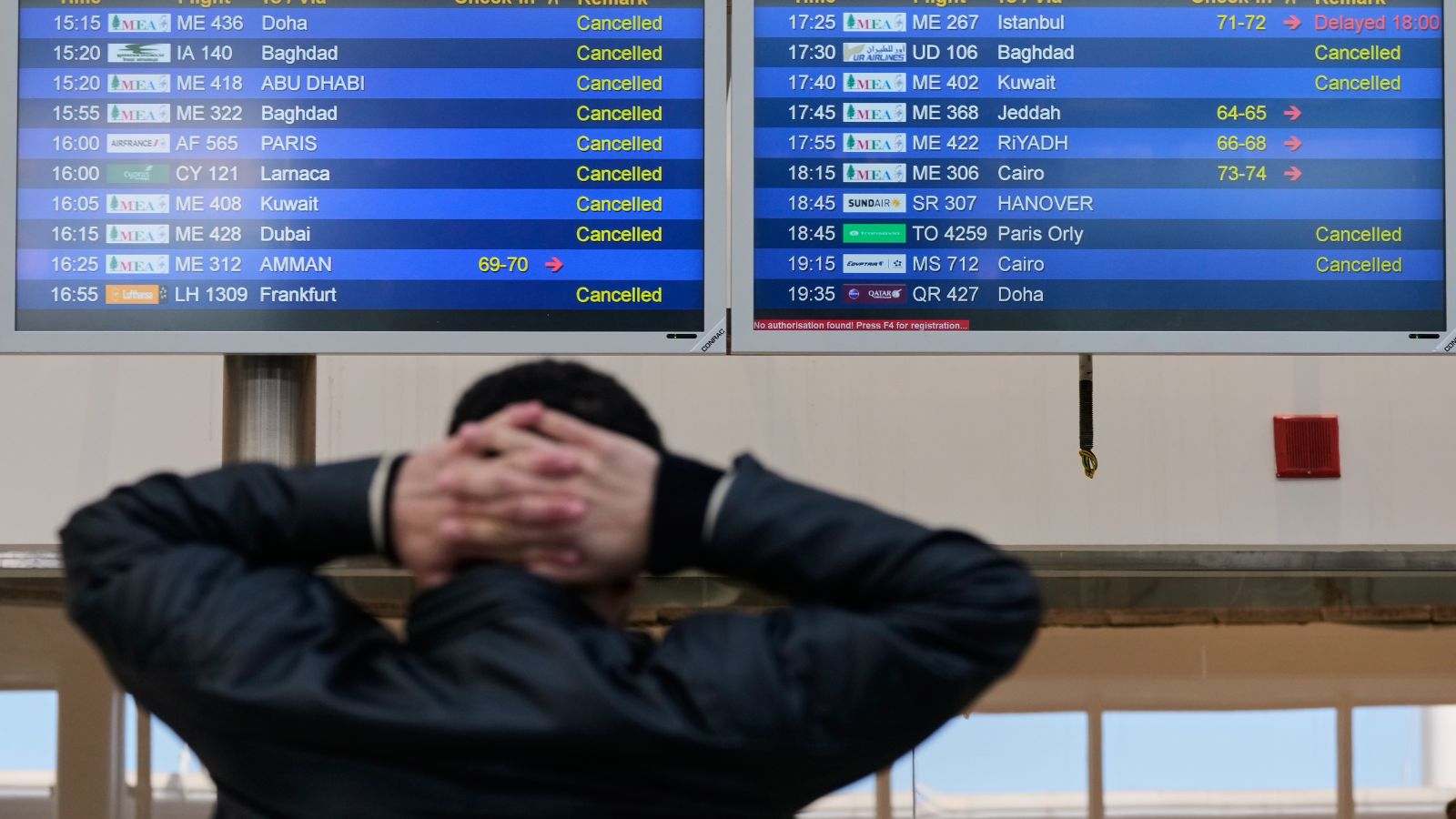
The sky over the Middle East has gone dark for commercial aviation. If you've been watching flight trackers over the last 48 hours, you've seen something unprecedented: a massive, empty hole where one of the world's busiest transit corridors used to be. Following the joint military strikes by the United States and Israel against Iran on February 28, 2026, the regional air network hasn't just slowed down—it's effectively collapsed.
Thousands of flights are grounded. Major hubs like Dubai, Doha, and Tel Aviv are either shuttered or operating under severe military restrictions. If you're currently traveling or planning a trip through the region, the situation is volatile and changing by the hour. Don't rely on old schedules; they're useless right now.
The Grounded Hubs and Airport Status
The biggest shock to the system is the closure of the "Big Three" transit points: Dubai, Doha, and Abu Dhabi. Usually, these airports never sleep. Today, they're ghost towns.
- Dubai International (DXB) and Abu Dhabi (AUH): Both are under Emergency Security Control of Air Traffic (ESCAT) zones. Emirates has suspended all flights until at least 15:00 UAE time on March 2. Reports indicate Dubai International sustained physical damage during retaliatory strikes, making a quick reopening unlikely.
- Doha Hamad International (DOH): The airport has been evacuated. Qatar Airways has officially suspended all operations to and from Doha until further notice.
- Tel Aviv Ben Gurion (TLV): Israel has declared a nationwide state of emergency. Ben Gurion is closed to all civilian traffic until at least March 3, though extensions are expected.
- Tehran Imam Khomeini (IKA): Iranian airspace is totally closed. All flights are suspended until at least 08:30 UTC on March 3. European carriers like Lufthansa have already scrapped their entire winter schedule to Tehran through the end of the month.
- Other Closures: Airspace is currently shut in Iraq, Kuwait, Bahrain, and Syria. Jordan remains technically open, but most international airlines have stopped flying there anyway.
Airlines Slashing Schedules
It isn't just regional airlines feeling the heat. Because the Middle East is the literal bridge between Europe and Asia, the ripple effects are hitting travelers in London, Mumbai, and New York.
European and North American Carriers
Most Western airlines are refusing to enter the airspace of Israel, Lebanon, Jordan, Iraq, and Iran. This adds hours to flight times as they're forced to detour south over Saudi Arabia or north over Central Asia.
- Lufthansa Group: Flights to Tel Aviv, Beirut, Amman, and Erbil are suspended until March 7. Dubai and Abu Dhabi services are halted through March 4.
- Air France/KLM: All services to Tel Aviv and Beirut are canceled. KLM has entirely suspended its Amsterdam-Tel Aviv route for the foreseeable future.
- United and Delta: Flights to Tel Aviv are cancelled through at least March 6. United has also pulled the plug on Dubai flights until March 4.
- British Airways: Tel Aviv and Bahrain flights are suspended until March 4.
Indian and Asian Carriers
The impact on India is particularly brutal. Over 350 flights from Indian carriers like Air India and IndiGo were canceled in a single day.
- Air India: Long-haul routes to Europe and North America (like flights to Chicago and Newark) are being heavily rerouted or canceled because they can't overfly the Gulf.
- Japan Airlines: Flights between Tokyo and Doha are off the board.
What This Means for Your Ticket
If your flight is canceled, you have rights, but they're being stretched to the limit. Most airlines are offering full refunds or free rebooking, but don't expect to get out on the next available plane. There are currently over 60,000 stranded passengers in India alone—the backlog is massive.
Expect ticket prices to spike. When airlines have to fly longer routes, they burn more fuel. When they burn more fuel, you pay for it. If you're looking to book a flight between Europe and Asia right now, be prepared for "war surcharges" or simply much higher base fares.
Dealing with the Chaos
Honestly, if you don't have to travel through the Middle East this week, don't. The risk of being stranded in a transit hub is high. If you're already mid-journey, here’s what you need to do immediately:
- Download the Airline App: Don't wait for an email. Push notifications on the app are usually ten minutes faster than any other communication.
- Check Your Transit Visas: If you're rerouted through a different country (like Turkey or Saudi Arabia) due to a diversion, you might suddenly need a transit visa you hadn't planned for.
- Check Flightradar24: Before you head to the airport, look at the live map. If you see no planes over your destination, your flight isn't happening, regardless of what the departure board says.
- Confirm Travel Insurance: Most standard policies have "Act of War" exclusions, but many will still cover travel delays and "trip interruption" if the airspace is closed by civil authorities.
The situation is likely to get worse before it gets better. With the death of high-ranking officials and active missile exchanges, the "Notice to Airmen" (NOTAMs) are being extended in 24-hour increments. If you're in Israel or Iraq, the advice from embassies is clear: leave if you can, but only via land borders like the Allenby Bridge to Jordan, as the runways are no longer a reliable exit strategy.
If you have a flight scheduled in the next 72 hours, check your flight status now and look for alternative routes through Istanbul or Singapore, which are currently becoming the primary—and very crowded—alternatives for east-west travel.