The Demand Inelasticity of Celestial Events
On July 22, 2028, a 100-kilometer-wide umbral shadow will cross New Zealand’s South Island at 4:17 PM local time, delivering 2 minutes and 51 seconds of total daytime darkness. For the host region of Otago—anchored by the urban hub of Dunedin and the resort corridor of Queenstown—the event represents an unprecedented convergence of geographic scarcity and inelastic consumer demand. Dunedin last sat within a path of totality in 1163, predating human settlement in the archipelago.
Hotels in key nodes across Otago are completely sold out two full years prior to the event, demonstrating a structural disconnect between standard hospitality inventory allocation and transient macro-event shocks. When an asset’s supply is strictly fixed by local infrastructure but demand experiences an instantaneous 400% surge, conventional yield management models fail.
Understanding the true economic opportunity of astro-tourism requires moving past superficial headcount figures and evaluating the structural mechanisms that dictate inventory velocity, dynamic pricing ceilings, and regional capacity constraints.
Structural Drivers of the Otago Capacity Squeeze
The immediate exhaustion of regional room inventory is not merely a story of enthusiastic stargazers; it is an exercise in extreme supply-side bottlenecking. Three core variables dictate this structural imbalance across the lower South Island.
Total Economic Yield = Primary Lodging Capture + Secondary Service Spillover - Infrastructure Degradation Cost
1. Geographical Bounding and Geometry of Totality
Solar eclipses are binary phenomena: an observer is either inside the path of totality or entirely outside the premium experience. The 2028 path cuts specifically through Central Otago, positioning Dunedin as the primary eastern terminal and Queenstown as the western gateway. Observers outside this 100-kilometer band receive only a partial eclipse, which carries negligible commercial premium. Consequently, geographic demand compresses into a narrow physical corridor rather than distributing evenly across New Zealand's larger tourism centers, such as Auckland or Christchurch.
2. Base Capacity Limits vs. Population Inflow
Dunedin possesses a resident population of approximately 130,000 and a commercial hotel and short-term rental inventory engineered to absorb steady leisure and university-related transit. Projected visitor inflows exceed 35,000 to 50,000 concurrent travelers for the eclipse window—representing a temporary 30% to 40% expansion of the city's human footprint within 48 hours. The total local room supply cannot absorb this magnitude of compression through standard operational buffers.
3. Inventory Allocation Asymmetry
Hospitality operators that opened booking windows 24 to 24 months in advance were instantly absorbed by institutional tour groups, astronomical societies, and high-net-worth individual (HNWI) astro-tourists. This early lock-in creates an artificial floor in available market supply long before retail travelers enter the search funnel, forcing secondary demand into regional periphery zones.
Monetization Frameworks for Regional Infrastructure
To maximize total yield from an event with a fixed duration of under three minutes, destination management organizations (DMOs) and private operators must deploy specific dynamic operational strategies.
                 ┌──────────────────────────────────────────┐
                 │    2028 SOUTH ISLAND ECLIPSE CORRIDOR    │
                 └────────────────────┬─────────────────────┘
                                      │
           ┌──────────────────────────┴──────────────────────────┐
           ▼                                                     ▼
┌─────────────────────┐                               ┌─────────────────────┐
│  QUEENSTOWN NODE    │                               │    DUNEDIN NODE     │
│ High ADR / Luxury   │                               │ High Volume / Academic│
└──────────┬──────────┘                               └──────────┬──────────┘
           │                                                     │
           ▼                                                     ▼
┌─────────────────────┐                               ┌─────────────────────┐
│ Private Aviation    │                               │ Night-Sky Cultural  │
│ Integrated Bundling │                               │ Festival Monetization│
└─────────────────────┘                               └─────────────────────┘
Dynamic Pricing Without Brand Erosion
Standard dynamic pricing algorithms automatically scale Average Daily Rates (ADR) upward as occupancy metrics clear critical thresholds. However, pricing an asset at 10x standard rates without altering the underlying product delivery invites long-term reputation risk and post-event chargebacks.
Operators must transform simple room sales into high-margin experiential packages:
- Minimum Stay Requirements: Mandating a strict 3-to-5 night minimum lock-in period prevents single-night turnover friction and stabilizes RevPAR (Revenue Per Available Room) across the broader week.
- Integrated Logistics Bundling: Infield transport, specialized solar filtration hardware, and access to private observation nodes must be bundled directly into room inventory to justify top-tier price tiers.
- Tiered Viewing Access: Converting unused property assets (e.g., rooftops, elevated pastures, hotel grounds) into ticketed observation zones creates a secondary revenue channel distinct from room nights.
The Temporal Staggering Strategy
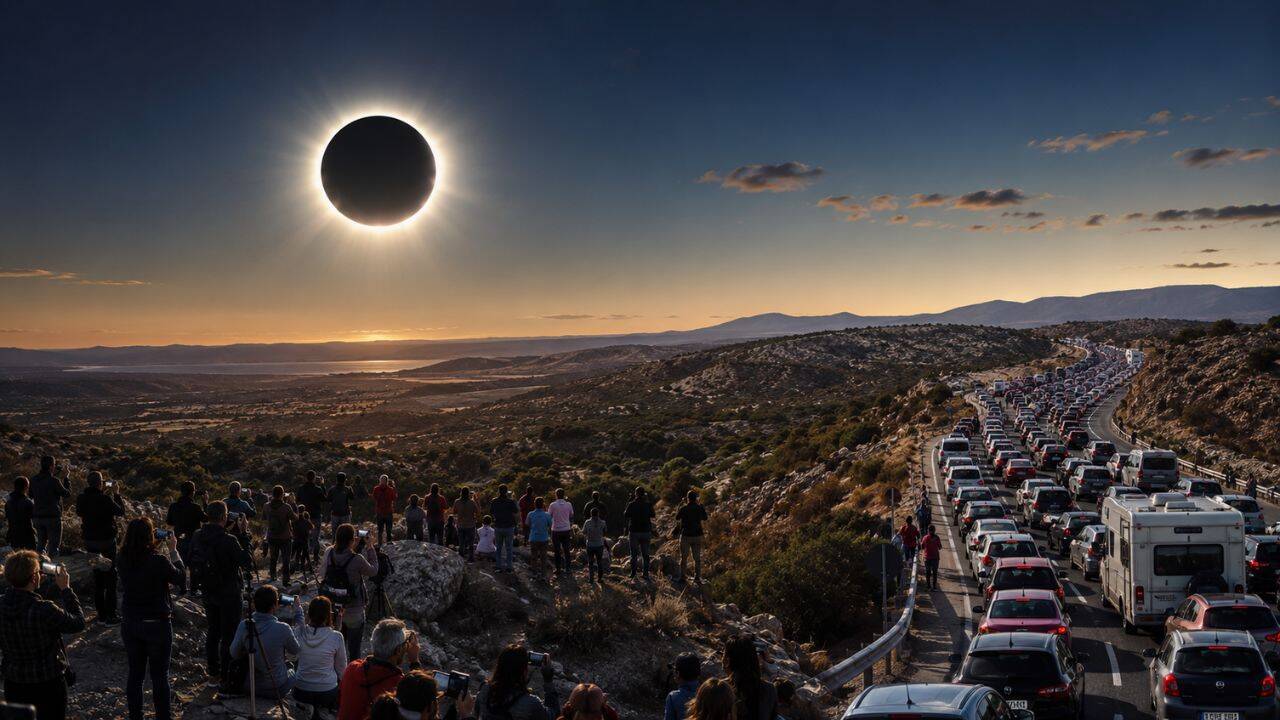
A significant operational risk during mega-events is the acute surge-and-collapse traffic pattern: tens of thousands of visitors attempting to enter the path of totality simultaneously, followed by an immediate mass exodus post-event.
Dunedin’s proposed integration of the Matariki (Māori New Year) night-sky festival with the eclipse timeline serves as an operational mitigation strategy. By creating a multi-week cultural calendar anchored around indigenous astronomy, the region converts a high-friction single-day transit spike into an extended stay model. Extended length-of-stay (LOS) metrics dilute local transport gridlock and increase total spend across non-lodging sectors like food and beverage, regional tours, and retail.
Operational Scenarios and Risk Profiles
Executing hospitality and municipal operations under extreme transient demand exposes systemic vulnerabilities. Decision-makers must plan across three distinct operational vectors.
| Vector | Operational Risk | Systemic Failure Mode | Mitigation Protocol |
|---|---|---|---|
| Grid Management | Telecom & Mobile Data Congestion | Local network collapse at $T-0$ due to concentrated uplink activity (live streaming, media uploads). | Deployment of temporary COWs (Cell on Wheels) along primary observation points. |
| Micro-Logistics | Winter Road Conditions | Mid-July in Southern New Zealand brings black ice and snow along key transit corridors (e.g., Crown Range, SH8). | Pre-allocation of heavy recovery gear and mandatory chain checks on primary routes. |
| Supply Chain | Mid-Winter F&B Supply Depletion | Local food and fuel distribution loops fail under 140% localized consumption pressure. | Establishing pre-staged distribution hubs outside the primary umbral band 72 hours prior. |
The Meteorological Risk Premia
A critical variable often unaddressed in astro-tourism forecasts is weather probability. A total solar eclipse in Southern New Zealand during late July occurs in the depth of Austral winter. Historical cloud cover metrics for inland versus coastal Otago vary significantly:
- Inland Regions (Central Otago/Queenstown): Lower relative humidity, higher probability of clear skies, but elevated risk of mountain-pass ice closures.
- Coastal Regions (Dunedin): Marine cloud layers present a non-trivial obscuration risk at 4:17 PM, when the sun sits low on the north-western horizon (approximately 10 degrees altitude).
This dynamic creates a mobile sub-segment of "chasers" who avoid fixed hotel inventory in favor of rental campervans and light vehicles, seeking real-time positional mobility based on short-range satellite weather forecasts.
Strategic Playbook for Private and Public Stakeholders
To capture maximum value while protecting core civic operations during the July 2028 event, stakeholder groups must execute three non-negotiable operational moves immediately.
First, municipal authorities in Dunedin and Queenstown must establish clear zoning parameters for temporary overflow accommodations. Converting public parks, fairgrounds, and regional airports into managed RV parks with dedicated sanitation, power, and shuttle infrastructure prevents unregulated wild camping and distributes visitor density safely.
Second, independent hoteliers must hold back a reserve allocation of 15% to 20% of premium room inventory until 12 months prior to the event. Releasing this inventory into the market closer to $T-0$ captures the secondary wave of high-budget corporate and media buyers who operate on shorter booking cycles, capturing the absolute apex of the pricing curve.
Third, regional transport bodies must establish strict one-way traffic corridors along key arteries (such as State Highway 1 between Christchurch and Dunedin, and State Highway 6 between Queenstown and Wanaka) during the six-hour window surrounding totality. Eliminating bidirectional traffic friction during the post-totality dispersal phase is the single most effective tool to prevent gridlock across the South Island's limited highway network.