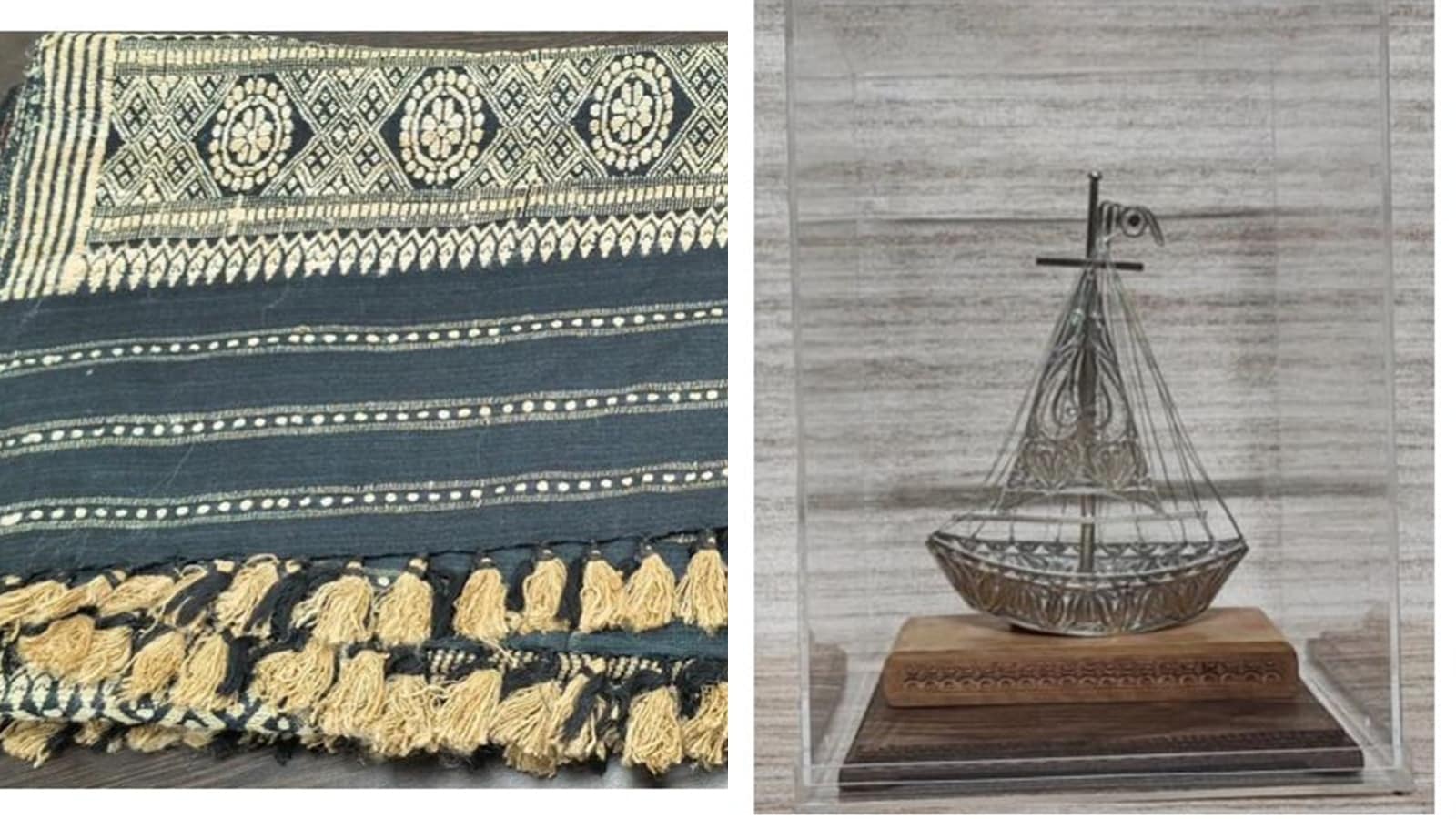
State gifts are rarely just items of courtesy. When an Indian prime minister concludes a multi-nation diplomatic tour with luggage filled with regional handicrafts, the narrative usually frames it as a simple celebration of heritage. This interpretation misses the real point. The selection of a Muga silk stole or a piece of pressed Himalayan orchid art functions as a precise exercise in geopolitical positioning. These objects serve as a soft-power mechanism intended to project domestic economic priorities and navigate complex bilateral relationships under the guise of cultural appreciation.
Statecraft requires leveraging every subtle interaction. During a five-nation itinerary covering the United Arab Emirates, the Netherlands, Sweden, Norway, and Italy, New Delhi utilized its craft registry to convey distinct messages to each capital. The choice of items represents a deliberate alignment of regional origins with global strategic objectives.
Mapping Craft to Capital
The distribution of these artifacts follows a specific logic that coordinates regional symbolism with geopolitical interests.
The Mediterranean Alignment
In Rome, Italian Prime Minister Giorgia Meloni received two distinct silk stoles. One was an Assamese Muga silk stole, known for its natural golden hue and exceptional durability. The other was a Shirui Lily stole, inspired by a rare blossom native only to the Shirui Kashong Peak in Manipur.
The inclusion of textiles from India’s northeastern states carries clear domestic and international significance. By positioning these rare regional crafts on the global stage, New Delhi reinforces the integration of its frontier states into its broader trade and cultural infrastructure. Concurrently, Italian President Sergio Mattarella was presented with a marble inlay work box. This choice directly references the historical connection between Florentine pietra dura and Mughal-era Indian architectural details, establishing a sense of shared craftsmanship.
The Nordic Environment
The gifts chosen for Scandinavian leaders shifted focus toward sustainability and ecological themes, mirroring Northern Europe's policy priorities.
- Norway: Prime Minister Jonas Gahr Støre received pressed orchid paintings and paperweights crafted from indigenous flowers in Sikkim. Crown Prince Haakon was given a Kalamkari painting from Andhra Pradesh featuring sun and moon motifs to represent balance.
- Finland: Prime Minister Petteri Orpo received a Kamal Talai Pichwai painting from Rajasthan. The artwork depicts lotus-filled waters, a visual metaphor carefully aligned with Finland’s identity as the land of lakes.
- Sweden: Prime Minister Ulf Kristersson received a Ladakhi wool stole and a Shantiniketan messenger bag, emphasizing raw, sustainable materials.
The Gulf and the Low Countries
In the United Arab Emirates, where trade relationships center on high-value commerce and food security, President Mohamed bin Zayed Al Nahyan received Kesar mangoes and Meghalaya pineapples alongside a rare Rogan painting from Gujarat. This combination blended luxury agricultural exports with artisanal skill. Meanwhile, Dutch Prime Minister Rob Jetten received a Madhubani painting featuring a fish motif, a traditional symbol of prosperity that connects with the water management heritage of the Netherlands.
The Economics of Cultural Validation
This method of gifting serves an economic purpose beyond mere diplomatic protocol. India has expanded its Geographical Indication (GI) registry to protect and promote traditional crafts. Presenting these items to foreign heads of state acts as a high-level marketing strategy for regional micro-industries.
When an artisan's work is presented as an official state gift, it elevates the status of that specific craft cluster. The global visibility provides a direct economic boost to communities in places like Kutch, Mithila, or the Brahmaputra Valley. This strategy transforms ancient regional traditions into viable components of modern international trade.
Soft Power in an Era of Hard Realities
The reliance on cultural artifacts also highlights a realistic approach to modern diplomacy. As trade negotiations and defense alignments encounter structural challenges, cultural diplomacy offers a reliable baseline of engagement. A hand-painted textile or an intricate metal vase provides a neutral ground for conversation, smoothing over underlying policy disagreements.
However, this approach has its limits. Cultural gifts cannot replace substantive progress on tariff reductions, intellectual property agreements, or defense technology transfers. A Muga silk stole may create a positive atmosphere during a bilateral meeting in Rome, but it does not resolve the complex regulatory challenges facing the India-Middle East-Europe Economic Corridor. Similarly, agricultural gifts to the UAE offer a polite gesture but do not alter the core dynamics of energy pricing or sovereign wealth fund allocations. The state gift is an effective tool for setting the tone of a meeting, but it remains a preface to the actual work of negotiation.
The Geopolitical Signature
Ultimately, the curation of these gifts reveals how New Delhi views its position on the global stage. It presents India not as a uniform economic entity, but as a complex coalition of distinct regional identities. Each item carried across borders serves as a physical representative of a localized economy seeking global validation.
The true value of these exchanges lies in their strategic intent. By embedding specific political, economic, and regional narratives into the exchange of physical objects, diplomacy operates on a symbolic level that mirrors official policy documents. The choice of an orchid paperweight or a silk stole shows that in modern statecraft, even the smallest gesture is calculated.