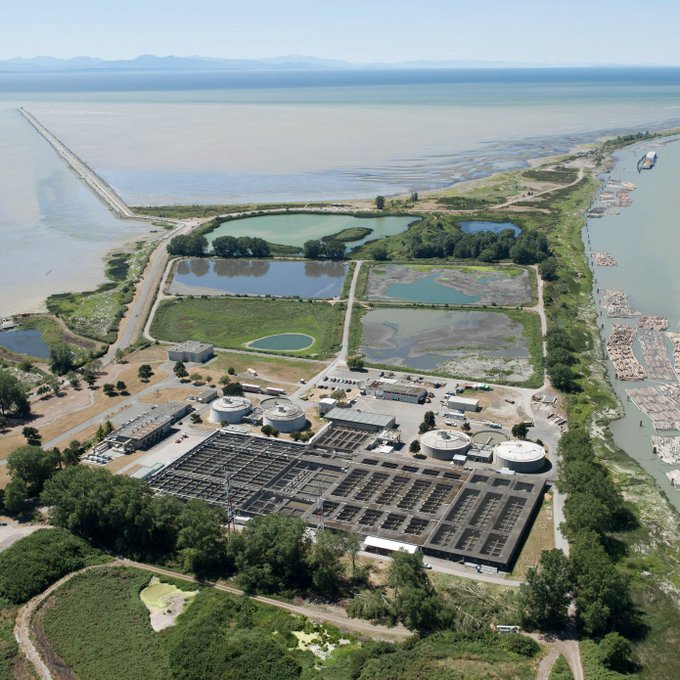
You shouldn't have to think about what happens after you flush the toilet. But on Thursday afternoon, thousands of Metro Vancouver residents didn't have a choice.
A sudden emergency at the Iona Island Wastewater Treatment Plant in Richmond forced officials to dump raw, completely untreated sewage straight into the Strait of Georgia. For over three hours, everything that went down the drains, sinks, and toilets of Vancouver, Burnaby, Richmond, and the UBC campus bypassed the treatment process entirely. For another look, read: this related article.
Officials are already rushing to downplay the incident. They claim early modelling shows no immediate threat to human health. They point out that the wastewater was pushed through a deep-sea outfall pipe seven kilometres offshore rather than washing directly onto Iona Beach. But let’s be honest: flushing millions of litres of raw human waste into a highly sensitive marine ecosystem is a failure, no matter how far offshore you pump it.
This isn't a freak one-off accident. It's a glaring symptom of an aging, fragile infrastructure system that's struggling to keep pace with rapid urban growth. Further coverage on this trend has been published by TIME.
The Three Hour Breakdown
The trouble started around 2:40 p.m. on Thursday. According to Metro Vancouver officials, an "unusual volume of rocky debris" flooded the plant's intake system. This wasn't standard grit. It was a massive wave of rocks and heavy material that instantly jammed the massive screening equipment at the start of the treatment process.
To prevent the entire facility from backing up and flooding nearby properties, operators had to isolate the jammed equipment. That meant triggering an emergency diversion. For more than three hours, raw sewage bypassed the primary treatment screens and flowed directly out to sea.
Crews scrambled to clear the blockage and fix the screens. By 6:00 p.m., workers managed to fully repair three of the plant's six screens—the bare minimum required to restore normal operations. The diversion finally stopped, but the damage was done.
Where did the rocks come from? Metro Vancouver's director of wastewater operations, Sean DePole, confirmed that the debris didn't originate inside the plant. It was introduced into the system from somewhere upstream, entering via customer drains, catch basins, or maintenance holes. Someone, or some project, effectively choked the region's primary defense against water pollution.
The Eco Risk Behind the Official Reassurances
The immediate response from the Metro Vancouver Regional District (MVRD) followed a familiar public relations script: don't panic, the water is fine. They emphasized that Vancouver Coastal Health is monitoring summer beaches and that the deep-sea outfall dilutes the waste long before it can touch swimmers.
But that narrative conveniently ignores the marine life directly below the surface.
The Iona Island plant sits right in one of the most ecologically sensitive zones on the Pacific coast. The Fraser River estuary and the Strait of Georgia are critical pathways for migrating salmon, sturgeon, and countless marine birds. While regional officials claim that an incident of this short duration won't significantly affect aquatic life, independent environmental groups have long warned about the cumulative toll of these "short-term" dumps. This is actually the second major sewage spill in the Strait of Georgia in just over a month, following a massive sewer leak in Comox back in May.
We don't know the full impact yet because environmental modeling takes time. Relying on the sheer volume of the ocean to dilute our waste is a twentieth-century solution to a twenty-first-century problem.
A Six Billion Dollar Race Against Time
If you want to know why this happened, look at the calendar. The current Iona Island plant was commissioned back in 1963. It relies on primary treatment, which basically means filtering out the big chunks and settling out some solids before pumping the rest away. It's outdated tech for a modern metropolis.
The plant currently serves a massive chunk of the urban core. By 2051, it's expected to handle the waste of nearly one million people.
Metro Vancouver knows the facility is skating on thin ice. They're planning a massive $6 billion upgrade to transition the site to secondary and tertiary treatment, rehabilitating infrastructure that has been creaking under pressure for decades. The problem? The estimated completion date isn't until 2039. We're looking at well over a decade of operating on a knife's edge, where a random influx of gravel can cripple the system.
Worse, this incident comes on the heels of recent labor tensions. Just weeks ago, wastewater workers briefly walked off the job during a contract dispute. When you combine an aging plant, an over-capacity population, and an exhausted workforce, system vulnerabilities skyrocket.
What Needs to Happen Next
We can't just chalk this up to bad luck and move on. If you live in the lower mainland, you need to push for real accountability and alter a few daily habits to protect the network.
- Audit upstream industrial inputs: Local municipalities must investigate how an "unusual volume" of rocky debris entered the sanitary sewer lines. Construction sites and industrial operations need stricter monitoring and heavier fines for dumping runoff into municipal drains.
- Accelerate the Iona upgrade timeline: A 2039 completion date for the wastewater plant overhaul is too far away. The provincial and federal governments need to treat this as a high-priority environmental emergency and inject the necessary funding to speed up construction.
- Watch the maps before you swim: Don't just take a press release's word for it. Check Metro Vancouver's real-time Sewer Overflow Map and Vancouver Coastal Health’s beach water quality reports before heading into the water this weekend.
- Mind what you put down your own drains: The system is fragile. Grease, wet wipes, and household chemicals compound the stress on screening equipment. If it isn't human waste or toilet paper, keep it out of the plumbing.