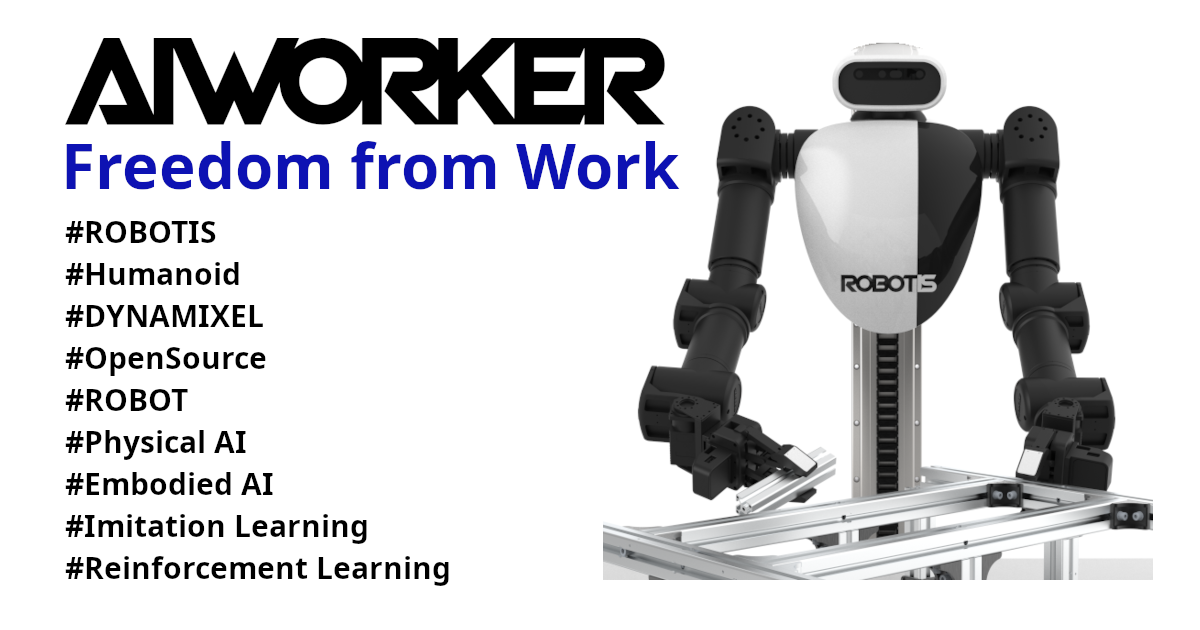
Meta is shifting its data collection strategy from passive observation to active surveillance of its own workforce. Recent reports indicate the social media giant plans to record the granular movements of employees—every mouse jitter, every rapid-fire keystroke, and every second of screen activity—to feed the voracious hunger of its generative artificial intelligence. This is not just a productivity check. It is an industrial-scale harvesting operation where the human worker becomes the blueprint for the machine that might eventually replace them.
The move marks a departure from scraping the open internet to mining the "private" habits of professional workers. As the pool of high-quality public data dries up due to licensing lawsuits and "no-robots" exclusions, Meta is turning inward. They need to teach their models not just how to write, but how to work. By analyzing how a human engineer debugs a line of code or how a designer navigates complex software, Meta hopes to build agents capable of mimicking professional logic and workflow patterns.
The End of Human Privacy in the Office
Workplace monitoring is not a new concept, but the scale of what Meta is proposing crosses a line from management to mimicry. Standard tracking usually focuses on "active time" or idle periods. Meta’s intent is different. They are looking for the micro-decisions.
When an employee pauses before clicking a specific button, that pause is data. When they delete a sentence and rewrite it, that correction is a lesson for a Large Language Model (LLM). This level of observation creates a "digital twin" of the employee's professional persona. The workers are essentially training their replacements in real-time, providing the subtle nuances of human intuition that cannot be found in a Wikipedia entry or a public Reddit thread.
The ethical vacuum here is vast. Most employment contracts include broad clauses about the company owning any work product created on their time and equipment. However, those contracts were signed long before "work product" included the involuntary twitch of a mouse or the biometric rhythm of a person’s typing speed.
Why Quality Data is the New Oil
Silicon Valley is currently facing a data wall. The first generation of AI models was trained on the "easy" data—the billions of words of public text available on the web. That supply is now exhausted or locked behind paywalls. To get to the next level of intelligence, companies need specialized data.
The Problem with Synthetic Data
Many researchers thought they could solve this by using "synthetic data," which is essentially AI-generated content used to train newer AI. It failed. When models train on their own output, they suffer from "model collapse," becoming progressively more confused and prone to errors. They need fresh, human-generated input to stay grounded in reality.
The Value of the Professional Clickstream
Meta’s internal workforce is one of the most elite groups of knowledge workers in the world. Their daily habits are gold.
- Engineering Logic: Tracking how developers navigate repositories.
- Contextual Decision Making: Monitoring how managers prioritize emails and Slack messages.
- Visual Spatial Intelligence: Recording how artists move through 3D environments.
By capturing these streams, Meta can build "Action Models" rather than just "Language Models." These are systems that don't just tell you how to do something; they do it for you by replicating the exact sequence of movements a human expert would take.
The Psychological Cost of Constant Surveillance
Imagine knowing that every mistake you make is being immortalized in a training set. This creates a stifling environment where innovation dies. If an employee knows that "non-standard" behavior is being recorded and analyzed, they will revert to the safest, most predictable patterns.
This leads to a paradox. Meta wants to capture human ingenuity, but the act of capturing it forces humans to act like robots. The data becomes sterile. The "ghost in the machine" that Meta is trying to bottle vanishes the moment the observer effect takes hold.
Furthermore, there is the issue of burnout. Constant surveillance is a primary driver of workplace anxiety. When your screen is being recorded for AI training, there is no "off" switch. There is no moment of quiet reflection. There is only the performance of productivity.
Security Risks of a Keystroke Database
Storing a database of every keystroke made by thousands of employees is a security nightmare. If this data is breached, the hackers wouldn't just have passwords; they would have the entire behavioral profile of Meta’s internal operations.
Traditional data breaches involve static information like credit card numbers. A behavioral breach is far more dangerous. It allows for perfect social engineering. A bad actor could use the recorded typing patterns and workflow habits of a high-level executive to craft a deepfake or an automated script that is indistinguishable from the real person. Meta is creating a honeypot of human behavior that, if leaked, provides a skeleton key to their entire corporate structure.
The Legal Gray Zone of Behavioral Harvesting
Labor laws are currently ill-equipped to handle the concept of "behavioral harvesting." While a company owns a piece of code you write, do they own the way you wrote it?
Intellectual Property of Movement
There is a growing argument among legal scholars that the specific "rhythm and method" of a professional’s work should be considered a form of intellectual property. If a master craftsman’s hand movements are recorded to program a robotic arm, the craftsman is usually compensated for that specific transfer of skill. Meta’s employees, however, are being subjected to this transfer as a condition of their existing salary.
The Privacy Act Conflict
In jurisdictions like the European Union, the General Data Protection Regulation (GDPR) offers some protection against invasive monitoring. Article 88 allows for specific rules to ensure the protection of human dignity and fundamental rights in the workplace. Meta’s plan to record screen movements likely violates the principle of "data minimization," which states that companies should only collect the data strictly necessary for a specific purpose. Collecting a video of someone’s screen to train an AI is a massive overreach compared to the simple task of ensuring they are doing their job.
Managing the Machine
The internal friction at Meta is likely to boil over as this program rolls out. We have already seen "quiet quitting" and "labor unrest" across the tech sector as AI tools are integrated into workflows. This is different. This is a direct extraction of human skill.
Management will argue that this is about "efficiency" and "augmenting" the worker. They will claim that by training these models, they are freeing employees from mundane tasks. That is a corporate fiction. The history of automation shows that when a task is automated, the human worker isn't "freed"—they are either given more work to fill the gap or they are managed out of the organization.
Meta’s engineers and designers are now in a race against their own digital shadows. Every time they solve a problem efficiently, they are providing the data that makes their own presence less necessary.
The Broader Industry Shift
Meta is the first to be caught in the act, but they won't be the last. Microsoft, with its integration of Copilot across Windows and Office 365, has the same capability. Google, through Workspace, is sitting on a similar goldmine. The professional world is entering an era where your "output" is no longer the product; your "process" is.
We are moving toward a future where "human-in-the-loop" isn't a benefit—it’s a temporary training phase. Once the models have sucked enough data from the screens and keyboards of the current workforce, the loop will close.
Companies must decide if they are in the business of creating value or simply mining their employees until there is nothing left but a series of optimized clicks. For the workers at Meta, the choice has already been made for them. They are no longer just employees; they are the raw material for the next version of Llama.
Stop thinking of your computer as a tool. If you work for a company like Meta, your computer is a high-resolution sensor, and you are the subject of a permanent, unpaid study in how to be replaced. Ensure your next contract specifies exactly who owns the data between your clicks.