The air inside the apartment did not move. It sat heavily on the chest, thick with the smell of old wool and trapped humidity, tasting faintly of dust. Outside, the street level of Frankfurt was a ghost town, the tarmac softening under a blinding, white-hot sky that looked more like the high deserts of Spain than central Germany.
Consider a woman named Martha. She is eighty-two. She does not appear in the official meteorological bulletins, but she is the true face of the numbers currently flashing across European news desks. Martha sat by her living room window, watching the digital thermometer on her bookcase climb. 38°C. 39°C. Then, the threshold that scientists had warned about for days: 40°C.
Heat like this is not an inconvenience. It is a biological assault.
When a continent built for the cold meets a reality well over 40°C, the infrastructure of daily life begins to warp. Rails expand and buckle. Asphalt melts. But the human body breaks down much faster than the steel and stone. The standard news reports cover these events with maps shaded in deep, apocalyptic purples and reds, ticking off records as if they were sports scores. They tell us that Germany is braced for unprecedented highs, and that England has issued Level 4 extreme heat warnings.
The numbers feel abstract. They sound like tomorrow's problem. But for millions of people trapped in top-floor flats across Europe, the problem is happening in the lungs, in the racing pulse, and in the quiet panic of realizing that the walls of your own home have become an oven.
The Illusion of the Summer Holiday
Europe has a long, romantic relationship with the sun. For generations, the arrival of warmth meant a migration toward the beaches, outdoor cafes, and the slow, golden afternoons of July and August. We are conditioned to welcome it.
That cultural memory makes the current crisis peculiarly dangerous.
When the British Met Office issues an amber or red warning for England, the immediate reaction of many is still to head for the parks with a bottle of sunscreen. The psychological shift required to treat a sunny afternoon as a natural disaster is immense. Yet, the data tells us we must. Unlike a hurricane or a flood, a heatwave leaves no visible path of destruction. There are no shattered windows, no uprooted trees, no dramatic rescue boats floating down main streets.
Silence. That is the defining characteristic of extreme heat.
It kills quietly, away from the cameras, behind drawn curtains. The human body is essentially a highly sophisticated thermal engine that must maintain a core temperature of roughly 37°C. When the air around us exceeds that baseline, the standard methods of cooling—mostly the evaporation of sweat—begin to fail, especially when the humidity levels rise. The heart must pump harder and faster to push blood to the skin's surface to release heat.
For the young and athletic, this is an exhausting exercise. For someone with a pre-existing heart condition, or an elderly person whose sweat glands are less efficient, it is a relentless, hours-long marathon.
When the Architecture Turns Hostile
The real crisis in western and northern Europe is architectural.
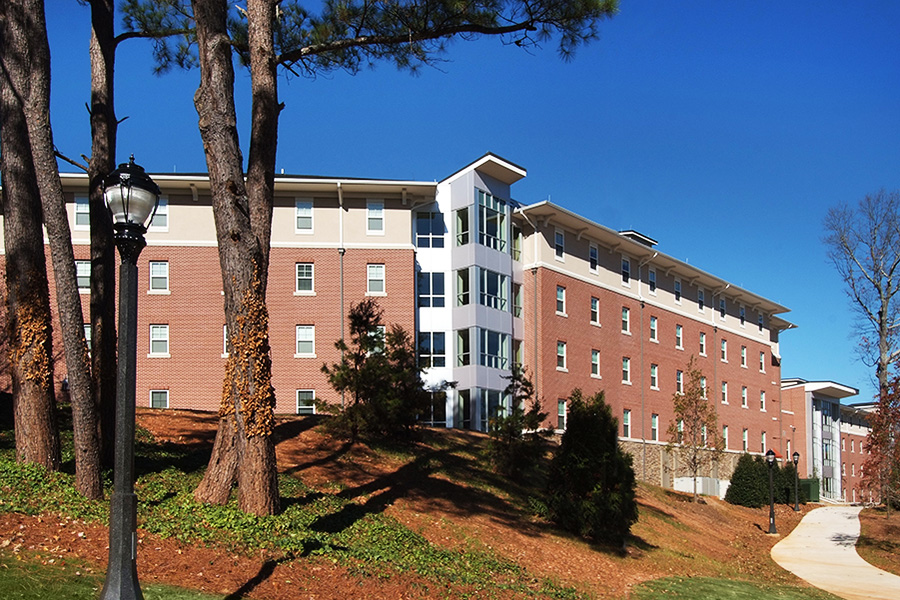
Walk through any British suburb or German city center. The buildings are monuments to insulation. They are constructed from thick brick, solid stone, and double-glazed glass, designed explicitly to capture every single watt of solar energy and trap it inside to survive long, bitter winters. There are no deep verandas. Shutters are rare outside of the Mediterranean coast. Central air conditioning is a luxury reserved for modern office high-rises and high-end hotels.
During a normal summer, these buildings perform beautifully. But during a multi-day event where the thermometer refuses to drop below 25°C even at midnight, the masonry acts like a thermal battery. It absorbs the heat all day long and radiates it back into the bedrooms all night.
There is no respite.
This is the invisible turning point of a heat crisis. The human body can handle extreme stress during the day if it can cool down and recover during the night. When the night-time temperatures stay high, the stress accumulates. Sleep becomes impossible. The nervous system remains on high alert. By day three or day four of a major heatwave, hospital emergency rooms notice a sharp uptick not just in heatstroke, but in strokes, heart attacks, and acute kidney failure.
The systemic failure cascades through the public space before it hits the individual. Think about the energy grids. As millions of small, portable cooling units are plugged into outdated electrical systems simultaneously, the demand spikes precisely when the cooling water for power plants—drawn from rivers that are now running low and warm—becomes scarce. The system chokes.
Shifting the Baseline
We often hear the phrase "unprecedented event" used to describe these summers. It is a comforting word because it implies abnormality. It suggests that if we can just grit our teeth through this particular week, things will return to the way they were.
The historical record suggests otherwise.
The European heatwave of 2003 was a watershed moment, responsible for an estimated 70,000 excess deaths across the continent. At the time, it was treated as a once-in-a-century anomaly. Yet, similar patterns have returned with increasing frequency and intensity. What was once the absolute ceiling of possibility has become the new baseline for a standard July.
The shift is behavioral as much as it is atmospheric.
In countries like Italy or Spain, life has long been organized around the dictates of the midday sun. Shops close. People retreat indoors during the peak hours of radiation. The heavy lifting of the day happens in the early morning or late evening. In northern Europe, however, the economy demands that the standard nine-to-five routine continue regardless of whether the pavement is hot enough to melt shoes. Construction workers still pour concrete under the midday glare. Delivery drivers still climb stairs with heavy boxes. Office workers still commute in metal carriages that lack modern climate control.
The friction between an economic model that never stops and a climate that has radically altered is where the human cost rises exponentially.
The Biology of the Breakdown
To understand why a 42°C forecast for Germany causes public health officials to panic, you have to look at what happens at the cellular level.
We are, at our core, a collection of proteins. Proteins have specific, delicate structures that allow them to function. If you heat an egg, the clear albumen turns white and solid because the proteins are denaturing—their structures are breaking down permanently under heat. A similar, albeit much more subtle, process begins to happen inside human cells when the core body temperature stays too high for too long.
The gut lining becomes more permeable, allowing toxins to leak into the bloodstream. An inflammatory response ripples through the entire vascular system. The blood begins to clot more easily.
It is a grueling way for a system to fail.
Yet, when we look at the public response to these warnings, there remains a strange disconnect. A winter blizzard that threatens to drop two feet of snow will empty grocery store shelves and cancel all public gatherings within hours. A heatwave that carries a significantly higher statistical mortality rate is often met with a collective shrug, a joke about buying ice cream, or a complaint about the trains running late.
We are biologically hardwired to fear the cold. The dark, the ice, the freezing wind—these are ancient, archetypal threats we understand instinctively. The sun, however, has always been our friend. Unlearning that instinct is one of the greatest challenges of the modern era.
The Localized Reality
Back in the apartment, Martha tried to remember the advice she had heard on the radio. Keep the windows closed during the day. Pull the curtains. Drink water even if you do not feel thirsty.
The advice sounds simple on paper. In practice, it requires active effort from someone who is already profoundly exhausted. Water tastes metallic and unappealing when you are nauseous from the heat. Closing the windows makes the apartment feel like a vault, cutting off even the slight illusion of relief that a breeze might offer.
The danger is magnified by isolation.
The vast majority of those who perish during these events are those who live alone, whose social networks have thinned, or who do not want to trouble their neighbors. They simply sit quietly in their chairs, waiting for the afternoon to pass, unaware that their internal thermostat is slowly losing the battle.
This is why the response to extreme heat cannot merely be an analytical exercise in meteorology or civil engineering. It cannot be solved solely by upgrading the cooling systems of our trains or spraying white reflective paint on our roofs, though those measures help.
The true defense against a warming continent is social. It is the willingness to knock on a neighbor’s door with a bottle of cold water. It is the structural flexibility of an employer who tells their staff to stay home when the thermometer crosses a certain line. It is the recognition that a weather warning is not an invitation to a beer garden, but a signal that the vulnerable among us are entering a zone of high physical peril.
The sun eventually dipped below the horizon in Frankfurt, but the brick walls of the apartment building remained hot to the touch. The air inside stayed completely still, holding onto the heat of the day like a secret, waiting for the morning to begin the cycle all over again.