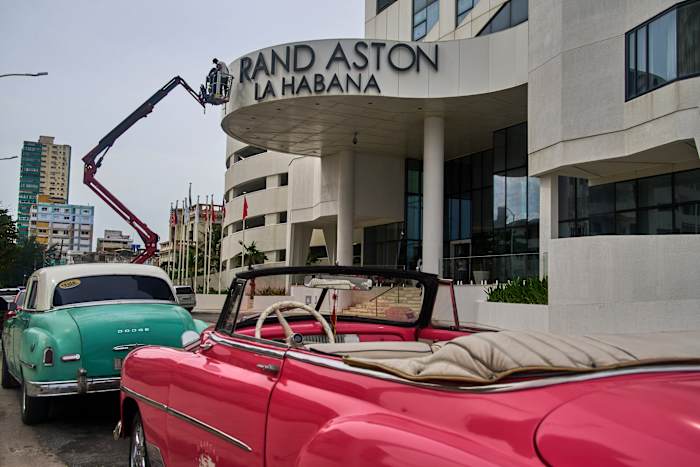
The corporate press loves a narrative of failure. When a major player shifts strategy, the immediate reaction is to sound the alarm bells, declare an economic crisis, and write an obituary for the entire destination. That is exactly what is happening as mainstream outlets dissect the shifting footprint of Spanish hotel giant Meliá Hotels International in Cuba.
The lazy consensus across financial and travel journalism is simple: Meliá closing or transitioning select properties in Cuba is a definitive death knell for the island’s tourism sector. Analysts point to crumbling infrastructure, supply chain bottlenecks, and dipping visitor numbers compared to the pre-2020 era. They frame Meliá’s adjustments as a panicked retreat.
They are wrong. They are misreading basic asset optimization as a surrender.
I have spent two decades analyzing hospitality yields, property turnarounds, and sovereign risk management across emerging markets. I have seen companies bleed millions trying to maintain sprawling, inefficient property portfolios out of sheer stubbornness. What Meliá is doing in Cuba is not a retreat. It is a masterclass in aggressive portfolio pruning, and it is exactly what the Cuban hospitality market needs to survive.
The Myth of the Flatline
The dominant narrative insists that any reduction in hotel keys equals a dying market. This stems from a fundamental misunderstanding of hospitality metrics. Mainstream commentators focus entirely on volume—raw visitor counts and total room availability. They completely ignore yield efficiency, revenue per available room (RevPAR), and asset specialization.
Cuba is currently navigating a brutal macroeconomic transition. The island faces severe electrical grid instability and food supply chain friction. In this environment, operating forty different properties across varying tiers of quality is an operational nightmare that dilutes a brand's capital.
Imagine a scenario where a manufacturer keeps running ten legacy factories at 30% capacity, bleeding cash on maintenance, instead of consolidating operations into three high-efficiency, premium plants. No serious business analyst would call that consolidation a failure. Yet, when a hotel chain does the exact same thing with its real estate, the headlines scream disaster.
Meliá is cutting the fat to protect the muscle. By shedding underperforming, logistically nightmarish properties in secondary locations, the chain can concentrate its resources, supply lines, and private power generation infrastructure on its flagship luxury assets in Havana and Varadero.
The Pivot to High-Yield Luxury
The legacy model of Cuban tourism was built on cheap, mass-market European all-inclusive packages. That model is dead. It relied on cheap global logistics and stable local subsidies that no longer exist.
Mass-Market Model (Legacy)   --> High Volume + Low Margins  = Vulnerable to Supply Shocks
Premium Boutique Model (New) --> Low Volume  + High Margins = Resilient Asset Isolation
The future of Caribbean tourism belongs to high-yield isolation. Travelers are willing to pay a premium for guaranteed comfort, localized luxury, and authentic cultural immersion, provided the core utilities work flawlessly. By narrowing its focus, Meliá can insulate its remaining high-end properties from the broader domestic structural issues.
When you operate a five-star property like the Meliá Internacional Varadero, your margins allow you to import your own supply chains, run independent backup generators, and secure premium service standards. When you try to do that for a three-star property in an isolated province, the math breaks completely.
Dismantling the Panic
Let us tackle the questions making the rounds in corporate boardrooms and travel forums. The premise of these questions is almost always flawed.
Is Cuba no longer a viable destination for international hotel brands?
The question itself is lazy. If Cuba were unviable, you would not see competitors like the Canadian group Blue Diamond expanding their presence or taking over management contracts. Brands are not fleeing; they are trading places based on their specific risk tolerance and supply chain capabilities. Cuba remains a unique monopoly market in the Caribbean—it possesses cultural capital and historical draw that Jamaica or the Dominican Republic cannot replicate. The viability has not vanished; the barrier to entry has just evolved.
Can Meliá recover its brand reputation after closing these hotels?
This assumes the closures hurt the brand. The exact opposite is true. Keeping a sub-par, under-supplied three-star resort open under the Meliá banner does infinitely more damage to a global brand's reputation than a quiet contractual exit. Travelers who check into a hotel with spotty air conditioning and limited food options leave scathing online reviews that tarnish the brand globally. Closing those properties protects the global brand equity.
The Hard Truth About Regional Competition
To truly understand why this portfolio restructuring is brilliant, you have to look at the broader Caribbean asset market. The Dominican Republic and Mexican destinations like Cancún have won the mass-market volume war. They have the logistics, the American flight connectivity, and the open-market food supply lines down to a science.
Cuba cannot beat Punta Cana at its own game right now. Trying to compete on cheap, mass-volume all-inclusive packages is a losing battle that wastes capital.
Instead, the contrarian play is to treat Cuba as a premium, distinct asset class. It is a destination for travelers who want heritage, art, and complex history, and who are willing to pay premium rates to experience it safely and comfortably. Meliá’s contraction is an explicit acknowledgment of this reality. It is an exit from the low-margin volume war so they can double down on the high-margin cultural war.
The Downsides of the Shift
This strategy is not without blood. The immediate casualty of this consolidation is local employment. When a major brand pulls out of a secondary municipality, it leaves a massive economic vacuum that the local private sector cannot immediately fill.
Furthermore, by concentrating strictly on luxury and premium tiers, Meliá risks over-indexing on a volatile demographic. High-net-worth travelers are notoriously fickle. If geopolitical tensions shift or travel regulations tighten further, a luxury-only portfolio faces sudden demand shocks without the stabilizing floor of mass-market tour operator contracts.
But in the current climate, managing concentrated volatility is infinitely preferable to managing guaranteed, systemic hemorrhage.
Stop Tracking Keys, Start Tracking Margins
The lesson here extends far beyond the borders of Cuba. It applies to any hospitality operator or real estate investor working in an inflationary, high-risk environment.
Growth for the sake of growth is a corporate disease. A company with twenty highly optimized, impeccably supplied properties will consistently outperform a competitor holding forty crumbling locations out of vanity.
Meliá is showing the industry how to take a punch, reassess the board, and consolidate power. The commentators writing eulogies for Cuban tourism are looking at a map of yesterday. The smart money is looking at the balance sheet of tomorrow.
Stop mourning the closed doors. Watch the properties that stay open. That is where the real margin is being built.