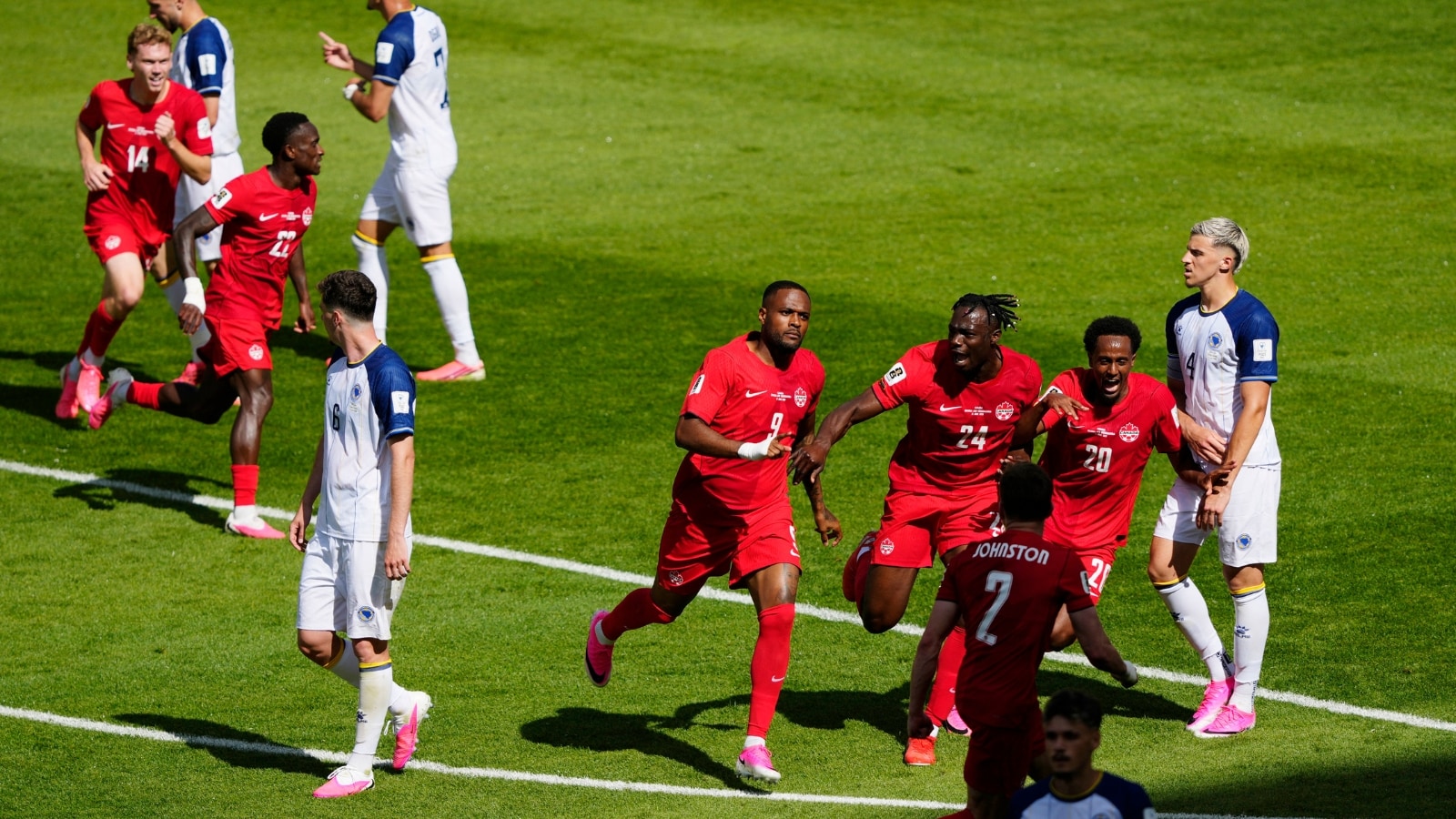
The expansion of soccer in the United States is routinely mischaracterized as a cultural awakening driven by fleeting tournament euphoria. This narrative mistakes the symptom for the cause. The acceleration of the sport within the domestic market is actually the result of a highly coordinated, capital-intensive infrastructure play designed to capture shifting media consumption habits and suburban demographic wealth. While mainstream commentary focuses on the visual spectacle of packed stadiums and fan behavior, a structural analysis reveals that the sport's growth is governed by distinct economic pillars: stadium asset optimization, youth academy monetization, and the fractionalization of media rights.
The primary impediment to soccer’s historical growth in the US was not a lack of interest, but an unfavorable supply chain. For decades, the sport operated on the margins of the domestic media ecosystem, relying on fragmented broadcasting and rented, multi-purpose facilities that degraded the live product and starved clubs of ancillary revenue. To understand why the sport has reached a critical mass, one must analyze the specific economic levers that have transformed it from a niche programming asset into a core component of the North American sports economy.
The Triad of Domestic Infrastructure Capitalization
The maturation of the domestic soccer ecosystem depends on three interconnected capital allocation strategies. When these levers operate simultaneously, they create a compounding growth loop that insulates the sport from the volatility of individual team performance or international tournament cycles.
Asset-Backed Real Estate and Stadium Monopolization
The transition from renting American football stadiums to constructing soccer-specific stadiums represents the single greatest driver of franchise valuation growth. When a franchise operates as a tenant in a multi-purpose stadium, its revenue potential is restricted by a fixed lease structure. It loses control over premium hospitality, concessions, parking, and secondary event booking.
+-----------------------------------------------------------------+
|                   Soccer-Specific Stadium (SSS)                 |
|                        Control Architecture                     |
+-----------------------------------------------------------------+
|                                                                 |
|   [1. Anchor Tenant Status] ---> [2. Ancillary Revenue Streams] |
|   - Schedule priority            - Concessions & Parking (100%) |
|   - Pitch condition control      - Premium hospitality / Suites |
|                                  - Non-match day event booking  |
|                                                                 |
|                                  [3. Balance Sheet Expansion]   |
|                                  - Tangible asset valuation    |
|                                  - Debt-financing leverage      |
+-----------------------------------------------------------------+
The Soccer-Specific Stadium (SSS) model alters this dynamic by establishing the club as the anchor tenant and property manager. This structural shift achieves two financial objectives:
- Capture of High-Margin Matchday Revenue: 100% of ancillary spend—premium seating suites, parking, concessions, and localized merchandise sales—flows directly into the club’s balance sheet rather than being split with a municipal authority or primary landlord.
- Non-Matchday Monetization: The facility functions as a year-round entertainment asset, hosting concerts, secondary sporting events, and corporate conventions. This diversifies the club's revenue profile away from a strict dependence on a 17-to-34-game home match schedule.
The physical architecture of these stadiums is deliberately scaled down to between 18,000 and 26,000 seats. This deliberate constriction of supply generates artificial scarcity, driving up season ticket waitlists and maximizing primary and secondary ticket pricing power.
Vertical Integration of Talent Supply Chains
Historically, American soccer relied on the collegiate draft system to supply domestic talent. This structure created an operational bottleneck: elite prospects were restricted to short competitive seasons and non-professional coaching until age 21 or 22, severely limiting their development window relative to global peers.
The modern domestic strategy mirrors the European and South American club model, replacing the draft with fully integrated, club-funded youth academies. The economic logic underpinning this shift rests on two primary mechanisms:
+-----------------------------------------------------------------------+
|                 Talent Development Supply Chain                       |
+-----------------------------------------------------------------------+
|                                                                       |
|  [Suburban Talent Pool] ---> [Club-Funded Academy] ---> [First Team]  |
|  - High disposable income    - Subsidized training     - Low-cost asset|
|  - Built-in consumer base    - High-density coaching   - High resale    |
|                                                                       |
+-----------------------------------------------------------------------+
First, it eliminates pay-to-play barriers in targeted urban and metropolitan corridors, expanding the talent acquisition funnel to include top-tier athletes who were previously priced out of the youth sports system. Second, it establishes a clear Homegrown Player pipeline. Under domestic roster mechanisms, Homegrown Players do not count against salary caps, allowing clubs to deploy capital more efficiently on marquee international acquisitions while filling out depth charts with low-cost, high-upside internal assets.
Furthermore, this infrastructure converts the academy from a cost center into a capital generator via the global transfer market. Elite domestic prospects developed at zero acquisition cost can be sold to European leagues for multi-million-dollar fees, providing clubs with pure profit that can be reinvested directly into infrastructure or scouting networks.
Media Rights Aggregation and Consolidation
The historical distribution of soccer in the United States was crippled by fragmentation. A consumer seeking to follow the sport required multiple linear television packages and nascent streaming subscriptions across various networks, creating friction and suppressing aggregate viewership numbers.
The structural remedy came through radical consolidation. By shifting global broadcasting rights to unified streaming ecosystems under long-term, multi-billion-dollar agreements, the sport removed geographic and regional blackouts. This distribution architecture solves three critical problems:
- Global Accessibility: A single subscription grants access to every live match globally, lowering the barrier to entry for casual consumers.
- Predictable Cash Flow: Long-term media partnerships provide franchises with guaranteed, non-volatile revenue distributions, stabilizing balance sheets against macroeconomic downturns.
- Data Capture and Monopolization: Unlike linear television, direct-to-consumer streaming platforms capture granular user data. This allows for targeted advertising, personalized merchandise marketing, and direct conversion of viewers into ticket buyers, creating an integrated digital monetization loop.
Demographic Realities vs. Consumer Monetization
A recurring analytical error is assuming that high participation rates or favorable demographic trends automatically translate into commercial success. For decades, soccer advocates pointed to the millions of American children playing youth soccer as proof of an impending market takeover. This assumption ignored the consumption bottleneck: youth participation does not inherently generate media viewership or merchandise sales.
The current commercial acceleration succeeds because capital allocators have stopped trying to convert the traditional American sports fan and have instead focused on optimizing monetization within two specific, high-value consumer segments.
The Affluent Suburban Youth Household
The economics of youth soccer in America differ fundamentally from the rest of the world. In Europe and South America, soccer is historically a working-class sport. In the United States, it is disproportionately concentrated in affluent suburban households.
This demographic profile possesses high disposable income and a high propensity for digital subscription spending. Clubs capitalize on this segment by positioning the live matchday experience not merely as a sporting event, but as a premium, family-oriented lifestyle consumer product. The high density of youth participation within these households creates a built-in consumer base for licensed merchandise, summer camps, and academy clinics, turning the youth participation matrix into a direct customer acquisition funnel for the professional franchise.
The Digital-Native Multi-Club Consumer
The modern domestic soccer consumer is highly digitally literate and exhibits low loyalty to traditional linear television delivery models. This segment frequently engages with multiple leagues simultaneously—tracking domestic clubs alongside elite European competitions like the English Premier League or UEFA Champions League.
Rather than competing directly with European soccer for viewership, the domestic market has adapted by positioning itself as a complementary, highly accessible live product. Western Hemisphere time zones allow domestic broadcasters to offer live matches in prime-time windows that do not overlap with European morning or afternoon broadcasts. This structure enables the domestic product to capture residual entertainment demand from soccer consumers who have already consumed European content earlier in the day.
Market Distortions and Structural Vulnerabilities
Despite capital inflows and rising valuations, the domestic soccer growth model is subject to acute structural imbalances that threaten long-term stability. Investors and analysts must evaluate these vulnerabilities to understand the upper limits of the market's expansion.
The Single-Entity Paradox and Valuation Inflation
The dominant domestic soccer league operates under a unique single-entity corporate structure. Instead of operating as independent businesses, individual team owners own shares in the centralized league, and all player contracts are negotiated and held centrally by the league office rather than by individual franchises.
| Metric / Attribute | Single-Entity Structure | Independent Club Model (Global) |
|---|---|---|
| Contract Ownership | Centralized League Office | Individual Franchise / Club |
| Downside Risk | Mitigated via revenue sharing | High (Risk of relegation/bankruptcy) |
| Wage Inflation | Strictly controlled via salary caps | Market-driven (Uncapped) |
| Valuation Drivers | Scarcity, expansion fees, real estate | On-field performance, global brand |
This architecture was designed to prevent the wage inflation that bankrupted historical American soccer leagues. By capping player expenditures and pooling media and sponsorship revenues, the single-entity model insulates individual investors from catastrophic financial downside. There is no risk of relegation to a lower division, which guarantees the long-term value of the franchise asset regardless of on-field failure.
However, this protection creates an artificial valuation bubble. Franchise expansion fees have risen exponentially, outstripping current operational revenues. This valuation model relies heavily on the injection of capital from new expansion owners to fund centralized operations. As the league approaches its geographical expansion limit, this source of capital will dry up, forcing franchises to rely entirely on organic cash flows generated by media rights and matchday revenue. If organic revenue growth fails to accelerate to match inflated valuations, a severe market correction is inevitable.
The Cost-of-Talent Floor and Global Competition
Soccer is the only major sport in the United States that operates within a truly global marketplace for talent. While the NFL, NBA, and MLB face no serious international competitors for elite athletes, domestic soccer leagues must constantly bid against wealthy European, Middle Eastern, and South American clubs.
This dynamic creates a financial bottleneck:
+-------------------------------------------------------------------------+
|                        The Capital Allocation Dilemma                   |
+-------------------------------------------------------------------------+
|                                                                         |
|                +---------------------------------------+                |
|                |   Centralized Salary Restrictions     |                |
|                +---------------------------------------+                |
|                                    |                                    |
|                                    v                                    |
|         +-----------------------------------------------------+         |
|         | Prevents teams from buying deep, high-quality squads |         |
|         +-----------------------------------------------------+         |
|                                    |                                    |
|                                    v                                    |
|               +------------------------------------------+              |
|               | Renders top domestic clubs uncompetitive |              |
|               | in high-value continental tournaments    |              |
|               +------------------------------------------+              |
|                                    |                                    |
|                                    v                                    |
|          +----------------------------------------------------+         |
|          | Limits ability to convert casual international fans |         |
|          +----------------------------------------------------+         |
|                                                                         |
+-------------------------------------------------------------------------+
To break this bottleneck, domestic regulators created mechanisms like the Designated Player rule, which allows teams to sign a limited number of marquee players outside of the salary cap. While this mechanism succeeds in bringing global stars to the domestic market, it creates top-heavy rosters. A squad containing two or three elite international stars alongside low-cost domestic role players often struggles with structural instability and performance variance.
The Fragmentation of Grassroots Governance
The youth soccer ecosystem in the United States is fractured across competing governing bodies, private tournament circuits, and scholastic associations. Unlike European systems, where a single national federation dictates a unified coaching curriculum and talent identification protocol from the grassroots to the professional level, the American system features competing entities that prioritize localized profit over elite talent maximization.
This fragmentation leads to talent duplication and systemic inefficiencies. Elite prospects are frequently misidentified or lost within competing private leagues that emphasize physical maturation over technical proficiency. Until the domestic market consolidates its grassroots infrastructure under a unified oversight mechanism, the efficiency of the talent supply chain will remain compromised, forcing franchises to continue spending capital on expensive foreign talent rather than optimizing domestic production.
Strategic Playbook for Long-Term Capital Retention
To sustain current growth trajectories and justify contemporary asset valuations, domestic soccer executives and investors must pivot from a strategy of market acquisition to one of structural optimization. The next phase of development requires the execution of three precise operational plays:
Franchises must transition away from relying on aging international superstars as their primary marketing levers. This strategy yields short-term spikes in ticket sales and jersey consumption but fails to build sustainable institutional equity. Instead, capital must be diverted into expanding international scouting networks and upgrading regional academy facilities. The objective must be to position the domestic league as the premier global launchpad for elite young talent—acquiring prospects at undervalued rates from South America and Africa, refining their capabilities in modern domestic facilities, and selling them to top-tier European clubs at a premium. This model establishes a repeatable, high-margin revenue stream that operates independently of individual player retirement timelines.
The single-entity regulatory framework must undergo gradual liberalization to prevent systemic uncompetitiveness on the global stage. The league should systematically raise the baseline salary cap while simplifying the Byzantine allocation money systems currently used to manage rosters. By giving individual club owners greater autonomy over their total wage bills, the overall depth and quality of play will improve, allowing domestic franchises to compete more effectively in international club tournaments. This elevated on-field product is critical for securing more lucrative international media distribution agreements.
Finally, operators must maximize the monetization of their real estate footprints. A stadium that sits dark for 300 days a year is a distressed asset. Organizations must aggressively develop mixed-use commercial and residential zones immediately adjacent to their soccer-specific stadiums. By integrating retail, dining, and multi-family housing units into the stadium district, sports entertainment properties can establish a diversified, non-cyclical real estate portfolio that generates consistent cash flows, effectively hedging against the inherent performance risks of professional sports.