Mass casualty transit accidents in mountainous geographies are rarely isolated incidents of driver error; they are the predictable outputs of systemic infrastructural, regulatory, and mechanical deficits. When a passenger vehicle carrying high-density passenger loads negotiates extreme terrain, the margin for operational error approaches zero. An analysis of mass transit safety in developing transit corridors—specifically exemplified by recurring high-fatality incidents such as bus plunges into deep ravines within Pakistan's mountainous provinces—reveals a structural failure cascade. Mitigating these catastrophic events requires moving past localized blame and instead deconstructing the interconnected failure vectors that guarantee these outcomes.
The survival rate in terrain-descent transit accidents is exceptionally low due to the physics of kinetic energy dissipation during a uncontrolled descent. Understanding these events requires a rigorous examination of the tripartite failure framework: vehicle degradation metrics, infrastructure deficits, and institutional oversight gaps.
The Tripartite Failure Framework
Mass transit systems operating in high-altitude or volatile terrain operate under continuous stress. System failure occurs when weaknesses across three distinct vectors align simultaneously.
1. Mechanical Stress and Structural Degradation
The operational lifecycle of a commercial mass transit vehicle in rugged terrain features accelerated wear cycles that standard regulatory frameworks fail to quantify.
- Braking System Thermal Overload: Continuous descent on gradients exceeding six percent induces extreme thermal stress on drum and disc braking systems. Without auxiliary retardation systems, such as engine brakes or hydraulic retarders, friction components experience rapid thermal fading, leading to total mechanical brake failure.
- Structural Integrity of Mass Transit Chasses: Many long-distance buses operating in developing economic regions utilize retrofitted commercial truck chasses. These structures feature high centers of gravity, which drastically lower the threshold for rollover encapsulation during sharp, high-velocity cornering.
- Tire Degradation and Load Dynamics: High passenger volumes, often exceeding official manifest limits, distribute weight unevenly. When combined with under-inflated or bald tires, the lateral force required to maintain traction on unbanked mountain curves exceeds the available coefficient of friction.
2. Geometric and Structural Infrastructure Deficits
The physical environment acts as the primary catalyst for mechanical failure turning into a mass fatality event. Mountainous transit corridors frequently lack the passive safety systems engineered to absorb or redirect kinetic energy.
- Absence of Passive Restraint Systems: The critical point of failure on mountain corridors is the absence of structural steel guardrails or reinforced concrete Jersey barriers capable of halting a 12-ton vehicle. Without these barriers, minor lateral deviations result in unmitigated terrain departures.
- Substandard Geometric Alignment: Roads carved through mountainous terrain often feature inconsistent radii, inadequate sight distances, and improper super-elevation (banking). Vehicles negotiating these zones face sudden changes in lateral acceleration that challenge vehicle stability.
- Surface Unpredictability: Pavement degradation caused by seismic shifts, landslides, and thermal cracking alters friction variables instantly, preventing drivers from executing emergency deceleration maneuvers.
3. Institutional and Regulatory Oversight Gaps
Behind every physical failure lies an institutional omission. The regulatory environment dictates the baseline safety threshold of the transport network.
- Manifest Inflation and Overloading: Economic pressures drive operators to maximize revenue per route, leading to systemic overloading. This practice alters the calculated center of gravity and extends braking distances exponentially beyond original manufacturer specifications.
- Permissive Vehicle Inspection Paradigms: Visual inspections substitute for rigorous dynamic testing. Vehicles with compromised steering linkages, exhausted suspension systems, and non-functional emergency exits remain certified for long-haul mountain transit.
- Driver Fatigue and Labor Exploitation: Long-distance routes through difficult terrain are frequently manned by single drivers operating on shifts exceeding twelve hours without mandatory rest periods. This chronic sleep deprivation degrades cognitive processing speeds and spatial awareness.
Kinetic Analysis of Ravine Descent Fatalities
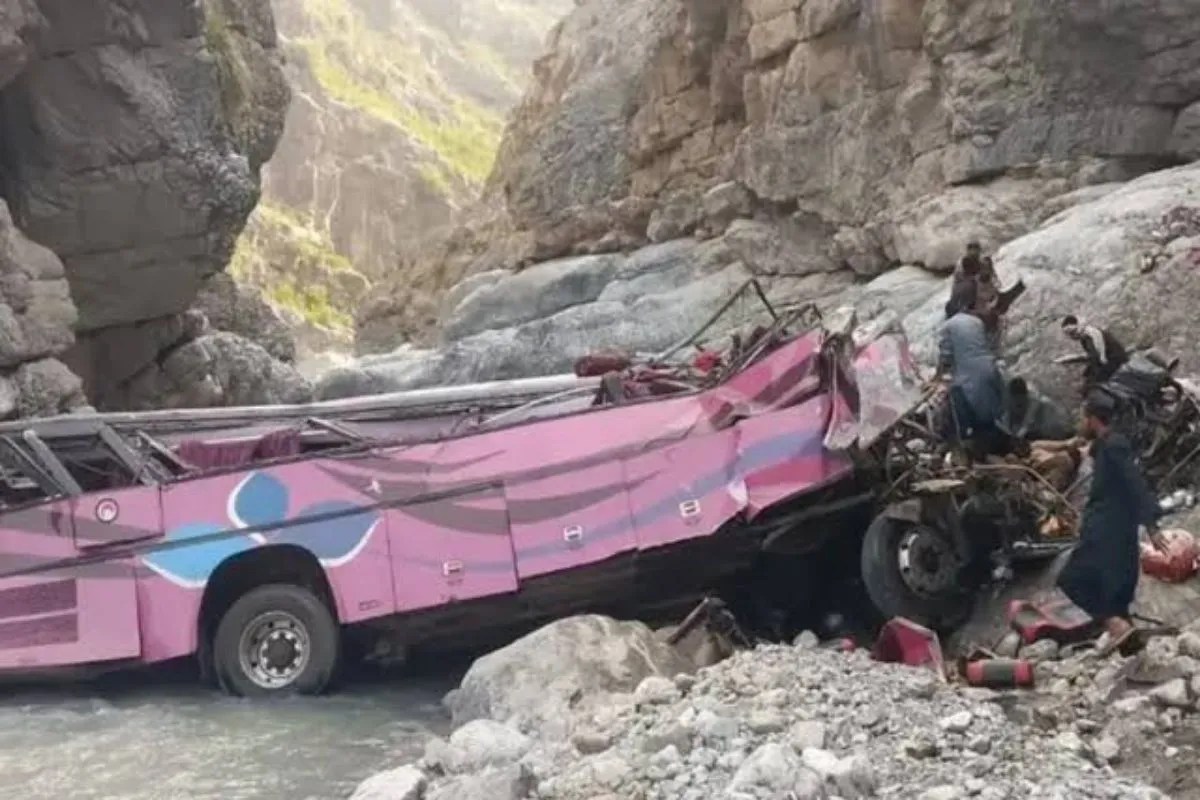
To understand why incidents like the recent transit disaster in Pakistan result in catastrophic loss of life—often exceeding 40 fatalities in a single event—one must examine the physical forces at play during a ravine departure.
When a multi-ton mass transit vehicle departs a roadway and enters a vertical or near-vertical descent, the primary mechanism of trauma shifts from linear deceleration to rotational impact. Unlike a standard highway collision where crumple zones absorb energy, a ravine plunge involves multiple high-velocity impacts against rock faces during a prolonged descent.
[Vehicle Departs Roadway]
          │
          ▼
[Primary Impact: Kinetic Energy Absorption via Chassis Deformation]
          │
          ▼
[Rotational Rollover: Structural Roof Collapse & Passenger Ejection]
          │
          ▼
[Terminal Impact: Absolute Structural Failure / High-Velocity Deceleration]
The structural design of standard commercial buses does not account for vertical crushing forces. During a rollover descent, the roof structure routinely collapses into the passenger cabin, obliterating the survival space. Furthermore, the absence of mandatory multi-point passenger seatbelts ensures that occupants are thrown violently within the cabin or ejected entirely, experiencing lethal secondary impacts with the external environment.
The Economics of Transport Insecurity
The persistence of high-fatality transit accidents in regions like Balochistan or Khyber Pakhtunkhwa is fundamentally rooted in economic realities. Transport networks in these areas operate on razor-thin margins.
Operators face a strict optimization problem: balance the rising cost of preventative maintenance against the fixed, regulated price of passenger tickets. In low-income corridors, operators optimize for survival by minimizing maintenance capital expenditures. Purchasing counterfeit spare parts, skipping scheduled overhauls, and delaying tire replacements are logical economic decisions for an undercapitalized operator attempting to maintain profitability.
This creates a structural bottleneck where safety becomes a luxury luxury good rather than a baseline operational standard. State enforcement mechanisms are often underfunded or compromised, meaning the financial penalty for violating safety protocols is lower than the operational cost of compliance.
Operational Interventions and Mitigation Frameworks
Addressing this systemic vulnerability requires moving away from reactive condolences and implementing rigid, data-driven safety infrastructure.
Mandatory Auxiliary Braking Mandates
Governments must legally require all passenger vehicles operating on designated high-altitude routes to be equipped with functioning secondary retardation systems. Compression brakes or electromagnetic retarders decouple the deceleration process from the friction-based wheel brakes, ensuring that primary systems remain cool and operational for emergency stopping scenarios.
Geo-Fenced Speed Regulation
Modern telematics allow for the real-time monitoring of commercial fleets. By enforcing mandatory GPS tracking and implementing geo-fenced speed limiters on high-risk mountain passes, regulatory bodies can programmatically prevent high-velocity cornering failures.
Structural Retrofitting of Civil Infrastructure
Civil engineering priorities must shift toward high-ROI passive safety measures. Installing deep-anchor runaway truck ramps (catch berths) filled with graded gravel at critical downward slopes provides an escape vector for vehicles experiencing total brake fade. Additionally, replacing substandard guardrails with high-containment roller barriers can redirect out-of-control buses back onto the roadway rather than allowing them to breach the perimeter.
The deployment of centralized transit hubs featuring mandatory pre-departure weight checks represents the final line of defense against manifest inflation. By systematically denying route access to vehicles exceeding maximum payload capacities, regulatory authorities can instantly restore the safety margins engineered into the vehicle's braking and suspension architecture.