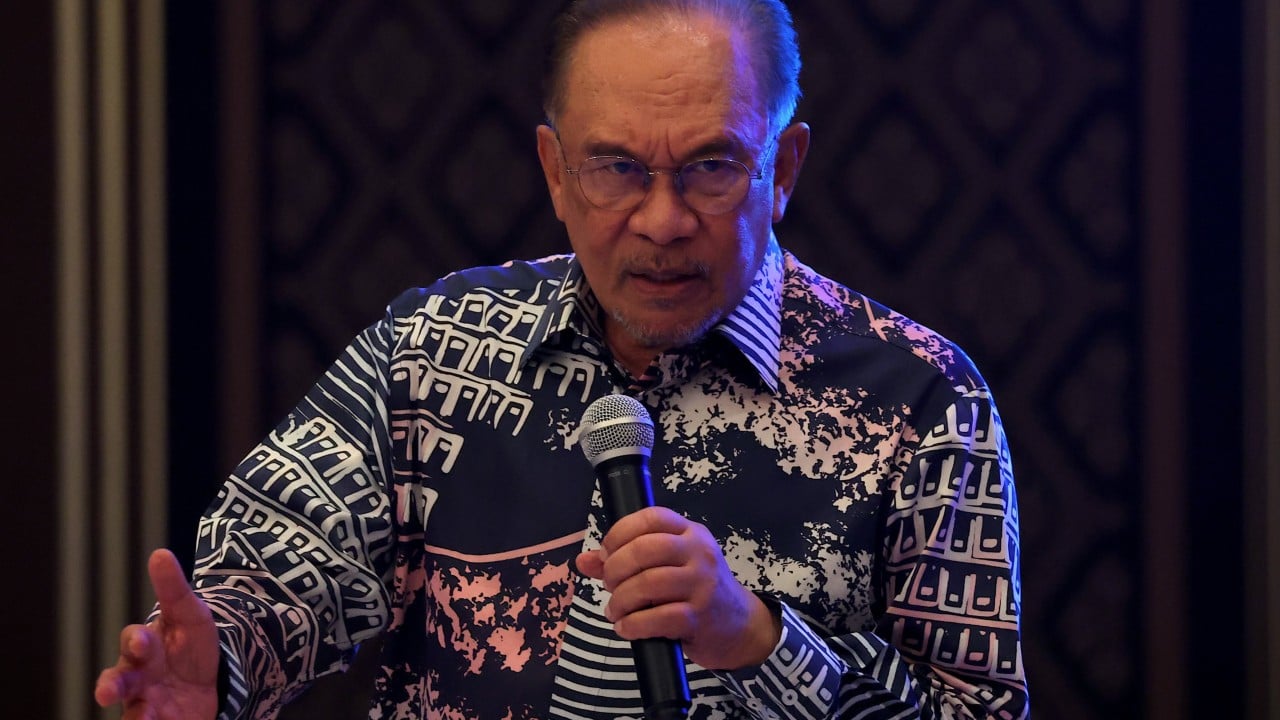
The stability of the Anwar Ibrahim administration is currently governed by a precarious equilibrium between parliamentary arithmetic and the diminishing returns of a "Big Tent" coalition. While surface-level analysis focuses on individual legislative setbacks, the underlying friction originates from a fundamental misalignment between the Pakatan Harapan (PH) reformist mandate and the preservationist instincts of the United Malays National Organisation (UMNO). Anwar is not merely facing a "setback"; he is operating within a structural bottleneck where every unit of reformist energy is countered by an equal unit of internal coalition resistance.
The Triple Constraint of the Madani Government
To understand the current paralysis, one must apply the Triple Constraint Model—Time, Scope, and Political Capital. Anwar’s administration is attempting to manage three mutually exclusive objectives:
- Institutional Reform: Decentralizing executive power and strengthening the judiciary/MACC (Anti-Corruption Commission).
- Malay-Muslim Consolidation: Competing with Perikatan Nasional (PN) for the "bumiputera" vote to ensure long-term viability.
- Fiscal Consolidation: Reducing the national debt (exceeding RM1.5 trillion) through subsidy rationalization and tax hikes.
The failure to pass significant reforms in recent sessions reveals a breakdown in this model. When the government attempts to execute institutional reforms (Objective 1), it risks alienating UMNO, whose survival depends on the traditional patronage systems Anwar pledged to dismantle. To keep UMNO in the fold, Anwar must pivot to Objective 2, which involves conservative signaling that alienates his core urban, multi-ethnic base. This cycle creates a "Reform Inertia" where the government expends maximum political capital to maintain a status quo that satisfies no one.
The Cost Function of the Two-Thirds Majority
The narrative that a two-thirds majority grants absolute power is a mathematical fallacy in the context of Malaysian coalition politics. In a monolithic system, $2/3$ equals total control. In Anwar’s "Unity Government," that $2/3$ is a fragmented variable:
$$P_t = \sum (C_1, C_2, ... C_n) - R$$
Where $P_t$ is the total legislative power, $C$ represents the competing interests of coalition partners, and $R$ is the friction of ideological resistance.
Recent parliamentary difficulties highlight that the "Unity" label obscures a high-friction environment. The inability to push through constitutional amendments—specifically those related to citizenship or the separation of the Attorney General’s roles—stems from the fact that the two-thirds threshold is only reached when the interests of PH, BN, GPS (Gabon Party Sarawak), and GRS (Gabungan Rakyat Sabah) align perfectly. Currently, the alignment is breaking down because the regional parties in East Malaysia have shifted their focus from national reform to the fulfillment of the Malaysia Agreement 1963 (MA63), effectively holding national policy hostage to regional demands.
The Economic Bottleneck: Subsidy Rationalization vs. Populism
The administration’s greatest vulnerability lies in the gap between fiscal necessity and political tolerance. The transition from blanket subsidies to targeted assistance (specifically the PADU system and diesel subsidy shifts) is a high-risk technical operation.
The mechanism of failure here is "Inflationary Perception." Even if the data shows that only a small percentage of the population is negatively impacted by subsidy removal, the psychological impact triggers a contraction in consumer confidence. Anwar’s difficulty in parliament is exacerbated by the opposition’s ability to weaponize this economic anxiety. By framing fiscal responsibility as an assault on the B40 (bottom 40% income group), the opposition forces the government into a defensive posture, preventing the introduction of more radical, necessary economic restructuring like the Goods and Services Tax (GST) or comprehensive civil service pension reform.
The MACC and the Judiciary: The Credibility Gap
A primary driver of the current "setback" narrative is the perceived inconsistency in anti-corruption enforcement. The government’s logic follows a "Selective Purification" strategy: targeting high-profile figures from previous administrations while appearing to provide legal "off-ramps" for current allies (most notably the DNAA—Discharge Not Amounting to an Acquittal—granted to Deputy PM Zahid Hamidi).
This creates a credibility deficit that functions as a hidden tax on all subsequent reform efforts. When the government introduces a reform bill, it is no longer judged on its legal merit but viewed through the lens of political survival. This skepticism has permeated the civil service, leading to "Bureaucratic Hedging," where senior officials delay the implementation of PH policies in anticipation of a potential shift in the political wind.
The Malay Heartland: The Battle for the 70 Percent
The data from recent by-elections and state polls indicates a persistent "Green Wave"—the consolidation of Malay-Muslim voters under the PN banner (PAS and Bersatu). Anwar’s strategy to counter this involves increasing the budget for Islamic affairs and adopting a more conservative rhetorical stance.
This creates an "Identity Paradox":
- If Anwar leans into reformism, he loses the Malay heartland.
- If Anwar leans into Malay-nationalism, he loses the moral authority that defines his leadership.
The recent parliamentary friction is a symptom of this paradox. The opposition knows that as long as they hold the "protector of the faith" mantle, they can stall any government initiative by framing it as a threat to Malay rights or Islamic values. This forces Anwar into a perpetual state of "Cultural Appeasement," which consumes time and resources that should be dedicated to legislative efficiency.
Structural Fragility of the East Malaysian Bloc
The role of GPS (Sarawak) and GRS (Sabah) has evolved from "kingmakers" to "veto-holders." Their support is transactional and non-ideological. The recent setbacks in the federal parliament are often linked to behind-the-scenes negotiations regarding state autonomy and oil royalties.
Anwar’s reliance on these blocs means that federal reform is often sacrificed to satisfy regional demands. This creates an asymmetric federation where the central government is weak and unable to enforce a uniform reform agenda across all states. The "Reform Push" is thus not a straight line, but a fragmented series of compromises that dilute the original intent of PH’s manifesto.
The Efficiency of the Opposition’s "Shadow Governance"
Unlike previous iterations of the Malaysian opposition, the current PN bloc utilizes a sophisticated "Scrutiny Engine." They have moved beyond simple rhetoric to a systematic deconstruction of government policy in the Dewan Rakyat. By focusing on the technical flaws in Anwar’s proposed amendments—such as the potential for statelessness in the citizenship bill—they have successfully forced the government into retreats that appear as major political defeats.
This is not a failure of Anwar’s charisma, but a failure of the government’s "Legislative Drafting and Liaison" (LDL) infrastructure. The government is consistently outmaneuvered in the committee stages because it lacks a cohesive whip system that can bridge the ideological gap between its disparate members before a bill reaches the floor.
Strategic Realignment: The "Pivot to Governance" Play
To break the current deadlock, the administration must abandon the pursuit of "Grand Constitutional Reform" in favor of "Incremental Executive Optimization." The political cost of constitutional changes is currently too high. Instead, the administration must focus on areas where the Prime Minister’s Office (PMO) has direct control:
- State-Owned Enterprise (SOE) Reform: Cleaning up the boards of GLCs (Government-Linked Companies) to remove political appointees without requiring parliamentary approval.
- Digitization of the Civil Service: Reducing corruption through the removal of human intermediaries in government procurement, a move that yields high efficiency gains with low political friction.
- Foreign Direct Investment (FDI) Execution: Shifting from "announcing" investment figures to "breaking ground" on projects. High-velocity economic delivery is the only variable that can offset the loss of ideological purity.
The current parliamentary "setback" is a signal that the era of reform via legislation is closing. The administration’s survival now depends on its ability to govern via the executive branch, delivering tangible economic improvements that bypass the ideological gridlock of the legislature. Anwar’s move should be to stop seeking consensus from a coalition that is structurally incapable of it and start exercising the powers of the state to create a "Performance-Based Legitimacy." Any further attempts to force controversial bills through a fractured parliament will only accelerate the degradation of the "Unity" brand and provide the opposition with the ammunition required to trigger a mid-term collapse.
Direct the legislative agenda toward "Sunsetting Clauses"—laws that automatically expire or require renewal. This forces the opposition and coalition partners to the table on a regular basis, turning every legislative session into a tactical negotiation rather than a strategic referendum on the government's existence. This is the only path to maintaining a functional government in a hyper-polarized, fragmented political market.