A 72-hour localized ceasefire in Oleshky demonstrates how tactical pauses operate not as precursors to macro-level peace, but as temporary equilibrium points driven by acute logistical bottlenecks and mutual attrition. When an aid mission prepares to enter a Russian-occupied settlement on the left bank of the Dnipro River while artillery exchanges pause, standard media coverage frames the event through a binary lens of diplomatic breakthrough or fragile hope. Both interpretations miss the underlying operational reality. Localized truces in high-intensity positional warfare follow strict game-theoretic rules, constrained by riverine geography, asymmetric force posture, and the weaponization of humanitarian access.
The Structural Logic of Micro-Ceasefires
Standard diplomatic reporting treats a three-day pause in fighting as an anomaly of goodwill. In military operations, a localized truce is an engineering solution to a specific friction problem. Along the lower Dnipro River, the physical barrier of the waterway separates Ukrainian forces on the elevated right bank from Russian forces occupying the flat, flood-prone left bank. Oleshky sits directly opposite Kherson city, placing it inside the immediate kill zone of short-range tube artillery, mortars, and first-person-view drones.
Under continuous fire, neither side can execute complex non-combat tasks without incurring disproportionate losses. For the occupying force, administering a civilian population without basic utilities, medical supplies, or evacuation corridors creates internal rear-area instability. Disease outbreaks, unburied casualties, and infrastructure collapse degrade the combat effectiveness of garrison troops stationed inside the settlement. For the opposing force across the river, firing into a populated area during a verified civilian relief operation carries severe reputational costs and risks alienating international backers who supply long-range precision munitions.
A localized truce emerges when the marginal cost of continuing kinetic operations exceeds the tactical value of denying the enemy a 72-hour operational pause. Both belligerents calculate that a bounded window of non-aggression yields higher utility than uninterrupted shelling. This equilibrium is inherently unstable because it relies on continuous verification rather than political trust.
The Three Pillars of Humanitarian Access in Active Kill Zones
Executing an aid mission into a contested urban environment requires aligning three distinct operational variables. Failure in any single domain collapses the ceasefire immediately.
Deconfliction Architecture and Communication Channels
Belligerents rarely communicate directly at the tactical level. Instead, neutral intermediaries—typically international humanitarian organizations or third-party state monitors—establish a synchronized communication protocol. This protocol defines exact GPS coordinates for the transit corridor, strict time windows for movement, and visual identification markers for vehicles. Every artillery battery, drone unit, and air defense crew within a 30-kilometer radius must receive stand-down orders tied to specific grid squares. A single rogue mortar team or an uncoordinated reconnaissance drone entering the corridor breaks the verification loop and triggers immediate retaliatory fire.Asymmetric Intelligence Denial
The primary military risk of any humanitarian pause is intelligence leakage. Aid convoys move along paved roads, traverse bridges, and enter urban centers where military assets are concealed. Both sides enforce strict operational security measures to prevent the relief mission from mapping defensive fortifications, minefields, or troop concentrations. The occupying force dictates the exact route, bans unauthorized communications equipment, and embeds security escorts within the convoy. Conversely, the force across the river utilizes overhead surveillance to ensure the occupying army does not use the ceasefire window to rotate frontline infantry, resupply ammunition depots, or repair damaged air defense systems under the cover of civilian trucks.Logistical Throughput vs. Window Duration
A 72-hour window imposes hard mathematical limits on humanitarian relief. Aid planners must calculate the exact tonnage of water, medical supplies, and shelf-stable rations that can be loaded, inspected at checkpoints, transported across damaged road networks, and distributed before the truce expires. Checkpoint inspections alone consume up to 40 percent of a short ceasefire window. Consequently, aid missions prioritize high-density, high-impact cargo—such as trauma kits, water purification tablets, and insulin—over bulk construction materials or heavy fuel shipments.
Geographic Constraints of the Dnipro Floodplain
Understanding why Oleshky requires a formal ceasefire for basic aid delivery demands an examination of its physical terrain. Unlike inland cities accessible from multiple directions, Oleshky is hemmed in by the Dnipro River to the north and west, and by the Konka River and extensive marshlands immediately adjacent to the urban core.
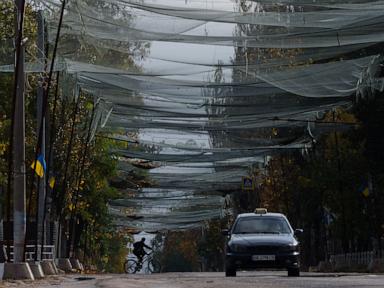
Road access into the town relies on a limited number of causeways and bridges that sit directly within the line of sight of Ukrainian observation posts on the higher western bank of the Dnipro. In normal combat conditions, any vehicle moving along these exposed arteries is treated as a valid military target. Supply trucks carrying civilian food look identical on thermal imaging cameras to military logistics vehicles carrying artillery shells. Without a formalized ceasefire agreement, the geometry of the terrain guarantees that supply convoys will be interdicted before reaching the town center.
Furthermore, the water table in Oleshky is exceptionally high. Past flooding events—most notably the destruction of the Kakhovka Dam—saturated the soil, ruined subterranean water pipes, and contaminated local wells. Civilian survival in the settlement depends entirely on external trucking of potable water. When artillery duels close the access roads for weeks at a time, the humanitarian crisis escalates on a predictable biological timeline, forcing the belligerents to negotiate periodic relief valves.
Distinguishing Verified Facts from Analytical Hypotheses
Rigorous assessment of conflict reporting requires separating confirmed operational events from strategic speculation. When evaluating a three-day truce in Oleshky, analysts divide the information environment into two strict categories.
Confirmed Operational Facts:
- A localized cessation of hostilities has held for 72 hours within a defined geographic perimeter around Oleshky.
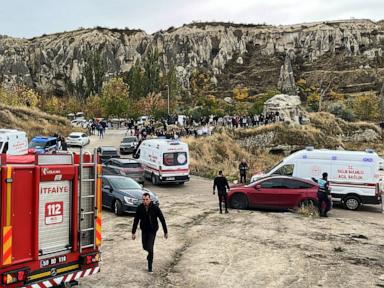
- Humanitarian personnel and supply vehicles are staged and cleared to enter the settlement to deliver essential aid.
- Both military commands have refrained from major offensive ground maneuvers or heavy artillery barrages within the designated corridor during this specific window.
Analytical Hypotheses:
- Hypothesis A: Tactical Exhaustion. Both sides suffered acute localized attrition in equipment and personnel over the preceding weeks, using the humanitarian request as a face-saving mechanism to regroup and evacuate wounded soldiers without appearing weak.
- Hypothesis B: Infrastructure Stabilization. The occupying authority detected an imminent public health crisis or critical utility failure in Oleshky that threatened to spill over into adjacent rear-area logistics hubs, necessitating external humanitarian intervention to offload administrative burdens.
- Hypothesis C: Signaling for Broader Negotiations. Diplomatic backchannels are testing the command-and-control discipline of frontline units to verify whether Moscow and Kyiv can enforce compliance on localized sectors before attempting larger sector-wide agreements.
Treating any of these hypotheses as established fact distorts strategic forecasting. The observable evidence supports only the conclusion that localized incentives temporarily aligned to permit non-kinetic transit.
The Moral Hazard of Weaponized Truces
Humanitarian corridors in modern positional warfare carry an inherent structural flaw: they create a moral hazard for the occupying force. Under international humanitarian law, an occupying power bears the primary legal responsibility for ensuring the food and medical supplies of the civilian population. When an occupying army diverts resources toward military fortifications and allows civilian infrastructure to collapse, international aid agencies step in to prevent mass starvation or disease.
By permitting a 72-hour truce for external aid delivery, the occupying force successfully externalizes the financial and logistical cost of civilian administration onto international donors. Simultaneously, the truce forces the opposing army to halt interdiction strikes against the exact road networks the occupying military uses for its own supply lines.
For the defending force across the river, accepting the truce is a constrained optimization problem. Rejecting the ceasefire makes the defender appear indifferent to the suffering of its own citizens living under occupation. Accepting the ceasefire grants the enemy three days of uninterrupted rear-area respite, allowing them to reinforce bunkers, lay new mines along the riverbanks, and rest exhausted troops.
Escalation Dynamics at the 72-Hour Boundary
The most dangerous phase of any localized truce is not the opening hour, but the final six hours before expiration. As the deadline approaches, both sides face a classic prisoner's dilemma regarding the resumption of hostilities.
If Force A withdraws its surveillance assets and prepares to resume artillery fire precisely at hour 72, while Force B uses hour 70 to covertly move an electronic warfare unit into the town center under the cover of departing aid trucks, Force B gains a decisive tactical advantage. Because both commanders anticipate this defection, pre-emptive positioning begins well before the official truce ends.
Drones return to high-altitude observation orbits to track the departing aid convoy and record any changes in the enemy's defensive posture. Artillery crews pre-calculate firing solutions on newly spotted targets. Infantry units tighten perimeter security to guard against reconnaissance teams that may have infiltrated the neutral zone during the lull. Consequently, the termination of a localized ceasefire frequently triggers an immediate spike in kinetic intensity, as both sides attempt to neutralize the intelligence and positional gains the other acquired during the pause.
Strategic Forecast and Operational Imperatives
A three-day truce in Oleshky will not expand into a permanent regional ceasefire. The fundamental strategic objectives of both belligerents along the Dnipro River remain irreconcilable: one side seeks to maintain a defensive buffer protecting the land bridge to Crimea, while the other seeks to liberate occupied territory and push artillery threats away from Kherson.
Analysts and humanitarian planners must operate under the assumption that this truce is a closed, single-iteration event rather than the first step in a linear peace process. To maximize operational utility before the corridor closes, relief coordinators must front-load all high-priority medical and water deliveries within the first 48 hours, reserving the final 24 hours strictly for extraction and verification. Military planners on both sides will treat the resumption of fire at the 72-hour mark as a certainty, calibrating their immediate post-truce strikes to target the exact logistical vulnerabilities exposed during the humanitarian transit.