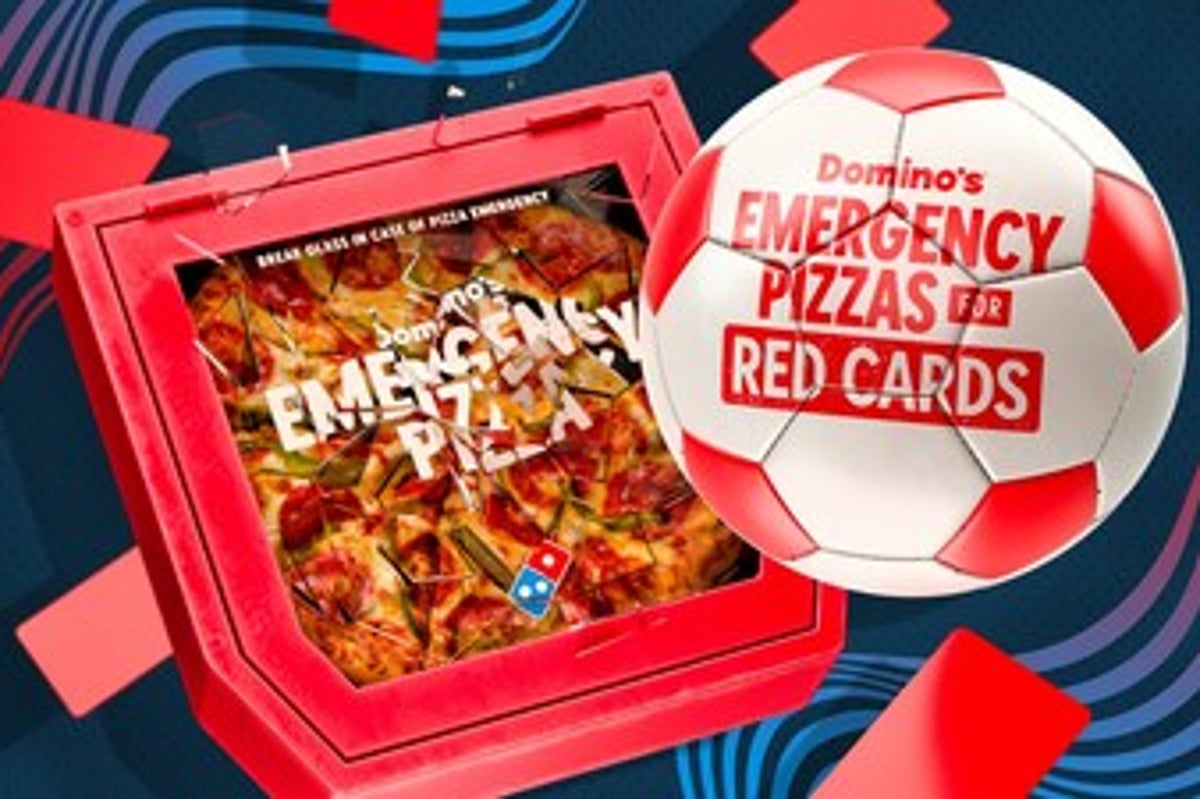
Corporate sponsorship of mega-sports events often suffers from a structural flaw: the inability to convert passive viewership into direct, measurable consumer action. Most brand activations rely on static impressions, hoping that logo placement on a stadium board translates to downstream revenue. High-performing corporate strategies bypass this hope by tying consumer rewards directly to high-probability, high-tension match events. Frito-Lay’s promotional architecture during major soccer tournaments—specifically linking the occurrence of a penalty kick to the distribution of free products—serves as a case study in contingent marketing.
The core objective of this strategy is the monetization of situational tension. By understanding the probability matrices of the sport, the operational logistics of localized delivery systems, and the psychological triggers of the viewing audience, a brand can transform a simple penalty call into a massive customer acquisition pipeline.
The Probability Matrix of the Contingent Event
To understand the financial exposure and engagement upside of a contingent promotion, the underlying sports mechanics must be quantified. A penalty kick is not a random occurrence; it is a function of specific tactical variables, referee tendencies, and defensive pressure.
Penalty Probability = f(Attacking Box Entries, Defensive Tackle Aggression, VAR Intervention Rates)
In modern international soccer tournaments, the introduction of the Video Assistant Referee (Referee Review Systems) has fundamentally altered the baseline frequency of penalty awards. Historical data indicates that penalty calls increase significantly in tournaments utilizing advanced video review due to the detection of marginal infractions that escape the human eye in real-time.
A brand structuring a promotion around a penalty must calculate its financial downside based on these shifting baselines:
- The Baseline Rate: On average, a penalty kick occurs approximately once every three to four matches in elite international play.
- The Variance Factor: Group stage matches featuring highly asymmetric matchups (e.g., a top-tier global power against a low-ranked qualifier) exhibit a higher frequency of defensive panics inside the penalty area, increasing the probability of an infraction.
- The Conversion Factor: Roughly 75% to 80% of penalties result in a goal. If the promotion triggers simply on the award of a penalty rather than a scored goal, the brand increases its activation windows while decoupling its risk from the technical execution of the player.
By anchoring the consumer reward to a penalty, the brand capitalizes on the absolute apex of match tension. The sudden halt in play, the walk to the penalty spot, and the isolated duel between goalkeeper and kicker create a prolonged media window where consumer attention is highly concentrated and emotionally charged.
The Operational Pipeline of Instant Gratification
The primary bottleneck in contingent marketing is the latency between the triggering event and the consumer’s redemption behavior. If a penalty is awarded in the 73rd minute of a match, the brand has a hyper-perishable window to capture the consumer's digital footprint. Frito-Lay addresses this through a synchronized digital infrastructure linking television broadcasts, social media alerts, and localized delivery applications.
This operational pipeline functions through three distinct phases:
Real-Time Signal Detection and Broadcast Synchronization
The moment the referee signals a penalty, the brand's war room initiates a pre-programmed media buy overwrite. Automated scripts push push-notifications through partner delivery apps (such as DoorDash or UberEats) and update digital billboards or social media channels with the activation code. This requires zero-latency API integration between sports data feeds (e.g., Opta or StatsBomb) and the marketing distribution platforms.
The Scarcity and Velocity Engine
The promotion cannot open-endedly distribute free items without collapsing the campaign's unit economics. Therefore, the mechanism relies on velocity-based scarcity. The brand opens a strict temporal window—often exactly 90 minutes from the penalty call—or caps the total redemptions at a hard ceiling (e.g., the first 5,000 users). This triggers an immediate migration of attention from the television screen to the mobile device.
Fulfillment Logistics and Franchise Alignment
For a product like pizza or snack boxes, the physical infrastructure must bear the sudden demand spike. The digital platform routes the redemption load geographically, distributing orders across local franchise nodes to prevent kitchen bottlenecks. If a specific region experiences an unmanageable surge, the algorithm dynamically throttles availability or extends fulfillment times to protect the customer experience.
The Unit Economics of Consumer Acquisition
To the untrained observer, giving away thousands of free pizzas or snack packages appears to be a costly marketing expense. In a rigorous corporate framework, this expenditure is categorized as a highly optimized Customer Acquisition Cost (CAC) model.
Standard digital advertising campaigns across social media networks suffer from diminishing returns and rising CPMs (Cost Per Mille impressions). A contingent promotion flips the equation by paying only for active engagement. The cost structure of a free-product promotion breaks down into predictable components:
Total Campaign Cost = Fixed Tech Infrastructure + (Total Redemptions * Marginal Product Cost)
The marginal product cost (the actual cost of the ingredients and cardboard packaging) is substantially lower than the retail value advertised to the consumer. If a brand promises a "$15 value" for free, the actual internal cost to the system might be closer to $3.
The strategic value generated from this $3 expenditure outperforms traditional media spend across three core dimensions:
- First-Party Data Harvesting: To claim the reward, consumers must download an app, create an account, verify their phone number, and input a delivery address. The brand acquires clean, compliant, first-party user data that can be used for targeted remarketing campaigns for the next 12 to 24 months. The long-term Customer Lifetime Value (LTV) of this data routinely dwarfs the initial $3 marginal product cost.
- App Store Optimization and Velocity: A sudden surge of thousands of downloads within a two-hour window pushes the brand’s application to the top of app store charts. This organic visibility triggers secondary, non-paid downloads from users who were not even watching the match, compounding the return on investment.
- The Attachment Rate Factor: Consumers rarely order a single free item in isolation. The redemption process naturally encourages the addition of high-margin items—such as beverages, sides, or premium toppings—to the cart. In many instances, the profit margin from these secondary attachments completely offsets the cost of the free promotional item, rendering the activation cash-flow neutral on a per-transaction basis.
Strategic Mitigations and Risk Management
Deploying a campaign tied to unpredictable sporting outcomes carries inherent operational and financial risks. A tournament featuring an unprecedented volume of penalties could theoretically breach the allocated marketing budget, while a tournament with zero penalties could result in a completely unactivated campaign, wasting millions in upfront development and media rights acquisition.
Sophisticated corporate operators employ specific structural safeguards to manage these outcomes.
Promotional Insurance and Hedging
To protect against an anomalous statistical spike in penalties, brands secure promotional insurance policies. The brand pays a fixed premium to an underwriter; if the number of penalties exceeds a predetermined threshold (e.g., more than 15 penalties across the tournament), the insurance policy covers the marginal cost of all subsequent product redemptions.
Alternative Trigger Mechanisms
If a tournament progresses through the group stage without triggering the primary contingent event, consumer engagement will begin to wane. The strategy must include fallback triggers. If no penalty occurs by the 80th minute of a high-profile match, the system can automatically pivot to a secondary, higher-probability trigger—such as a corner kick or a specific substitution—to ensure the digital infrastructure is utilized and consumer attention is captured.
Execution Framework for Corporate Activation
To execute a contingent marketing campaign of this scale, an organization must transition away from traditional siloed marketing departments and adopt an integrated, cross-functional operational framework. The implementation matrix requires alignment across legal, logistical, and technical divisions.
| Phase | Functional Department | Key Deliverable | Operational Constraint |
|---|---|---|---|
| Pre-Tournament | Legal & Compliance | State-by-state sweepstakes verification and platform terms of service configuration. | Compliance with regional gambling and lottery regulations regarding incentivized play. |
| Pre-Tournament | Engineering | Load testing API endpoints to handle up to 50,000 concurrent requests per second. | Preventing server failure during the immediate post-penalty traffic spike. |
| In-Tournament | Data Analytics | Real-time monitoring of match event streams and automatic adjustments to promotion throttling. | Correctly identifying overturned VAR decisions before promotional codes are fully committed. |
| Post-Tournament | CRM & Growth | Segmenting acquired users based on geographic and purchasing behavior during the trigger window. | Executing the first remarketing loop within 72 hours of the initial download to prevent churn. |
The final strategic consideration rests on the psychological framing of the offer. The promotion must never feel like a corporate gimmick. By positioning the brand as a fellow participant in the emotional highs and lows of the tournament, the corporate entity shifts from an intrusive advertiser to an active enhancer of the fan experience. The consumer does not celebrate the penalty because they support a specific national team; they celebrate the penalty because the brand has successfully aligned its financial deployment with the viewer's personal utility function.


